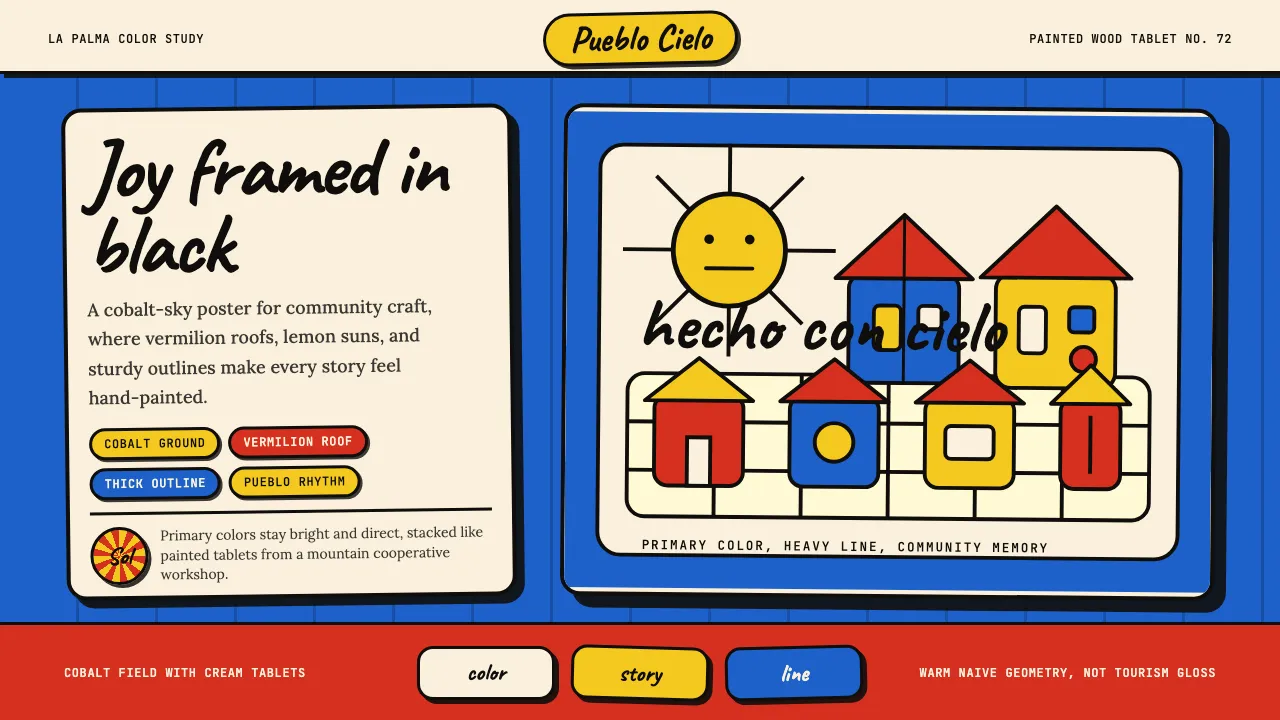
About Salvadoran Fernando Llort Naïf
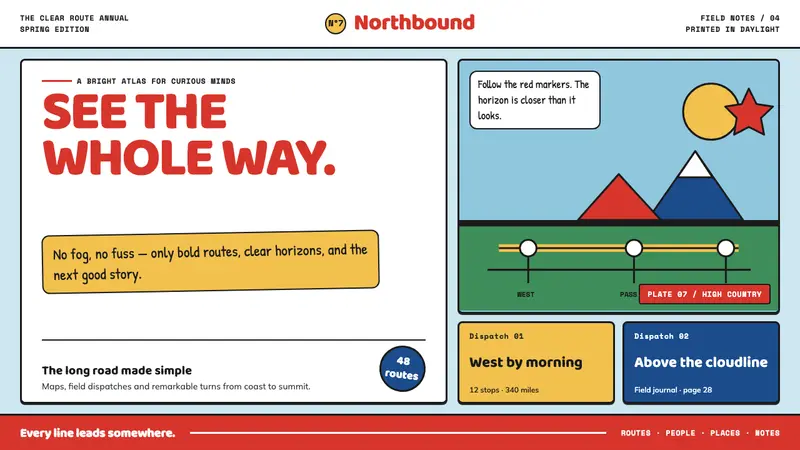
Born from Fernando Llort's 1972 move to the mountain village of La Palma, this design system channels the naïf-cubist pueblo aesthetic that became a community livelihood through civil war and beyond. Thick black outlines frame primary-color farmhouses, doves, and sun-faces on a cobalt sky.
The visual language honors Llort's deliberate Klee-and-Rivera-informed practice — polychrome, joyful, and structurally bold — while respecting the living cooperative tradition of Semilla de Dios.
- Origin
- La Palma, Chalatenango, El Salvador
- Era
- 1972–present (Llort active 1972–2018; cooperative continues)
- Key figures
- Fernando Llort · Salvador Choto · Sister Maddo · José Llort
- Movements
- La Palma naïf school · Central American artesanía identity · Liberation Theology folk-art
Salvadoran Fernando Llort Naïf design spec
Colors
Background
Surface
Primary
Secondary
Accent
Text
Typography
CaveatHeadings
LoraBody
JetBrains MonoMono
Unlock for 1 credit
The other 11 sections — buttons, cards, spacing, motion, techniques and more — open once you unlock. Download the DESIGN.md or send it to your AI in one click. Unlock once, yours forever.
Sign up nowHave an account? Sign in
Styles similar to Salvadoran Fernando Llort Naïf
Also inspired by art & artists, with a close feel.
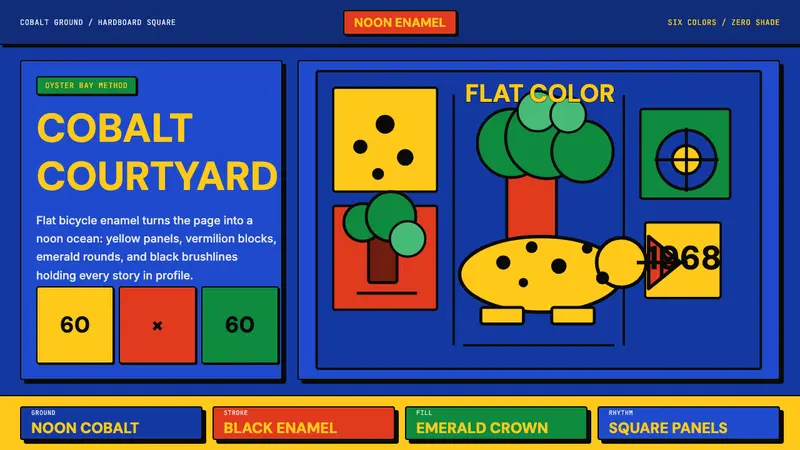 Tanzanian Tingatinga on Cobalt Canvas (1968)Cobalt sings flat. Yellow, vermilion and emerald panels snap under black enamel outlines.
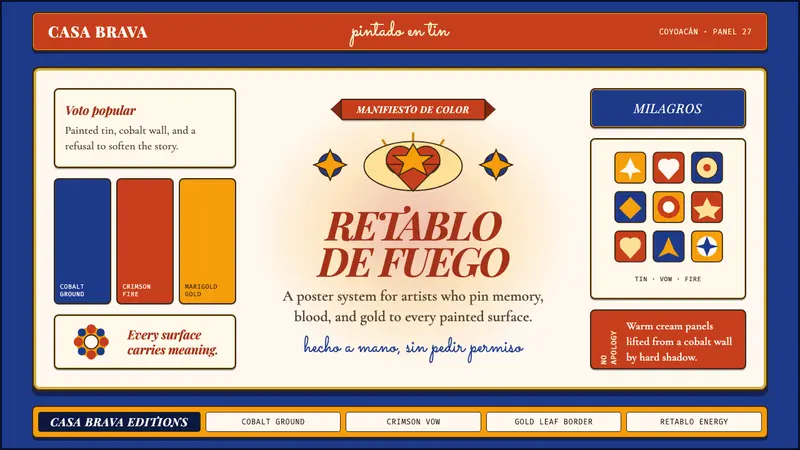 Mexican Folk Art (Frida-era)Defiance painted on tin. Cobalt ground, crimson vows, marigold borders, hard shadows.
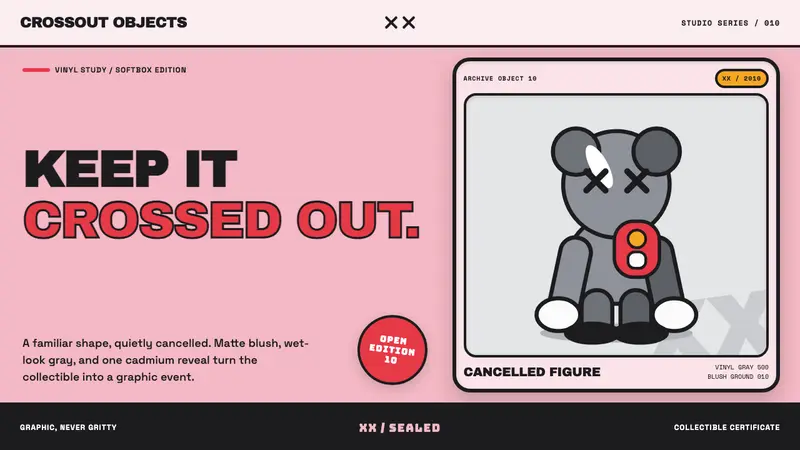 KAWS Companion (2010)Playful, with its eyes crossed out. Blush fields frame glossy gray vinyl and fat black lines.
 Tintin (Hergé Ligne Claire)Adventure reads at a glance. Flat spot colors and uniform black contours map every turn.