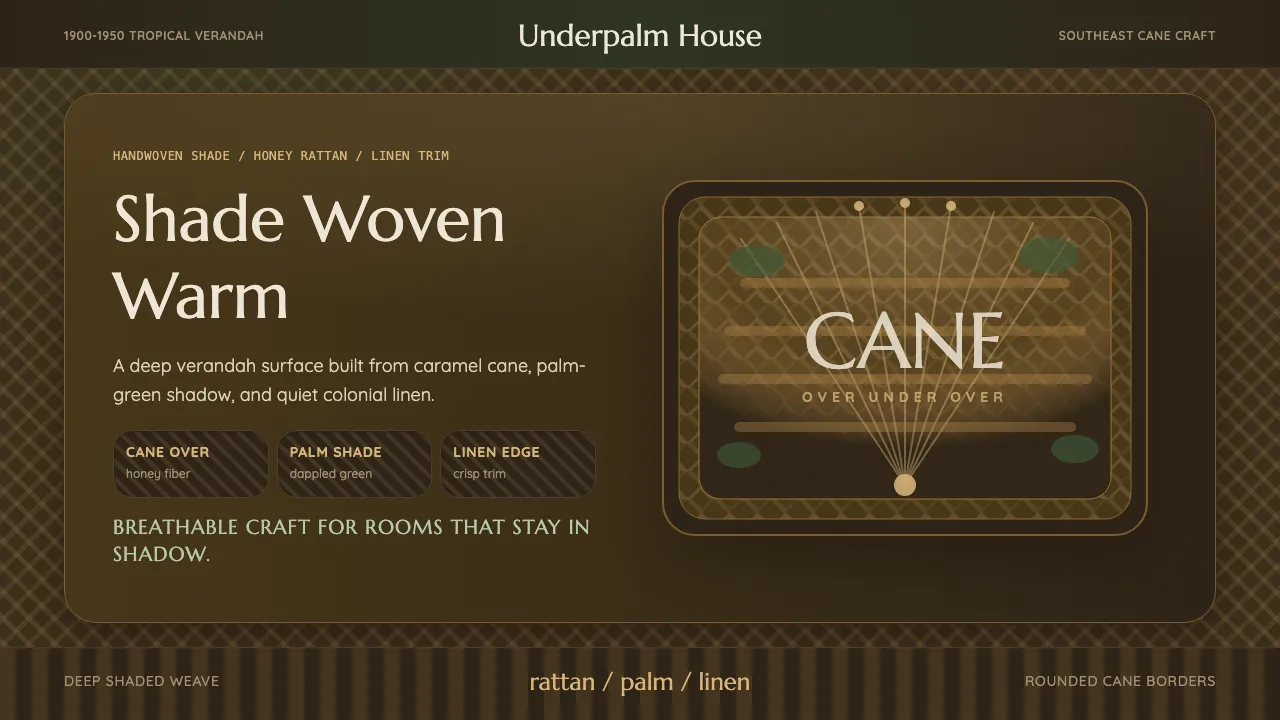
About Rattan & Wicker
Rattan & Wicker draws on the shaded verandahs of Southeast Asia between 1900 and 1950, where honey-golden cane was woven over and under into peacock chairs, settees and screens. The surface is the deep weave itself — warm fiber sitting in green-dappled shade, not a pale off-white.
Tropical palm greens and crisp colonial linen trim play against the caramel rattan, giving an interior that feels handmade, breathable and quietly elegant. It is craft furniture light, translated into a dark, woven digital surface.
- Origin
- Southeast Asia — Indonesia, the Philippines, Malaya
- Era
- 1900–1950 (colonial tropical verandah furniture)
- Key figures
- Southeast Asian rattan weavers · Cane craftsmen of the Malay archipelago
- Movements
- Colonial tropical interior / porch furniture · Natural-fiber wicker craft
Rattan & Wicker design spec
Colors
Typography
The other 11 sections — buttons, cards, spacing, motion, techniques and more — open once you unlock. Download the DESIGN.md or send it to your AI in one click. Unlock once, yours forever.
Sign up nowStyles similar to Rattan & Wicker
Also inspired by crafts & folk art, with a close feel.
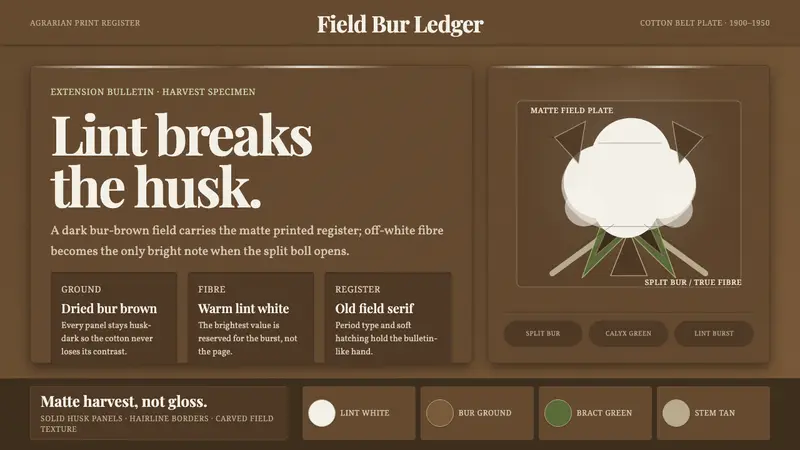 Cotton Boll HarvestHarvest contrast made matte. Off-white lint bursts from husk brown with field-serifs.
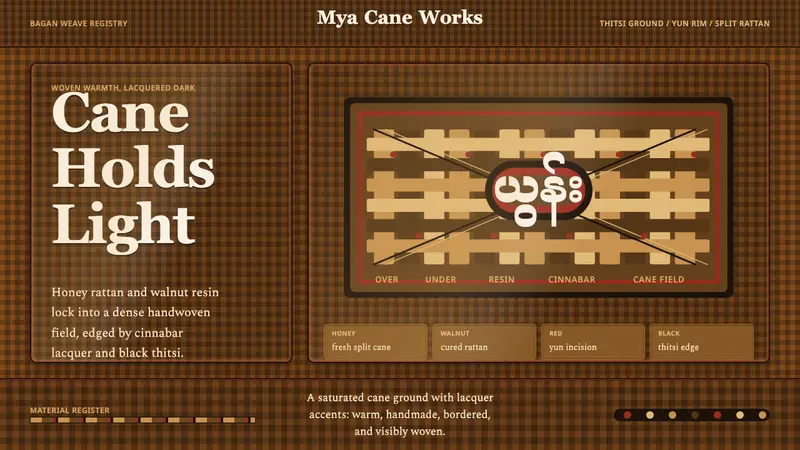 Burmese Cane RattanWoven warmth holds the page. Walnut cane lattice glows with cinnabar rim lines.
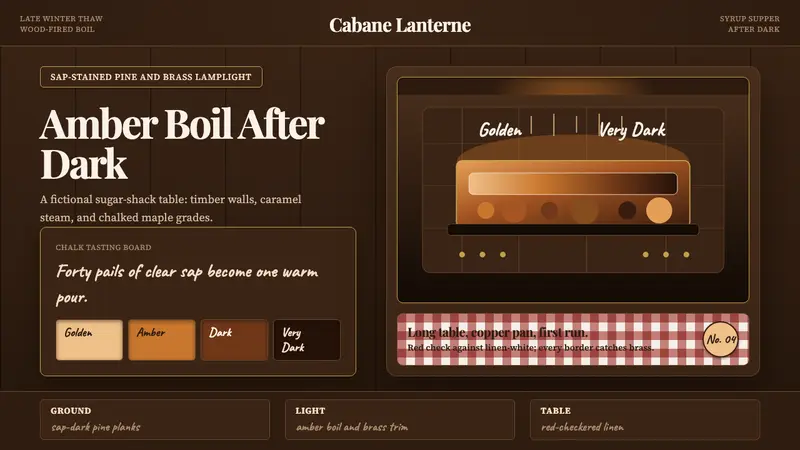 Québec Maple Sugar ShackWarmth boils in the dark. Amber serif type, brass borders, and gingham checks glow on timber.
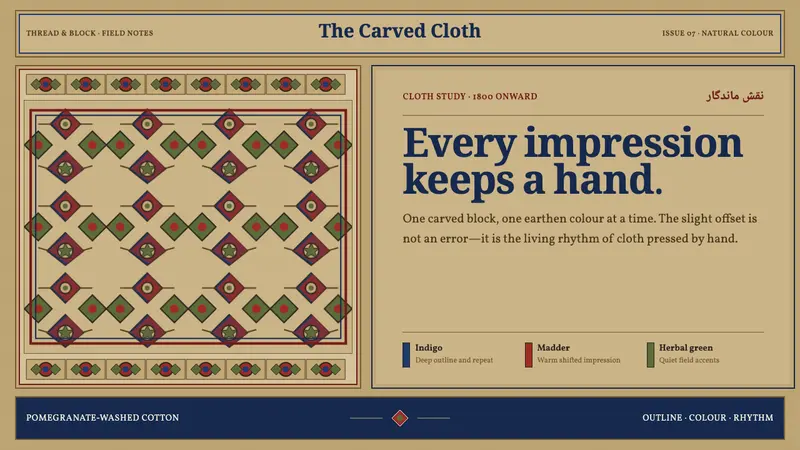 Isfahan Qalamkar PrintEvery impression keeps a hand. Indigo and madder repeats shift softly across pomegranate-tan cloth.