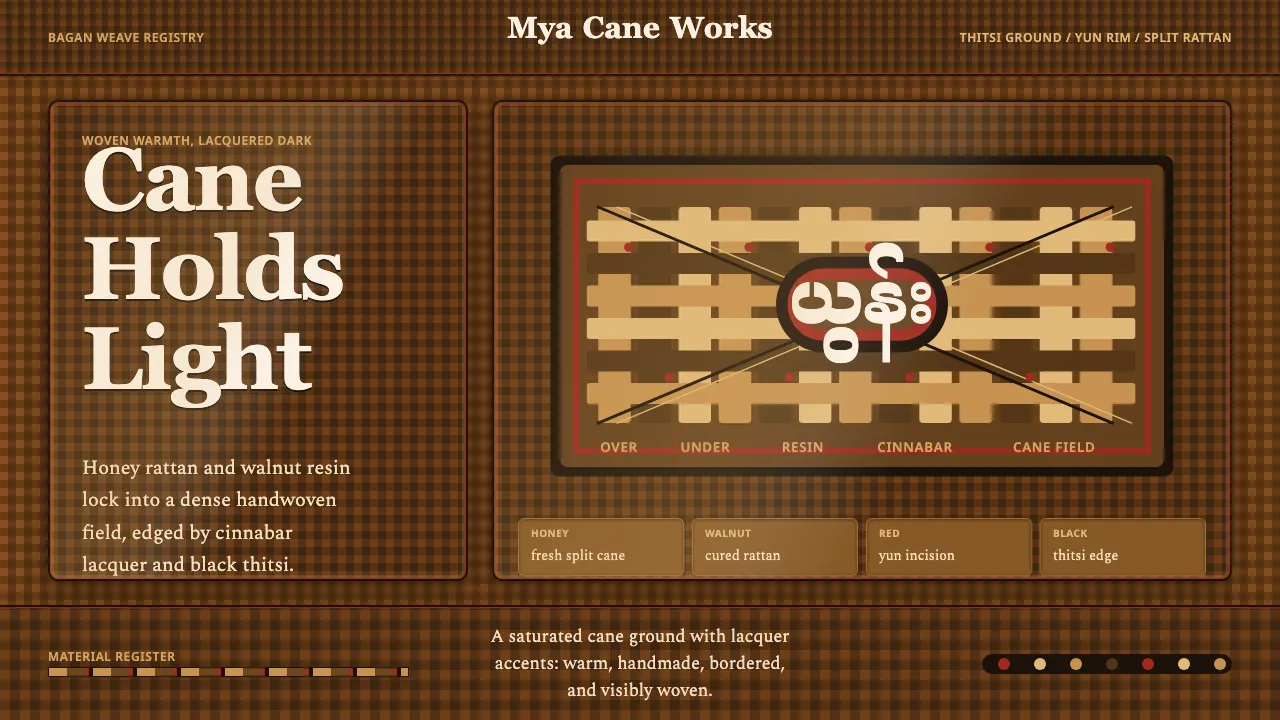
About Burmese Cane Rattan
Burmese Cane Rattan distills a century of Myanmar wickerwork into a design system: trays and underframes woven from split rattan and kyun bamboo into tight honey-to-walnut lattices, finished over a thitsi resin lacquer ground.
The palette spans honeyed rattan to deep walnut cane, lifted by cinnabar yun-lacquer red (hinthabada) and blackened thitsi. The surface is always a visible woven weave — warm, handmade, and saturated, never a flat or cream fill.
- Origin
- Southeast Asia — Myanmar (Burma); Bagan, Kyaukka, Inle
- Era
- 1900–1950 (Burmese colonial-era wickerwork and yun lacquerware tradition)
- Key figures
- Burmese basket-weavers (wa-zaung) · Yun lacquerware artisans · Bagan thitsi lacquer masters
- Movements
- Myanmar wickerwork · Burmese yun lacquerware · Thitsi resin tradition
Burmese Cane Rattan design spec
Colors
Background
Surface
Primary
Secondary
Accent
Text
Typography
Noto Serif MyanmarHeadings
SpectralBody
Noto Sans MyanmarMono
Unlock for 1 credit
The other 11 sections — buttons, cards, spacing, motion, techniques and more — open once you unlock. Download the DESIGN.md or send it to your AI in one click. Unlock once, yours forever.
Sign up nowHave an account? Sign in
Styles similar to Burmese Cane Rattan
Also inspired by crafts & folk art, with a close feel.
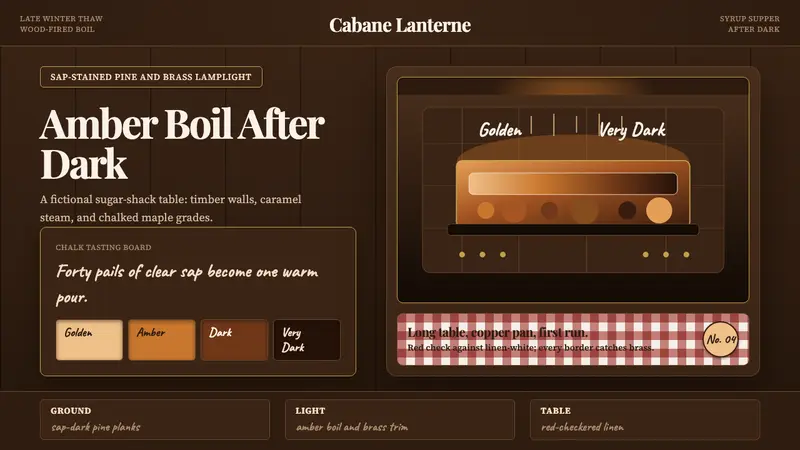 Québec Maple Sugar ShackWarmth boils in the dark. Amber serif type, brass borders, and gingham checks glow on timber.
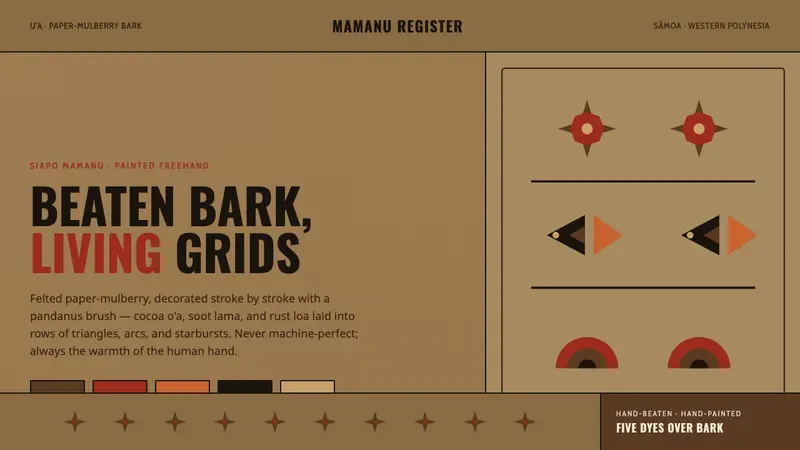 Samoan Siapo MamanuBeaten bark, never white. Five natural dyes paint freehand grids of fish, shells, starbursts.
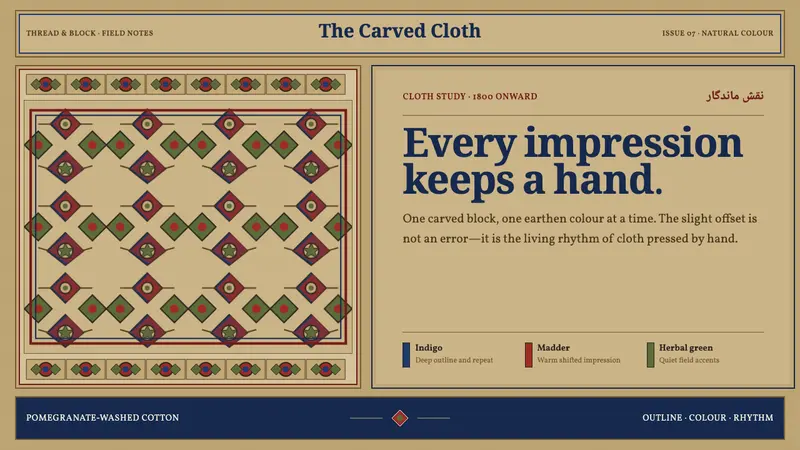 Isfahan Qalamkar PrintEvery impression keeps a hand. Indigo and madder repeats shift softly across pomegranate-tan cloth.
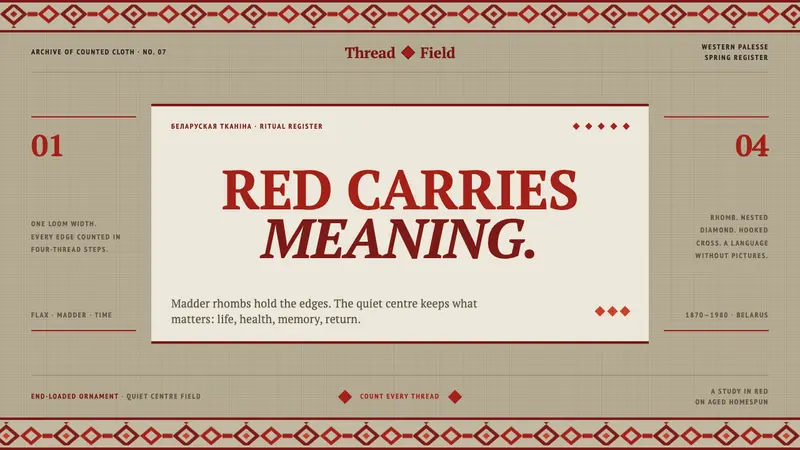 Belarusian RushnykRed carries meaning. Madder rhombs crowd aged flax edges while the woven centre stays still.