About Punjabi Phulkari (Floral Bagh)
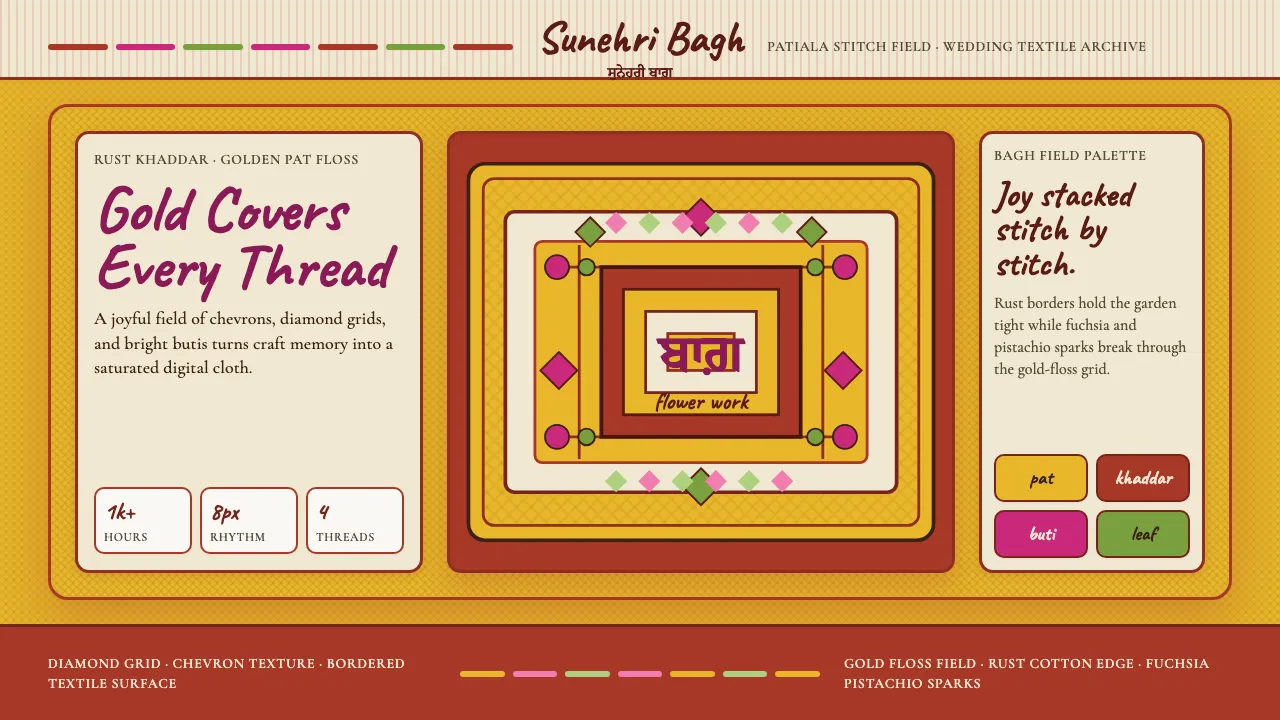
Phulkari — "flower work" — is the densest darning-stitch tradition in South Asia. Punjabi women embroider golden silk floss on the reverse side of rust-red khaddar cotton, building vertical chevron stitches into diamond grids, floral butis, and darshan-dwar gateway arches until not a thread of base cloth remains visible. A wedding bagh takes over a thousand hours.
This design system captures the bagh's joyful density: gold-floss page fields, rust-khaddar border bands, fuchsia and pistachio floral accents, and chevron-stitch texture overlays that echo the hand-stitched grain of the original textile.
- Origin
- Punjab, India (Patiala, Sangrur, Amritsar) and Pakistan (Hazara, Sialkot, Multan)
- Era
- 15th century onward; pre-Partition peak 1850–1947; post-1947 East Punjab revival
- Key figures
- Sarbjit Kaur Kang · Pepin van Roojen · Anu Bala
- Movements
- Punjabi dowry tradition · Punjab-Hazara textile continuum · post-Partition diaspora revival
Punjabi Phulkari (Floral Bagh) design spec
Colors
Typography
The other 11 sections — buttons, cards, spacing, motion, techniques and more — open once you unlock. Download the DESIGN.md or send it to your AI in one click. Unlock once, yours forever.
Sign up nowStyles similar to Punjabi Phulkari (Floral Bagh)
Also inspired by crafts & folk art, with a close feel.
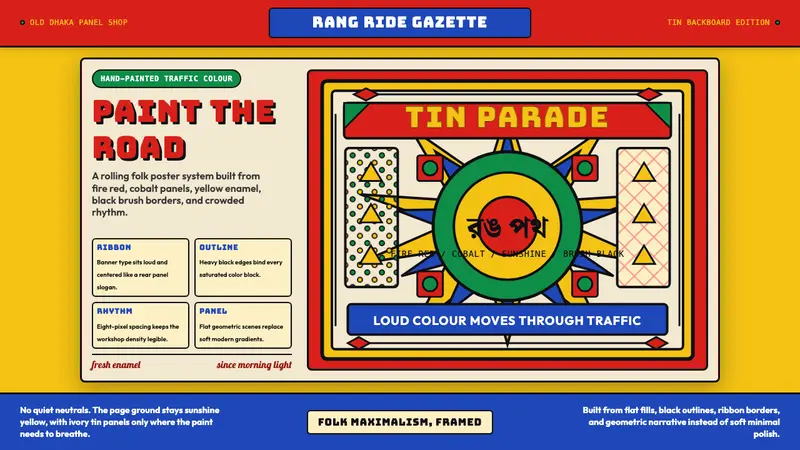 Bangladeshi Rickshaw Painting (Dhaka)Traffic shouts in color. Fire red, cobalt blue, and yellow panels lock into black borders.
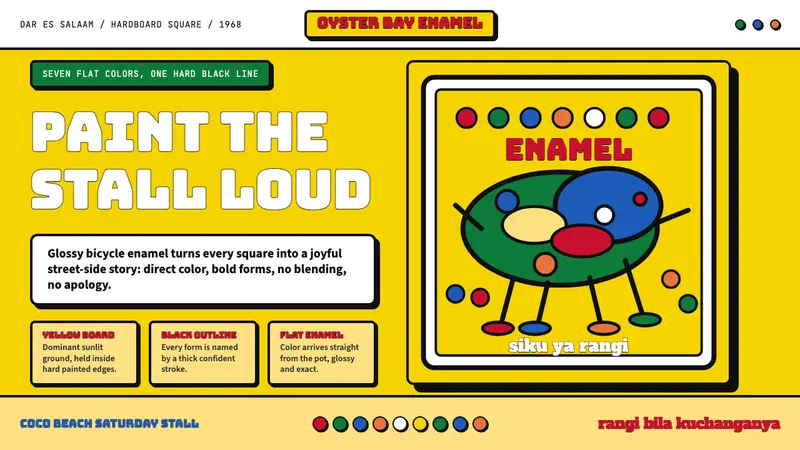 Tingatinga PaintingJoy refuses blending. Enamel yellow, Bungee strokes, and black-outlined flat color.
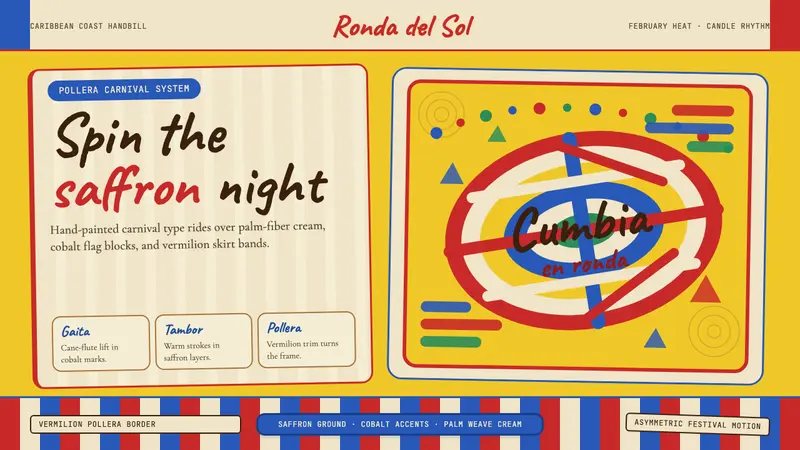 Colombian Cumbia (Pollera Carnival)Carnival heat spins. Saffron ground, Caveat script, vermilion stripes, cobalt beats.
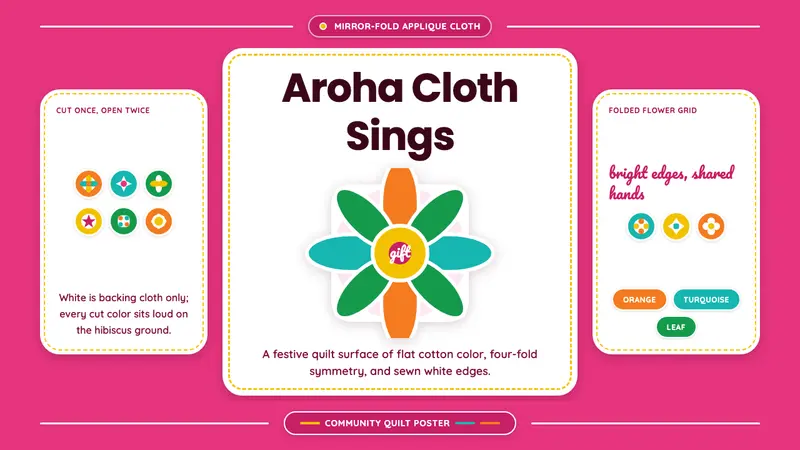 Cook Islands TivaevaeSaturated craft sings. Hibiscus pink carries mirror-fold florals in flat applique color.