About Colombian Cumbia (Pollera Carnival)
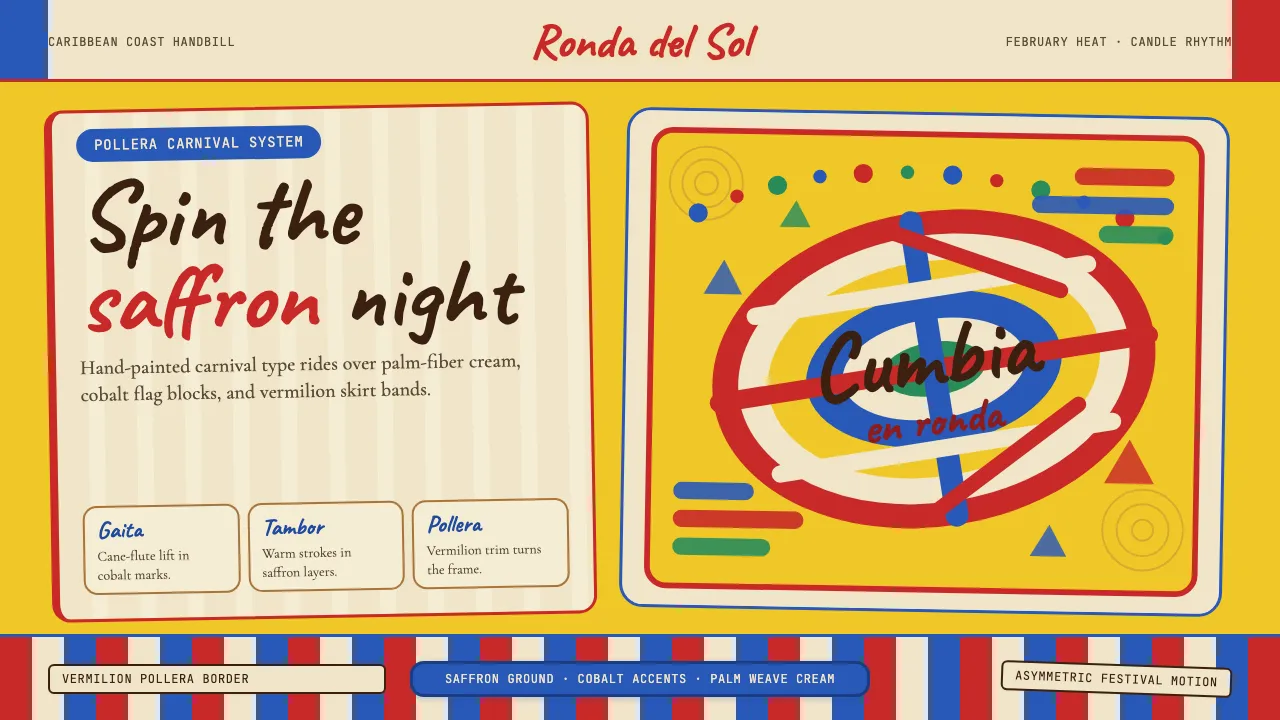
Colombian cumbia is the Caribbean coast's signature dance tradition — a three-culture fusion born in Cartagena's colonial port, where African drums met Indigenous gaita flutes and Spanish melodies. Women in blazing red-white-yellow pollera skirts twirl candles around partners in white suits and woven Vueltiao hats, moving to the pulse of tambor-alegre drums beneath carnival string lights.
This design system captures that Barranquilla February heat: hot saffron-yellow ground, cobalt-blue flag accents, vermilion pollera stripes, and hand-lettered festival energy. Every surface feels like palm-fiber weave and cotton skirt fabric, every interaction carries the asymmetric momentum of a spinning dancer.
Learn more about the Colombian Cumbia (Pollera Carnival) style
- Origin
- Colombia, Caribbean coast — Cartagena, Barranquilla, Santa Marta
- Era
- 17th-century colonial syncretism; codified 1850–1950; Barranquilla Carnival since 1888; UNESCO ICH 2003
- Key figures
- Francisco "Pacho" Galán · Lucho Bermúdez · Totó la Momposina · Petrona Martínez
- Movements
- Afro-Indigenous-Spanish coastal syncretism · Barranquilla Carnival institution · post-1940s urban cumbia · global cumbia diaspora
Colombian Cumbia (Pollera Carnival) design spec
Colors
Typography
The other 11 sections — buttons, cards, spacing, motion, techniques and more — open once you unlock. Download the DESIGN.md or send it to your AI in one click. Unlock once, yours forever.
Sign up nowStyles similar to Colombian Cumbia (Pollera Carnival)
Also inspired by crafts & folk art, with a close feel.
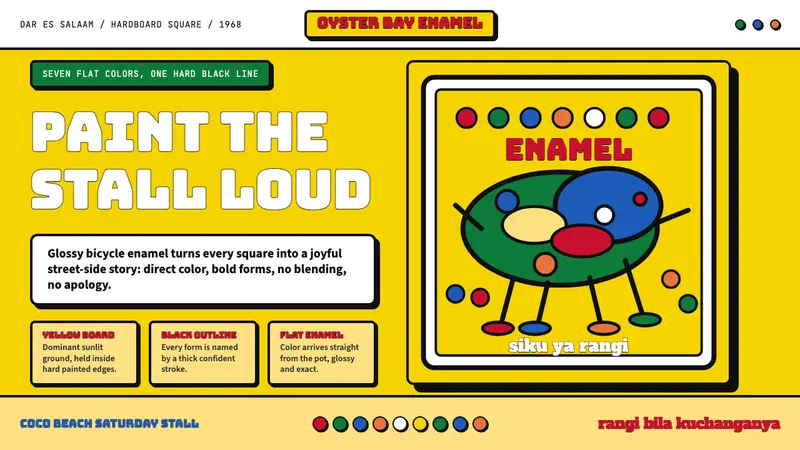 Tingatinga PaintingJoy refuses blending. Enamel yellow, Bungee strokes, and black-outlined flat color.
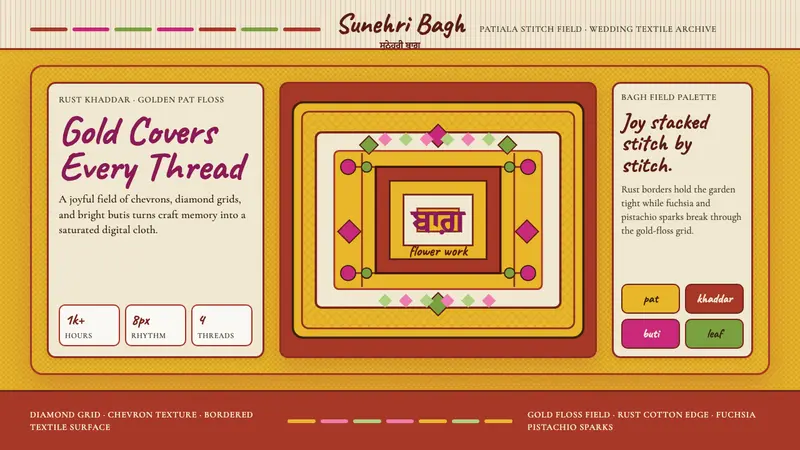 Punjabi Phulkari (Floral Bagh)Joyful density wins. Gold chevrons, rust borders, fuchsia-pistachio butis fill the field.
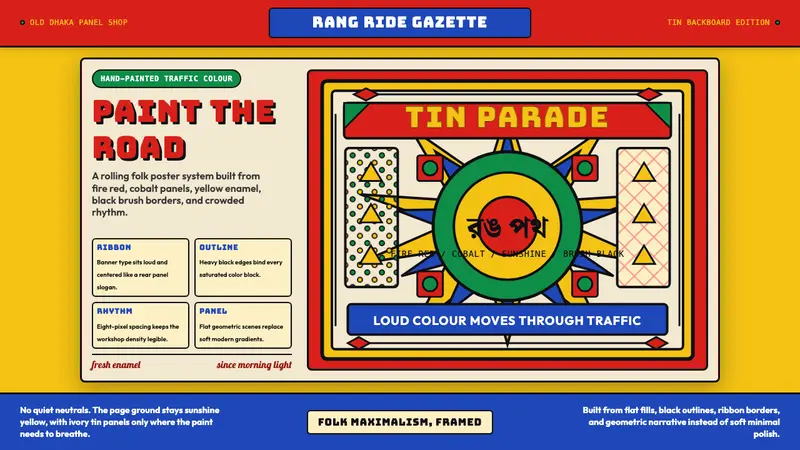 Bangladeshi Rickshaw Painting (Dhaka)Traffic shouts in color. Fire red, cobalt blue, and yellow panels lock into black borders.
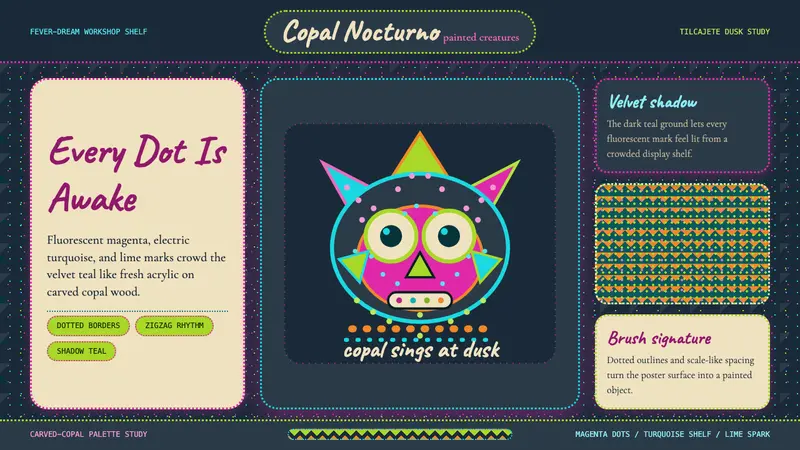 Mexican Alebrije Oaxaca (Linares 1936)Fever craft glows. Velvet teal carries magenta dots, turquoise zigzags, and Caveat script.