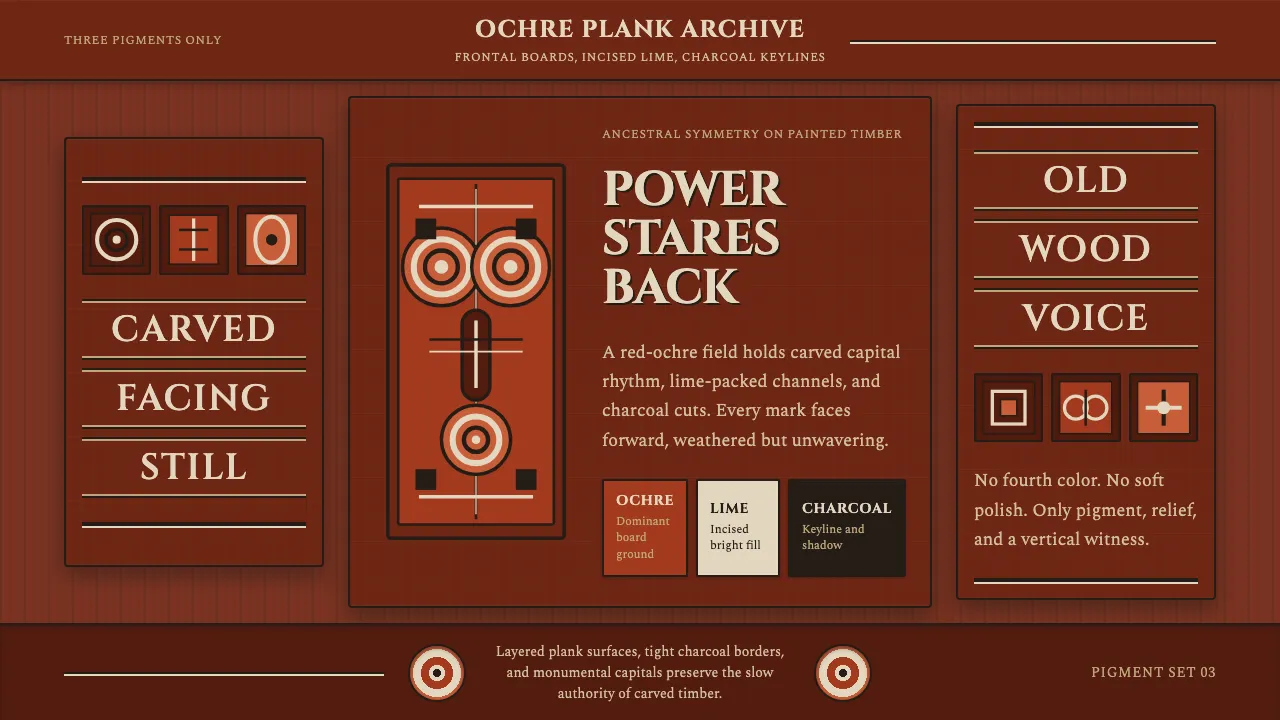
About Sepik Spirit Board
Sepik Spirit Board draws on the gope and kwoi boards of the Papuan Gulf and Sepik River, where carvers worked old canoe and house timber into frontal ancestral faces. A dominant red-ochre field is incised with white-lime and charcoal lines, low-relief spirals reading as eyes, nose, and navel.
The system holds to a strict three-pigment world: iron-oxide red, white clay, and charcoal black on the painted wood itself. There is no fourth color and no smooth gradient — only carved relief, weathered grain, and bilateral symmetry carried by monumental capital letterforms.
- Origin
- Papuan Gulf & Sepik River, Papua New Guinea (Oceania)
- Era
- Pre-1900 (traditional Melanesian production)
- Key figures
- Anonymous Kerewa carvers · Anonymous Elema carvers · Anonymous Iatmul carvers
- Movements
- Melanesian ancestral spirit-board (gope/kwoi) tradition
Sepik Spirit Board design spec
Colors
Typography
The other 11 sections — buttons, cards, spacing, motion, techniques and more — open once you unlock. Download the DESIGN.md or send it to your AI in one click. Unlock once, yours forever.
Sign up nowStyles similar to Sepik Spirit Board
Also inspired by crafts & folk art, with a close feel.
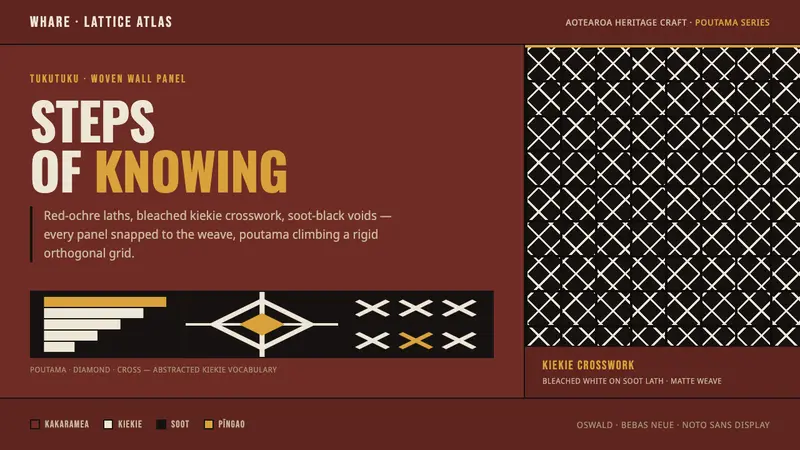 Māori Tukutuku PanelTukutuku weave, rendered strict. Bleached kiekie crosswork laces poutama steps on red-ochre lath.
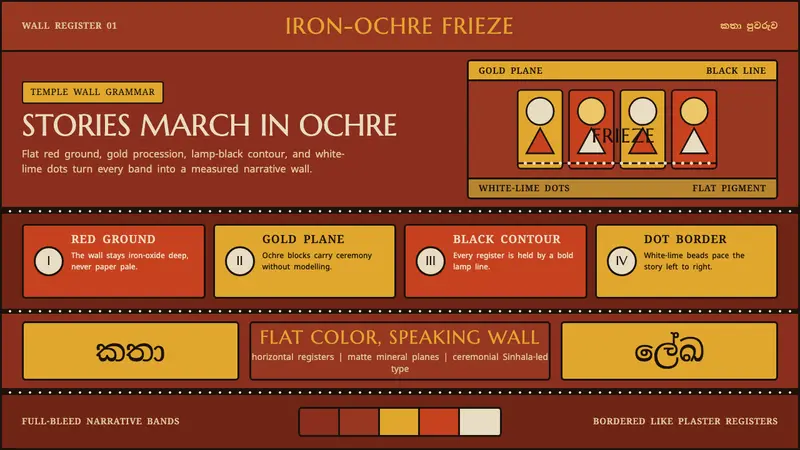 Kandyan Temple Mural FriezeTemple-wall gravity. Red ochre, gold planes, black contours, white-dot registers.
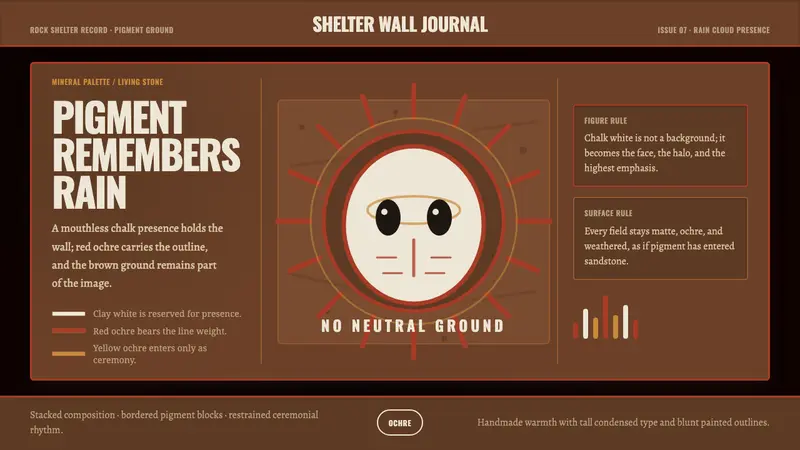 Wandjina Kimberley Rock ArtAncestral presence in stone. Chalk white haloes and red ochre outlines sit on brown rock.
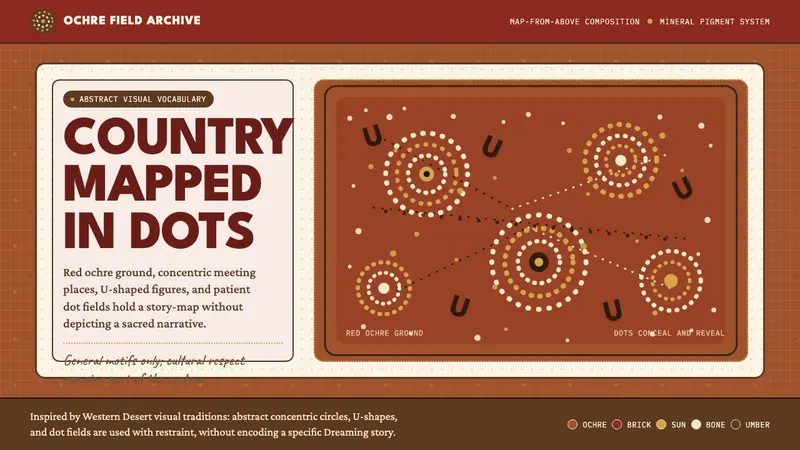 Aboriginal Dot PaintingAncient story-map energy. Red ochre, bone dots, concentric circles, and U-marks build country.