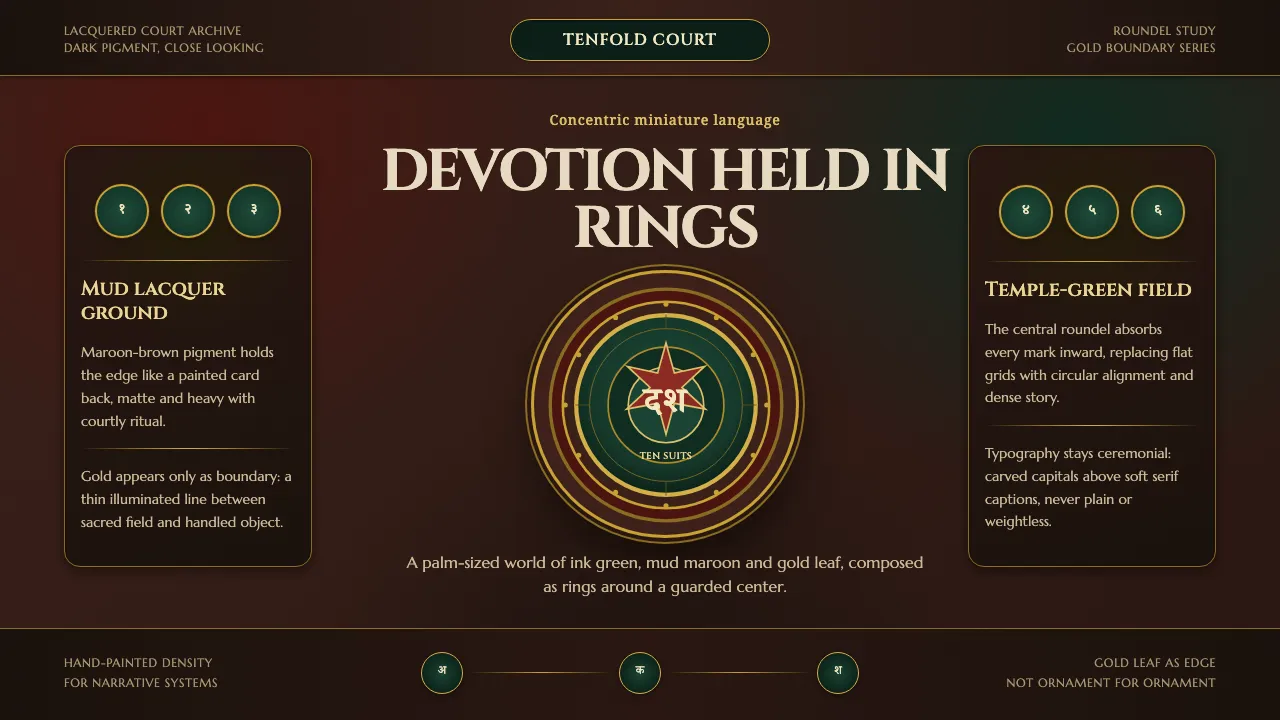
About Mysore Ganjifa Playing Cards
In the 18th-century Wadiyar court of Mysore, painters worked in miniature to produce Ganjifa — circular playing cards for the ten-suited Dashavatara game, each disc devoted to one avatar of Vishnu. Every card is a small illuminated world: a dark ink-green roundel at the center, ringed in gold leaf, framed by a deep maroon-brown border mixed from local mud pigment. The palette was never accidental. Ground earth pigments gave the border its lacquered mud-red-brown; temple-green ink filled the sacred field; gold line-work marked the boundary between the divine figure and the material world. This is a design language of concentric containment — devotion held inside a ring, held inside a border, held inside the hand.
- Origin
- Mysore, Karnataka, South India
- Era
- 18th-century Mysore court, courtly Dashavatara Ganjifa
- Key figures
- Mysore Wadiyar court painters · Ganjifa card-painting families
- Movements
- Dashavatara Ganjifa · South Indian courtly miniature illumination
Mysore Ganjifa Playing Cards design spec
Colors
Typography
The other 11 sections — buttons, cards, spacing, motion, techniques and more — open once you unlock. Download the DESIGN.md or send it to your AI in one click. Unlock once, yours forever.
Sign up nowStyles similar to Mysore Ganjifa Playing Cards
Also inspired by crafts & folk art, with a close feel.
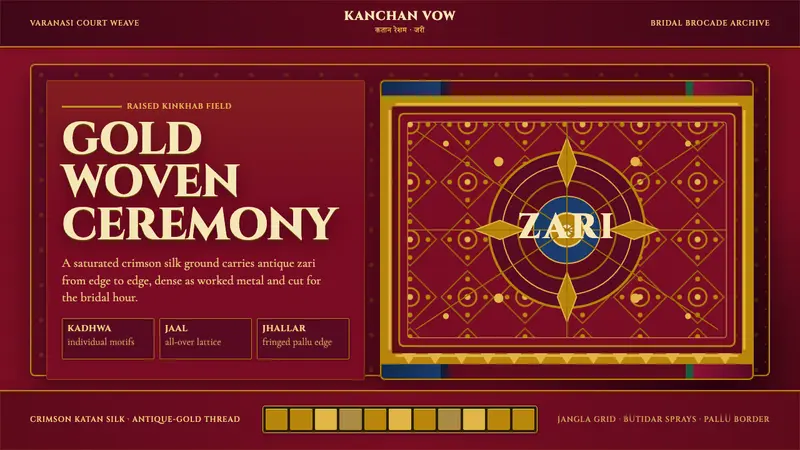 Banarasi Brocade SareeBridal maximalism, woven dense. Crimson silk grid carries raised antique-gold zari.
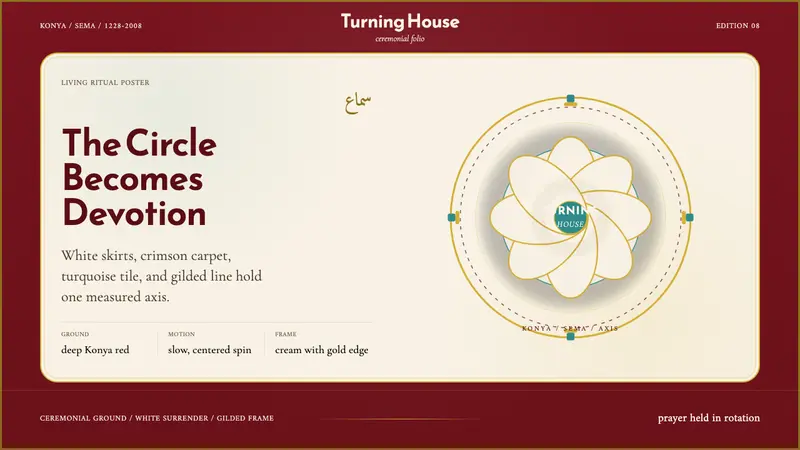 Sufi Whirling (Konya)Ritual in motion. Crimson field, white arcs, turquoise tile, and gold filigree.
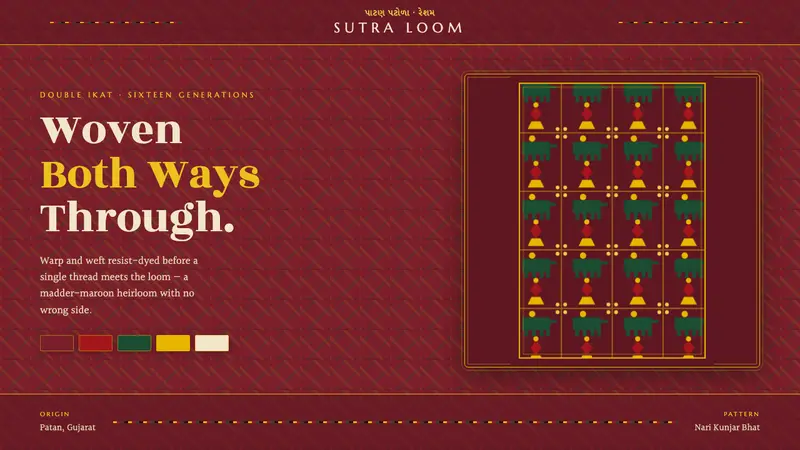 Patan Patola Double IkatReversible by design. Madder-maroon ground, a strict red-green-gold lattice, feathered ikat edges.
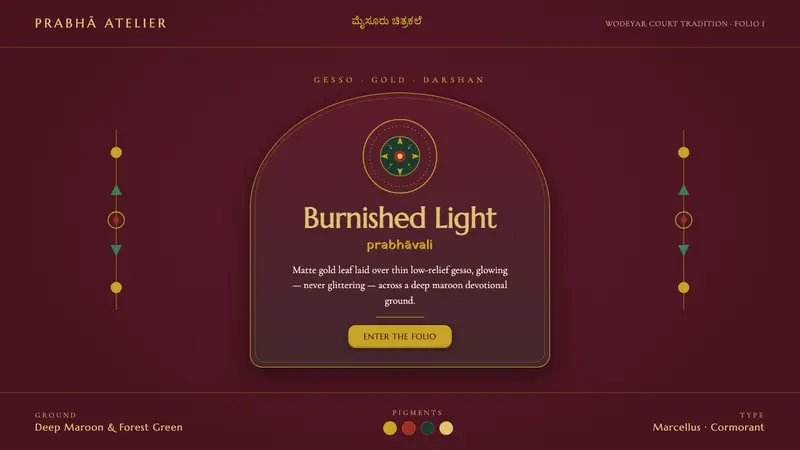 Mysore Gesso Gold PaintingGold that glows, never glitters. Matte burnished leaf over gesso on deep maroon devotional grounds.