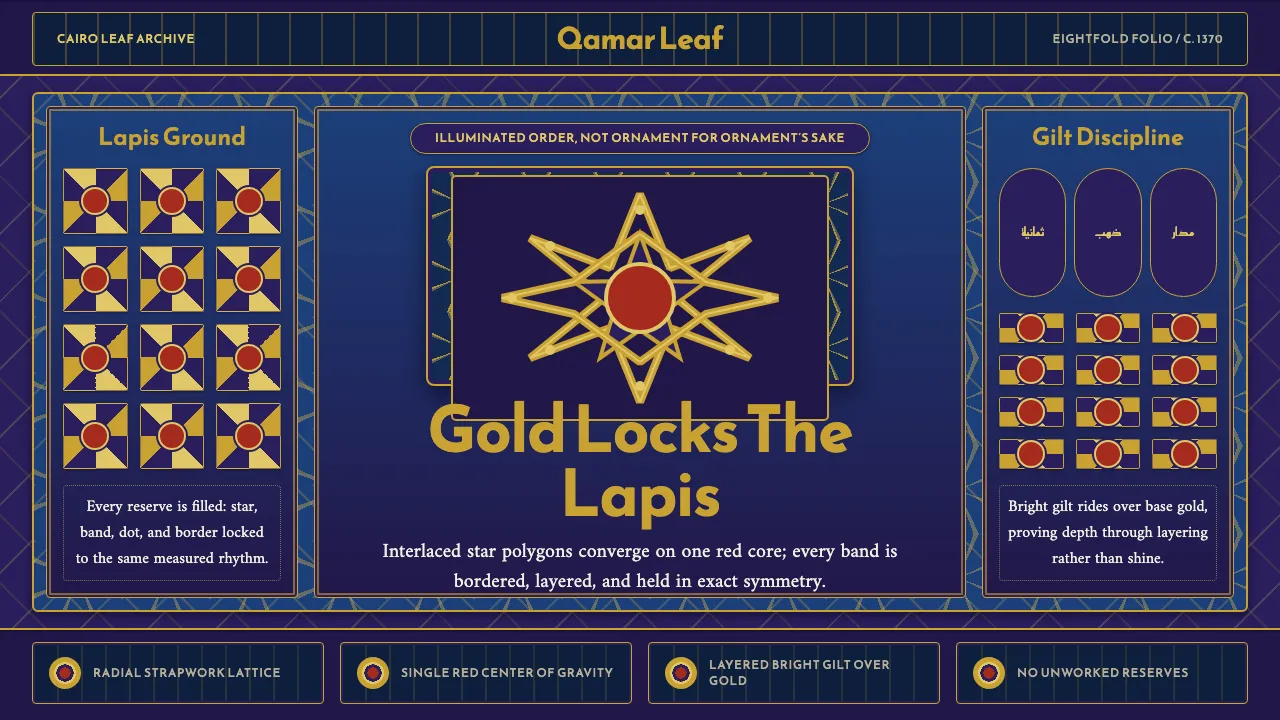
About Mamluk Quran Illumination
A Mamluk Quran frontispiece from Cairo around 1370 — the kind commissioned by amirs such as Arghun Shah — is a carpet page of pure geometric discipline. Eight-pointed stars and interlaced hexagons lock into a radial strapwork lattice; every reserve between the bands is infilled with gilded split-palmette scrollwork, converging on a red central medallion set against a deep lapis-blue ground.
This system carries that logic into an interface: lapis grounds everything, gold does the drawing, and a single red core marks the center of gravity. Geometry is exact and symmetrical, never loose. Surfaces are dense rather than airy — empty space reads as unfinished — and luxury is proved by the layering of bright gilt over base gold, not by shine.
- Origin
- Cairo, Egypt (with Syrian ateliers)
- Era
- c. 1370 (Mamluk Sultanate, Bahri–Burji transition)
- Key figures
- Amir Arghun Shah · Mamluk court illuminators · Cairo manuscript ateliers
- Movements
- Mamluk Quranic illumination · Islamic geometric strapwork
Mamluk Quran Illumination design spec
Colors
Typography
The other 11 sections — buttons, cards, spacing, motion, techniques and more — open once you unlock. Download the DESIGN.md or send it to your AI in one click. Unlock once, yours forever.
Sign up nowStyles similar to Mamluk Quran Illumination
Also inspired by art & artists, with a close feel.
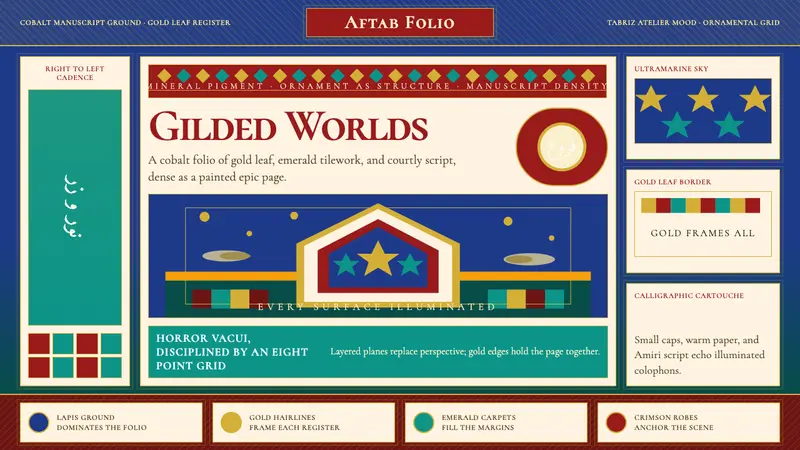 Persian Miniature (Shahnameh era)Manuscript luxury turns maximal. Cobalt ground, gold borders, and Cormorant SC fill every inch.
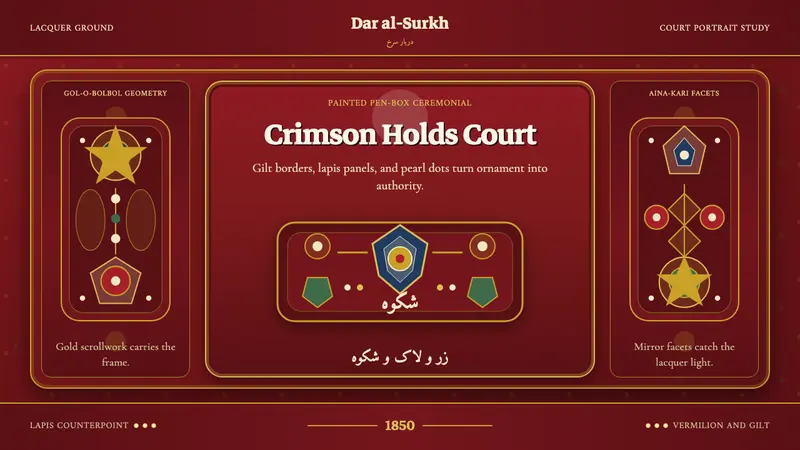 Qajar PersiaOpulence commands. Lacquer red, gilt borders, pearl dots, and lapis geometry.
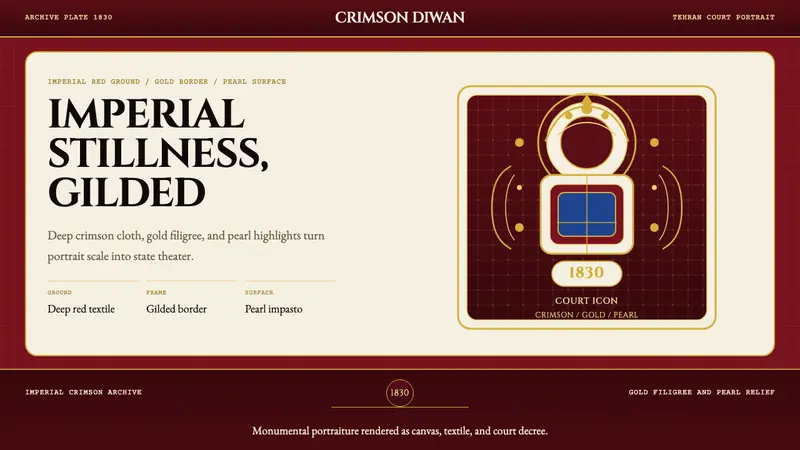 Persian Qajar Portrait (1830)Imperial stillness, gilded. Deep crimson, gold filigree, and pearl accents stage a royal icon.
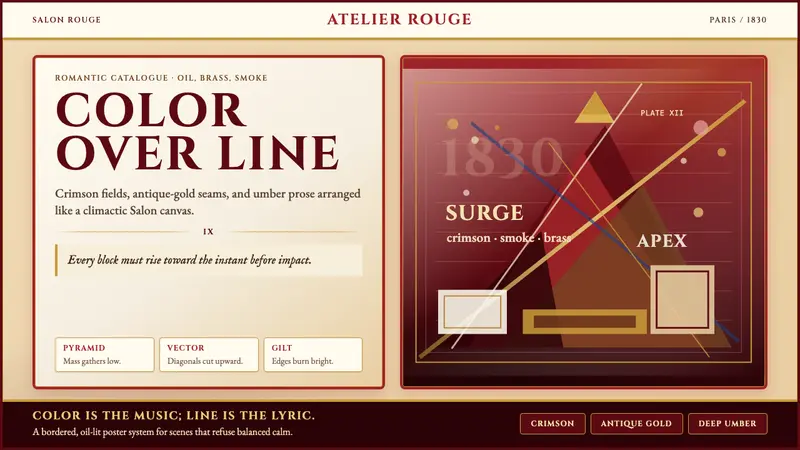 Delacroix French RomanticismOperatic color erupts. Crimson parchment, gilt borders, and diagonal pyramids force climax.