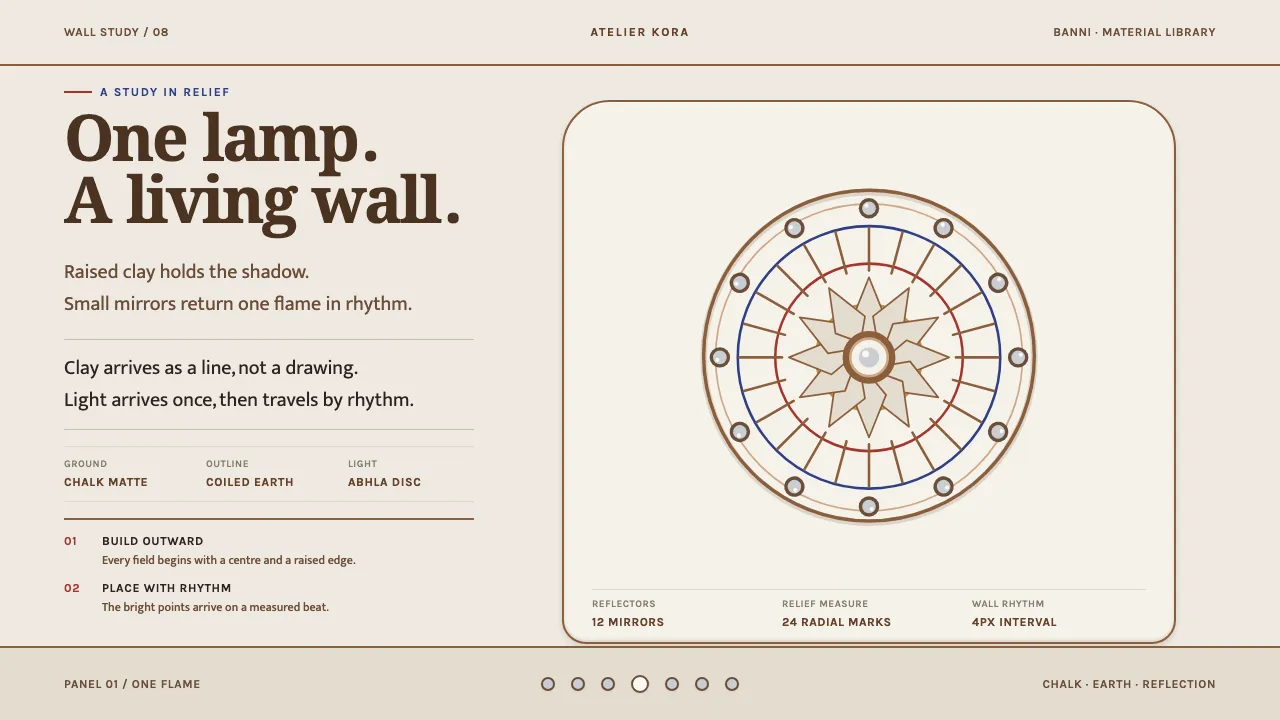
About Lippan Kaam
Lippan kaam is built, not drawn. Rabari, Mutwa and Meghwal women roll clay and dung into ropes, coil them into peacocks, camels, trees and lattice on the curved inner walls of a bhunga, then finish ground and relief alike in white clay until the whole room reads as one chalk-matte skin.
Small round mirrors — abhla — go into the wet clay while it still takes an impression. A windowless room lit by one oil lamp comes alive from them. The design language that follows is the same: raised outlines, radiating centres, and bright discs placed on a rhythm rather than scattered.
- Origin
- Kutch, Gujarat, India — the Banni grasslands and the villages around Bhuj
- Era
- Living vernacular tradition, documented for well over a century and still practised
- Key figures
- Rabari women of Banni · Mutwa women of Banni · Meghwal women of Banni
- Movements
- Kutchi vernacular architecture · Indian mud-relief and mirror-work craft · Banni embroidery
Lippan Kaam design spec
Colors
Typography
The other 11 sections — buttons, cards, spacing, motion, techniques and more — open once you unlock. Download the DESIGN.md or send it to your AI in one click. Unlock once, yours forever.
Sign up nowStyles similar to Lippan Kaam
Also inspired by crafts & folk art, with a close feel.
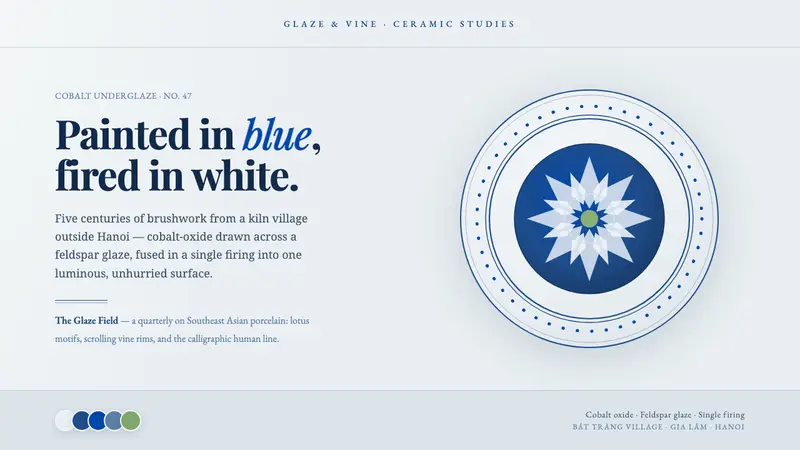 Bát Tràng Ceramic BlueCobalt brushed on glaze white. Muted underglaze blue, double-line plate rims, Playfair serif calm.
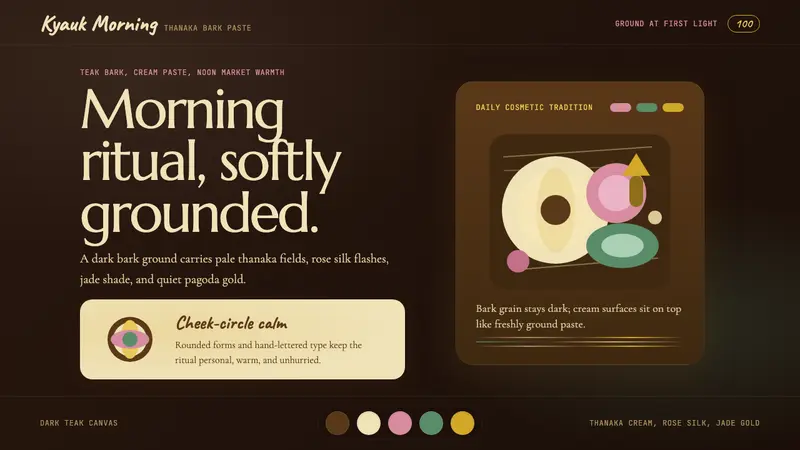 Burmese Shan Thanaka (Bark Paste)Handmade warmth on dark bark. Thanaka cream roundels soften rose, jade, and gold accents.
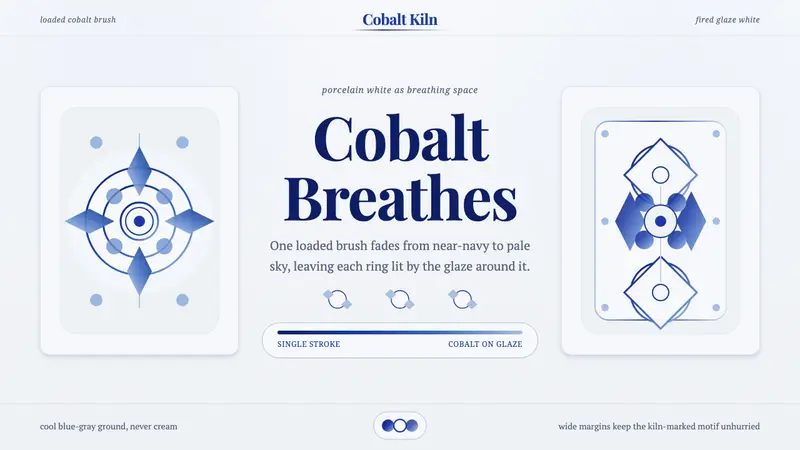 Gzhel Blue PorcelainPorcelain breathes. Cobalt gradients bloom across cool glaze-white space.
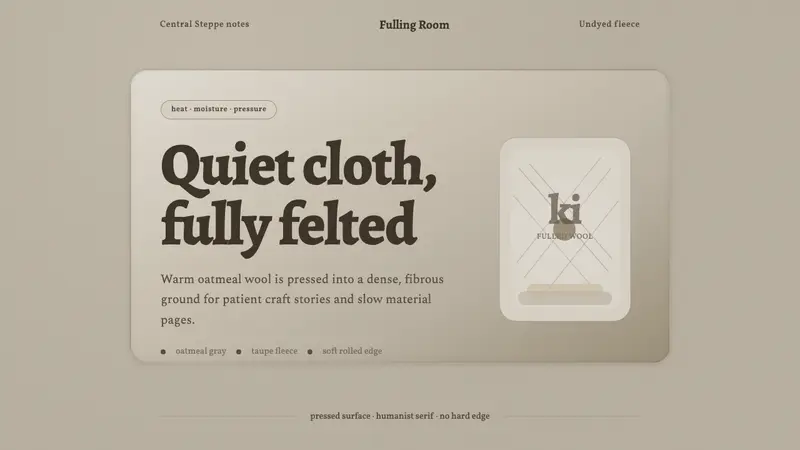 Wool FeltingHandmade stillness. Oatmeal-gray felt, humanist serifs, and soft rolled panels.