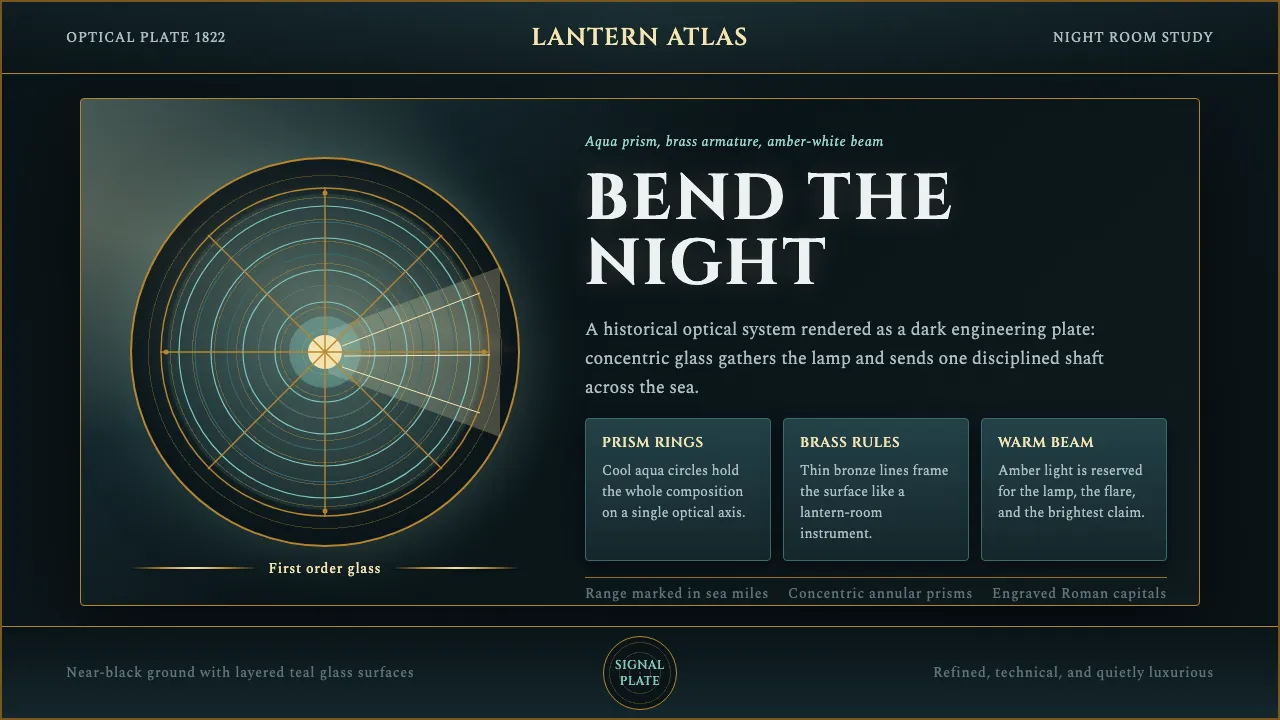
About Fresnel Lighthouse Lens
The Fresnel lens turned a feeble flame into a beam visible twenty miles out to sea. Augustin-Jean Fresnel's 1822 invention collapsed a solid lens into concentric prism rings around a central bullseye — a beehive of cut glass cradled in brass, each ring bending stray light back into a single shaft.
This system lives inside that lantern room at night. The ground is near-black; the optical glass glows aqua-green from its iron content, the brass armature catches a bronze gleam, and a warm amber-white beam cuts the dark. Refined Roman-capital titling and engraver's body type frame it like a 19th-century optical plate.
- Origin
- Western Europe (France; adopted worldwide for lighthouses)
- Era
- invented 1822 by Augustin-Jean Fresnel; pre-1900 optical engineering
- Key figures
- Augustin-Jean Fresnel
- Movements
- 19th-century optical engineering · maritime navigation technology
Fresnel Lighthouse Lens design spec
Colors
Typography
The other 11 sections — buttons, cards, spacing, motion, techniques and more — open once you unlock. Download the DESIGN.md or send it to your AI in one click. Unlock once, yours forever.
Sign up nowStyles similar to Fresnel Lighthouse Lens
Also inspired by science & nature, with a close feel.
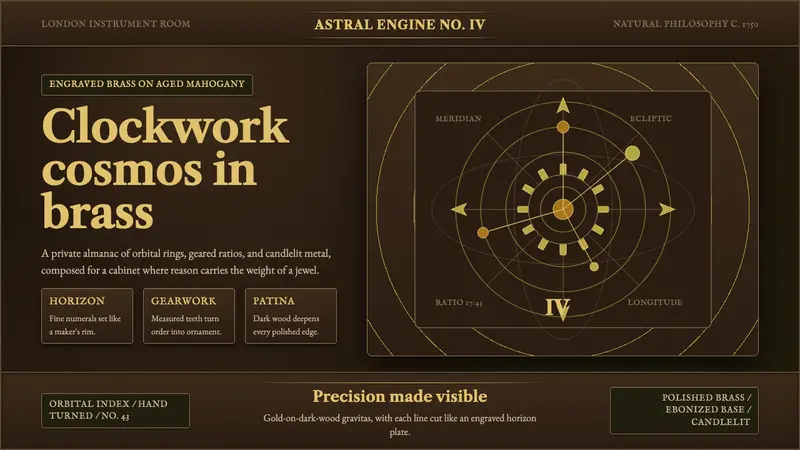 Brass OrreryTurns reason into gold. Brass rings and Caslon type glow over near-black mahogany.
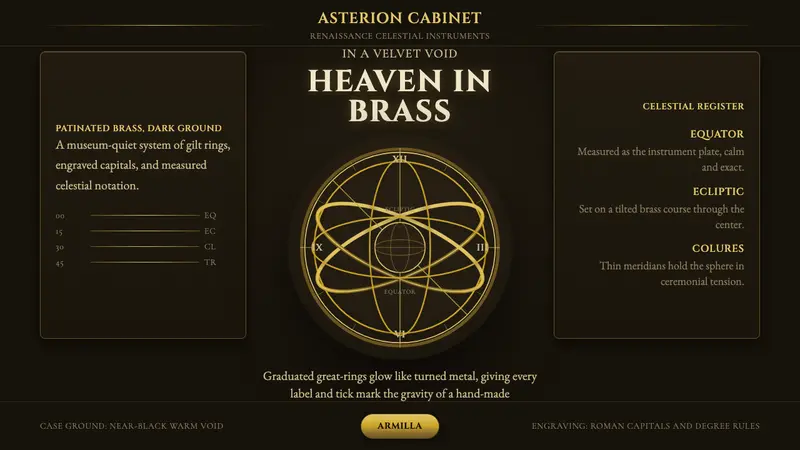 Armillary SphereMuseum darkness makes brass celestial. Cinzel capitals and concentric gold rings glow.
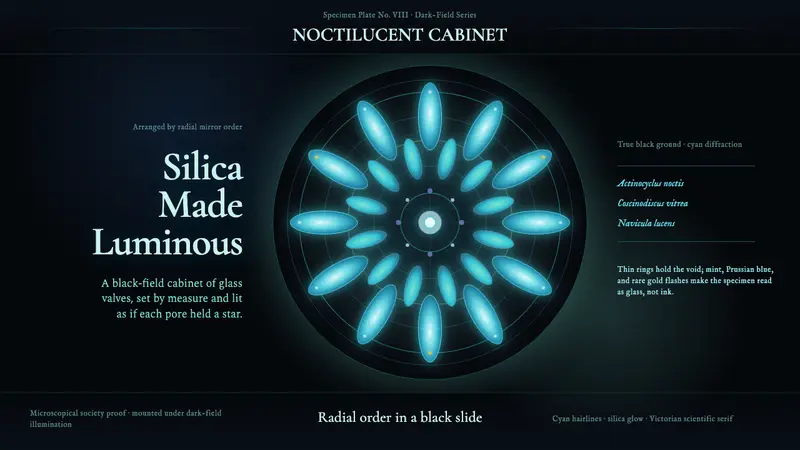 Diatom ArrangementDark-field order. Cyan and mint rosettes glow inside Victorian hairline rings.
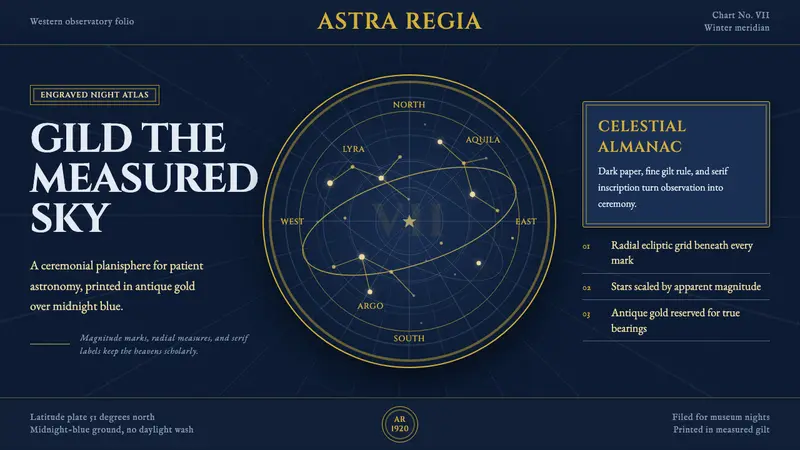 Vintage Star ChartScholarly night, gilded. Cinzel caps orbit gold grids and magnitude stars.