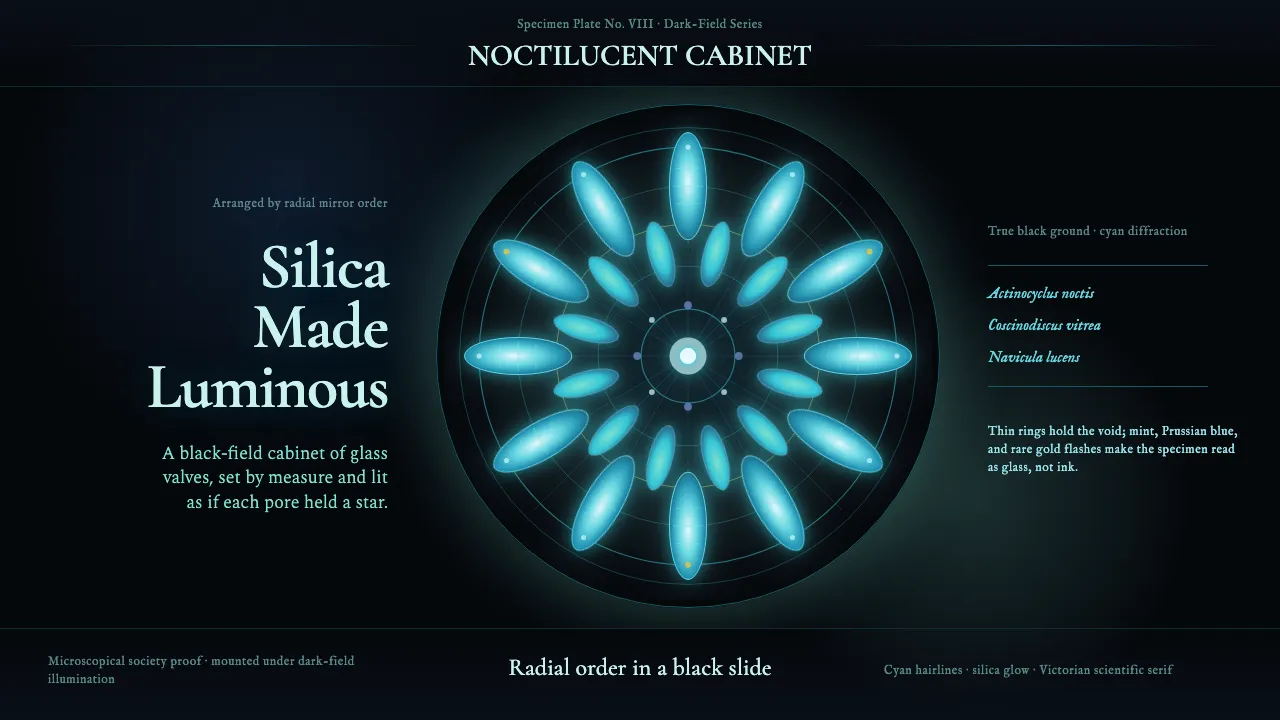
About Diatom Arrangement
Diatom Arrangement is drawn from the lost Victorian craft of mounting single-celled algae — their glass-like silica shells, or frustules — into perfectly symmetric rosettes on a single microscope slide. Under dark-field illumination the ground is a true black void and the valves glow from within, their finely spaced pores acting as a diffraction grating that throws off structural iridescence in cyan, Prussian blue, mint, and the occasional gold.
This system inherits that logic exactly: a near-black field, radially mirror-symmetric jewel-like compositions, and refined period scientific serifs. Forms are luminous on black, spaced with mathematical precision, and framed by thin concentric rings — never flat clip-art, never the white ground of bright-field microscopy.
- Origin
- Western Europe (Britain & Germany — the microscopical societies)
- Era
- c. 1850–1900 (peak Victorian microscopy; revived by Klaus Kemp)
- Key figures
- Klaus Kemp · J. D. Möller · Victorian slide mounters
- Movements
- Victorian natural-history microscopy · Dark-field illumination · Microscopical-society slide culture
Diatom Arrangement design spec
Colors
Typography
The other 11 sections — buttons, cards, spacing, motion, techniques and more — open once you unlock. Download the DESIGN.md or send it to your AI in one click. Unlock once, yours forever.
Sign up nowStyles similar to Diatom Arrangement
Also inspired by science & nature, with a close feel.
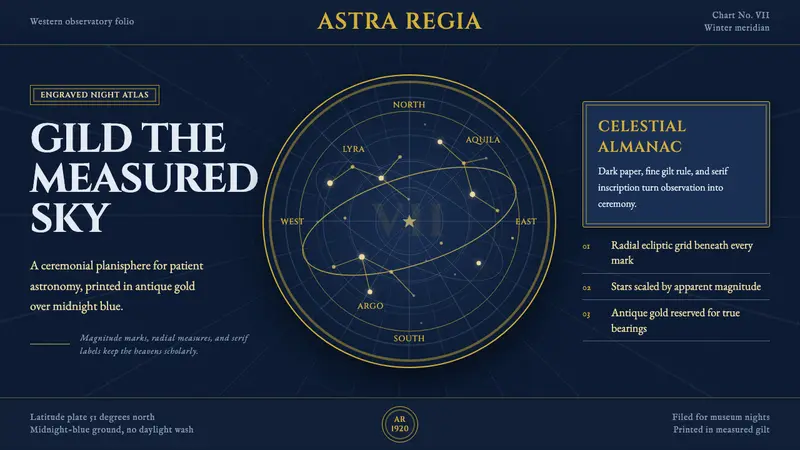 Vintage Star ChartScholarly night, gilded. Cinzel caps orbit gold grids and magnitude stars.
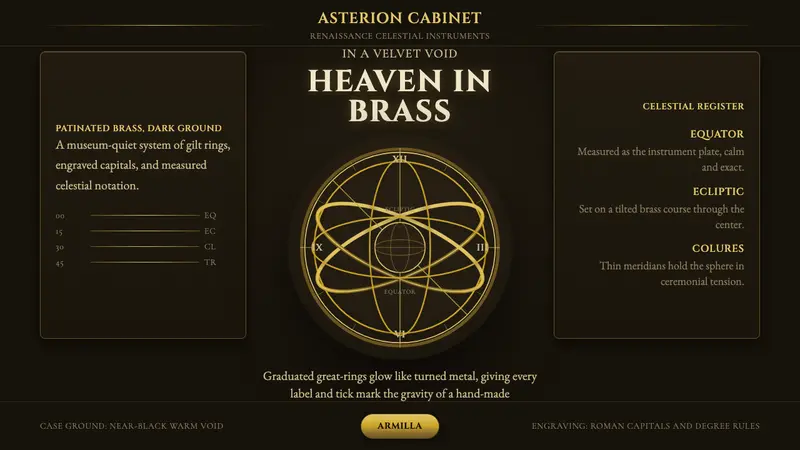 Armillary SphereMuseum darkness makes brass celestial. Cinzel capitals and concentric gold rings glow.
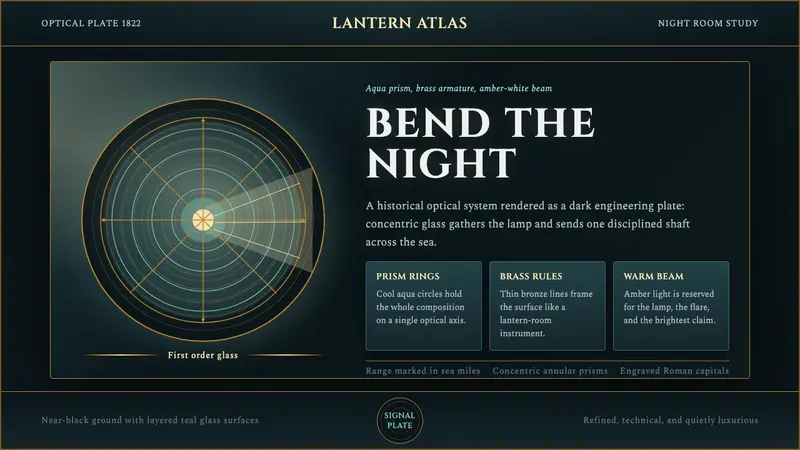 Fresnel Lighthouse LensPrecision cuts the dark. Aqua rings, brass rules, and an amber beam define the plate.
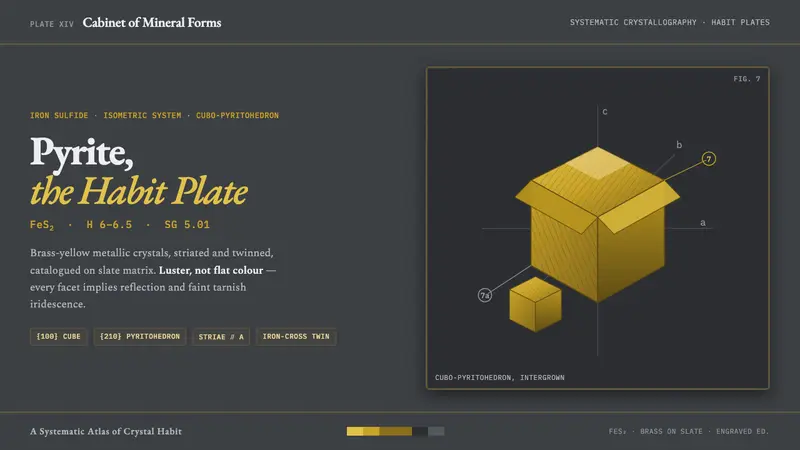 Pyrite Crystal HabitFool's gold under the loupe. Striated brass pyritohedra on slate, serif names, monospaced indices.