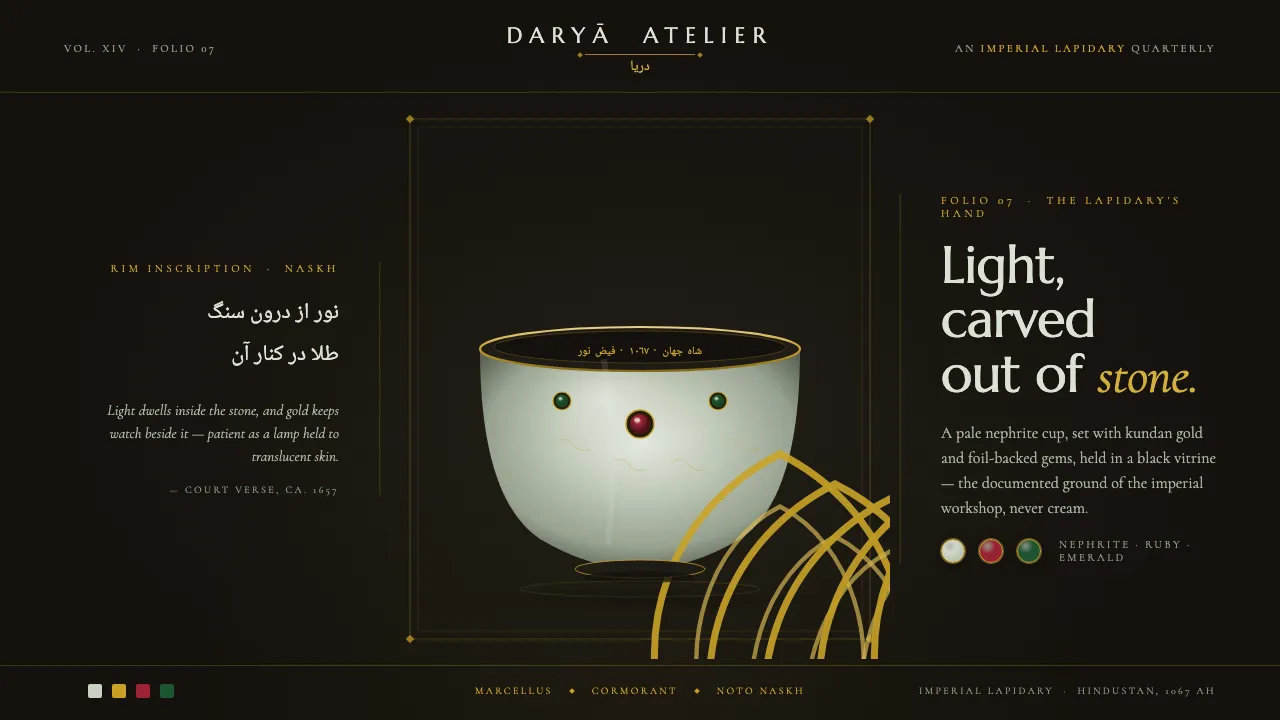
About Mughal Jade Carving
Mughal court jade is pale luminous nephrite — like Shah Jahan's 1657 wine cup — carved into floral relief and photographed against a black museum ground that reveals its translucent "mutton-fat" body. Gold strips and foil-backed rubies and emeralds are inset by the kundan technique, with court Naskh inscriptions running along the rims.
This design system distills that refined, jewel-set object into digital form: a deep black gallery ground, a pale grey-green stone that glows from within, gold hairline accents, and dual-script serif-and-Naskh headers that honor the imperial workshop.
- Origin
- South Asia — Mughal court workshops, Hindustan
- Era
- pre-1900 (Mughal India, 17th century; peak: Shah Jahan reign 1628–1658)
- Key figures
- Shah Jahan · Mughal imperial lapidaries · Indo-Persian court calligraphers
- Movements
- Shah Jahan-era imperial lapidary arts · Kundan gem-setting · Indo-Persian court calligraphy
Mughal Jade Carving design spec
Colors
Typography
The other 11 sections — buttons, cards, spacing, motion, techniques and more — open once you unlock. Download the DESIGN.md or send it to your AI in one click. Unlock once, yours forever.
Sign up nowStyles similar to Mughal Jade Carving
Also inspired by crafts & folk art, with a close feel.
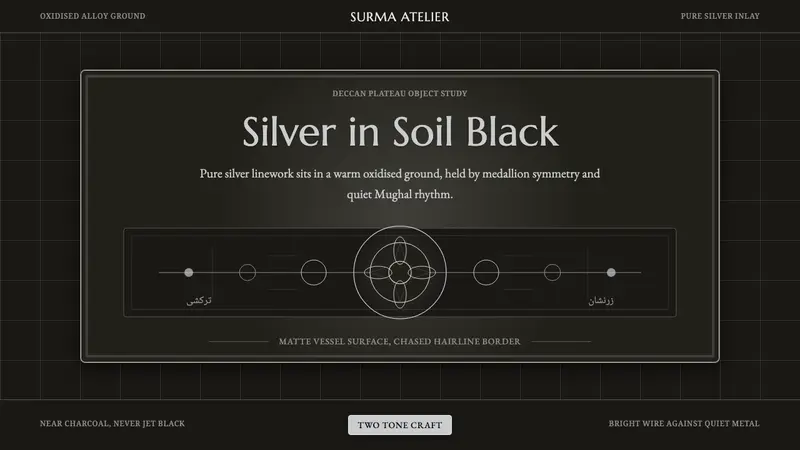 Bidar Bidriware VesselsSoil-black luxury. Crisp silver medallions and hairline borders cut the warm charcoal field.
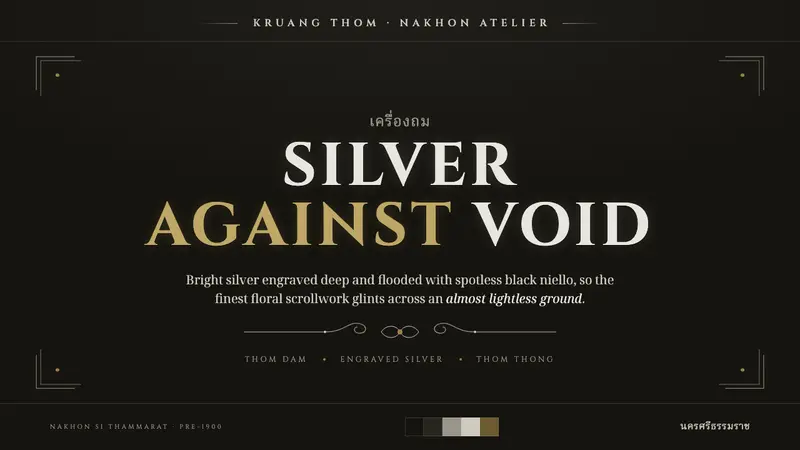 Thai NiellowareSpotless black, one bright line. Silver scrollwork engraved into near-lightless niello, gold rare.
 Kintsugi & Urushi LacquerBreakage becomes ceremony. Urushi black-brown carries gold seams and asymmetric type.
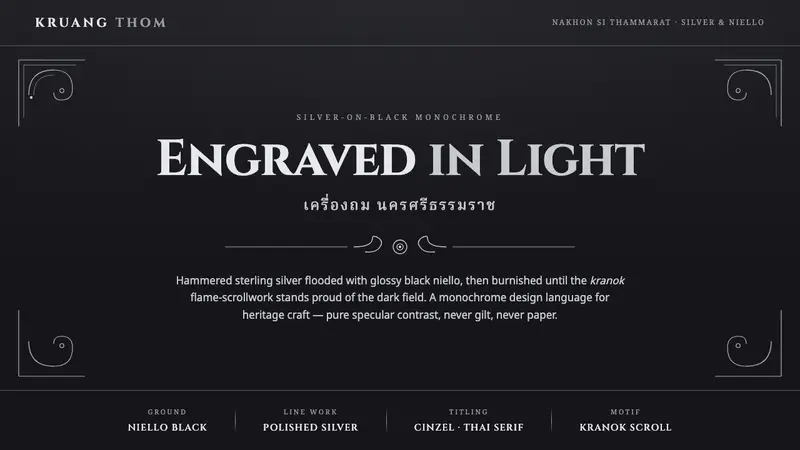 Thai Nielloware ThomSilver-on-black, never gilt. Polished kranok scrollwork glints proud of a glossy niello field.