About Icelandic Turf House
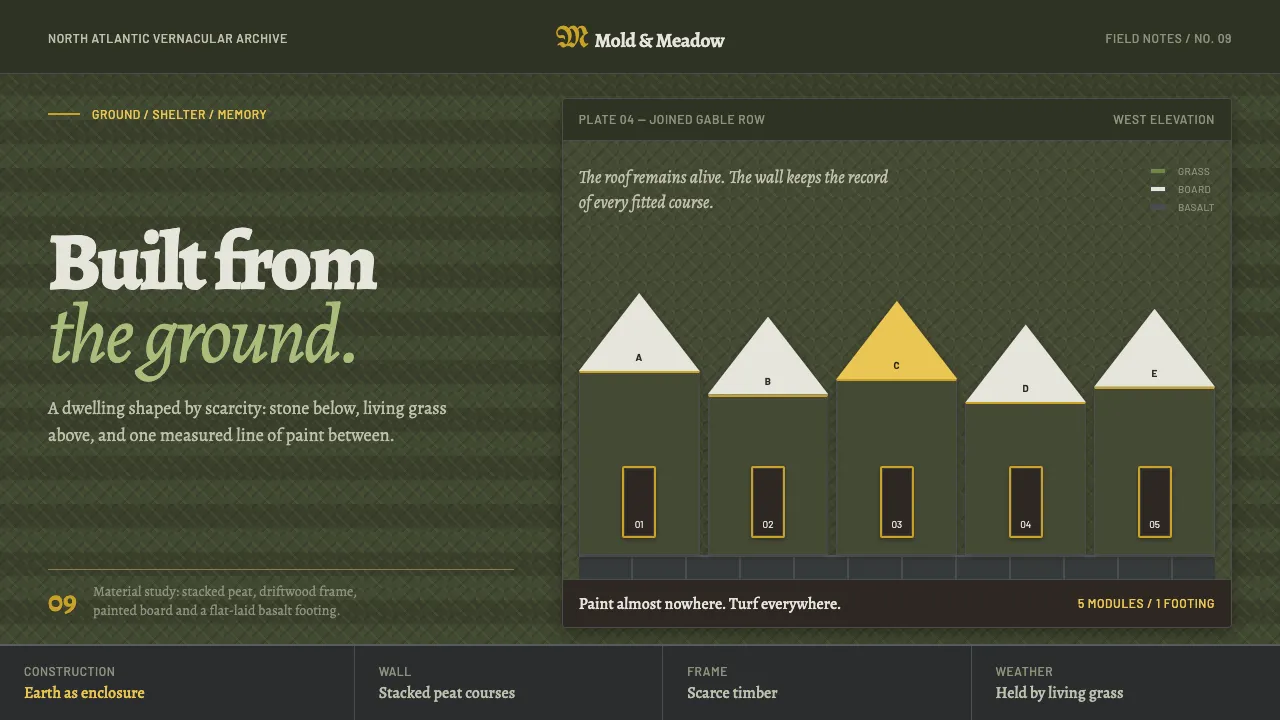
The torfbær is built from what the site gives. Basalt is laid flat for a footing, driftwood and imported timber make the frame, and stacked peat turf — clamped blocks, plain blocks, long strips, often coursed in herringbone — is fitted around it. The grass on the roof keeps growing, so the house reads as a swelling of the hillside rather than an object on it.
In the burstabær type the only wood you see from outside is the row of painted gable ends and the door. Every piece of ornament the farm allowed itself lives there: an off-white board, a warm yellow frame. This system keeps that ratio — turf everywhere, paint almost nowhere.
- Origin
- Iceland — Skagafjörður, Þjórsárdalur, Laufás, Árbær
- Era
- pre-1900; Glaumbær's kitchen and pantry mid-18th century, newest buildings 1879
- Key figures
- Glaumbær farm households · Icelandic turf masters · National Museum of Iceland
- Movements
- Nordic vernacular building · burstabær gable-row type · UNESCO tentative-list turf house tradition
Icelandic Turf House design spec
Colors
Typography
The other 11 sections — buttons, cards, spacing, motion, techniques and more — open once you unlock. Download the DESIGN.md or send it to your AI in one click. Unlock once, yours forever.
Sign up nowStyles similar to Icelandic Turf House
Also inspired by architecture & places, with a close feel.
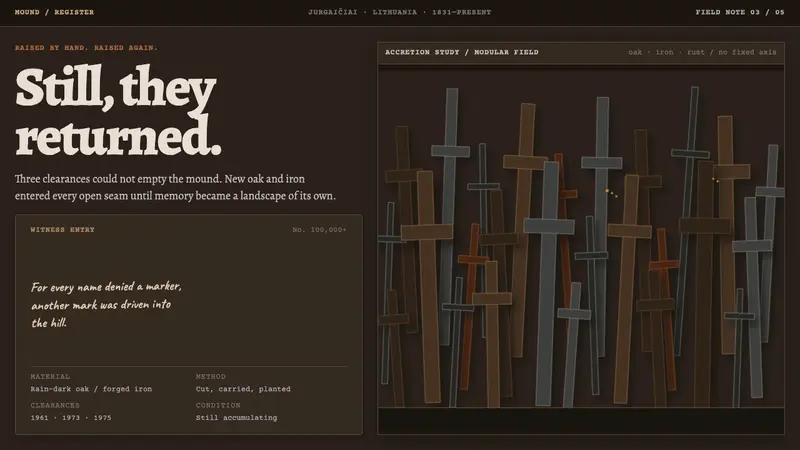 Hill of CrossesMemory returns by hand. Rain-black oak and rusted iron overlap until density becomes defiance.
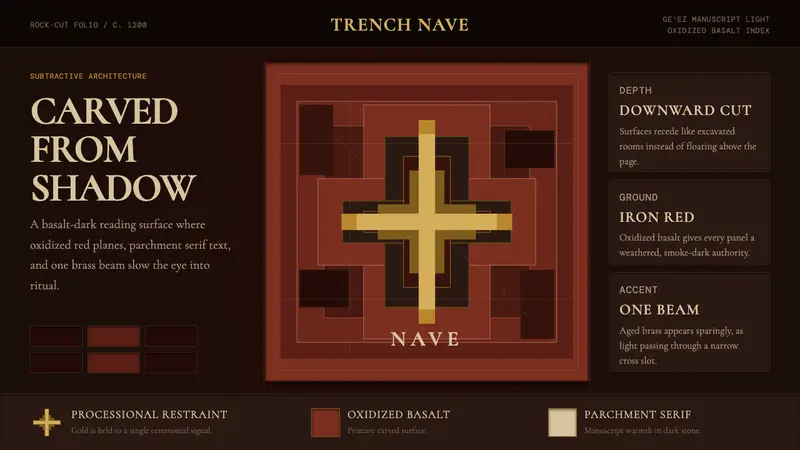 Ethiopian Lalibela Rock-Hewn Church (c.1200)Sacred weight in shadow. Oxidized basalt, parchment serif, and one aged-gold cross beam.
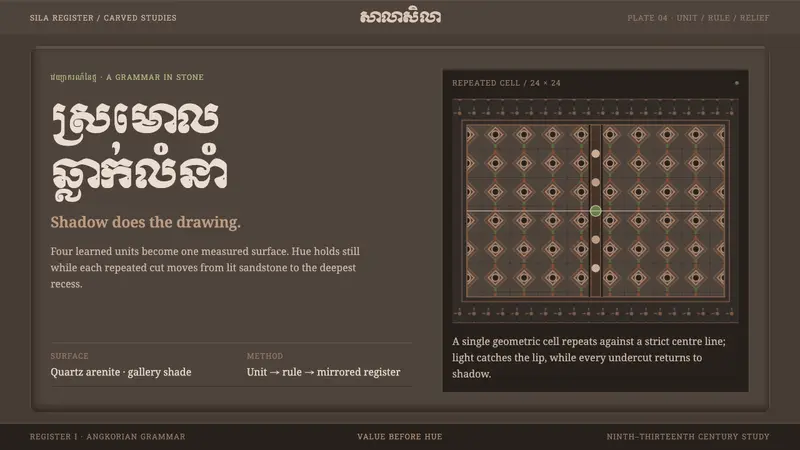 Khmer Kbach MotifShadow carves the grammar. Repeated stone cells turn a narrow sandstone palette into relief.
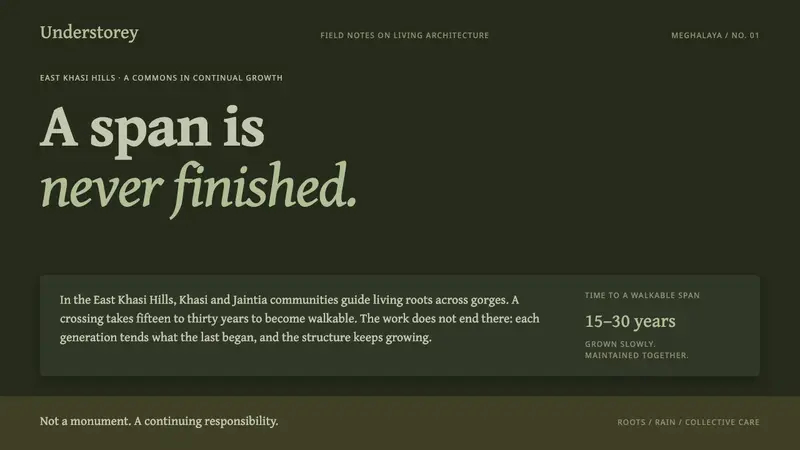 Khasi Living Root BridgeStill growing, never finished. Moss-green serif and layered dark decks carry a slower sense of time.