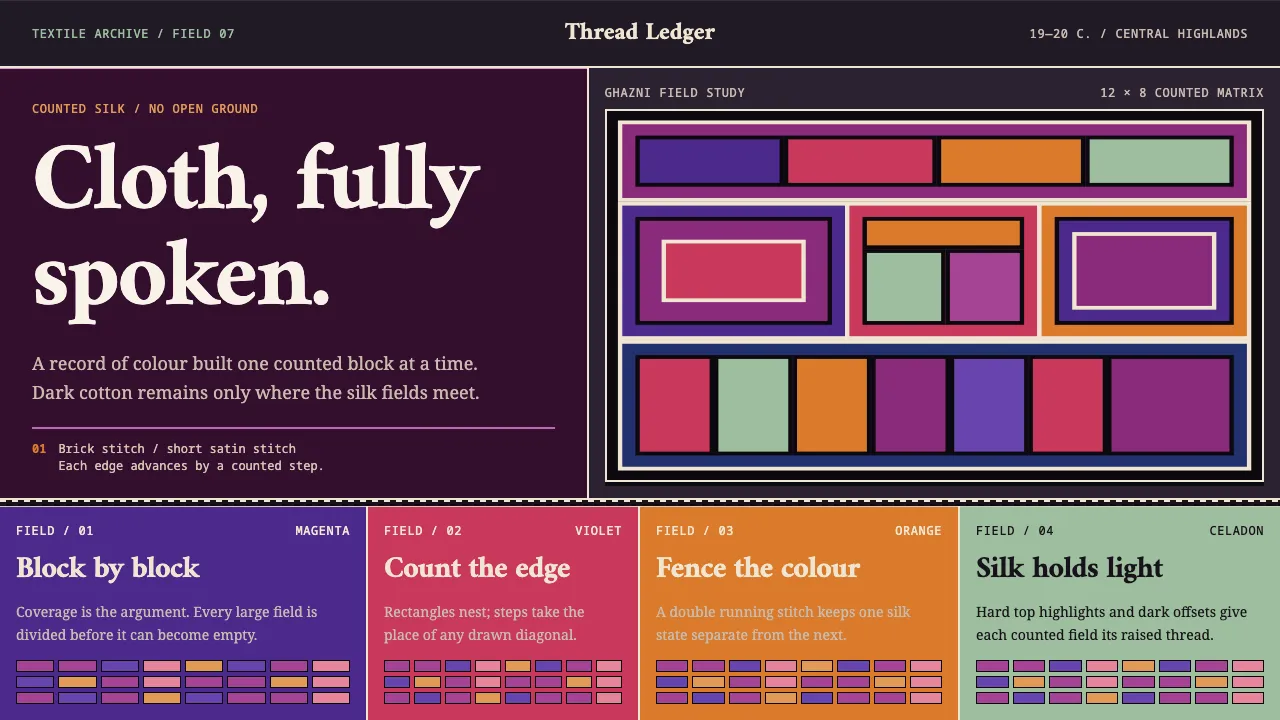
About Hazara Embroidery
Hazara women embroider a plain cotton ground in brick stitch and short satin stitch until the cloth beneath disappears. Shapes are counted, not drawn: lozenges, chevrons, chequerboards and stepped triangles built block by block, every edge a staircase of threads.
This system takes that discipline literally. The dark ground is never open field — it survives as the thin lattice between silk blocks. Colour changes mark state; a black-and-white double running stitch divides one field from the next. Nothing is left empty, and nothing curves.
- Origin
- Hazarajat, central Afghanistan — Bamiyan, Ghazni, Daykundi
- Era
- 19th to early 20th century; continuing as living practice
- Key figures
- Gillian Vogelsang-Eastwood · Textile Research Centre Leiden · SOAS University of London
- Movements
- khamak and tarshoamar counted-thread silk work · Ghazni and Bamiyan regional schools · Central Asian dowry and festival textile traditions
Hazara Embroidery design spec
Colors
Typography
The other 11 sections — buttons, cards, spacing, motion, techniques and more — open once you unlock. Download the DESIGN.md or send it to your AI in one click. Unlock once, yours forever.
Sign up nowStyles similar to Hazara Embroidery
Also inspired by crafts & folk art, with a close feel.
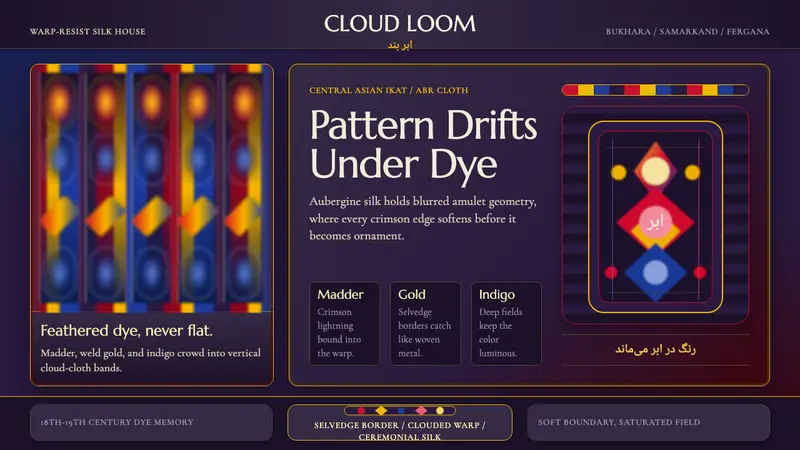 Central Asian IkatMaximal silk haze. Madder, gold, and indigo warp bands feather across aubergine.
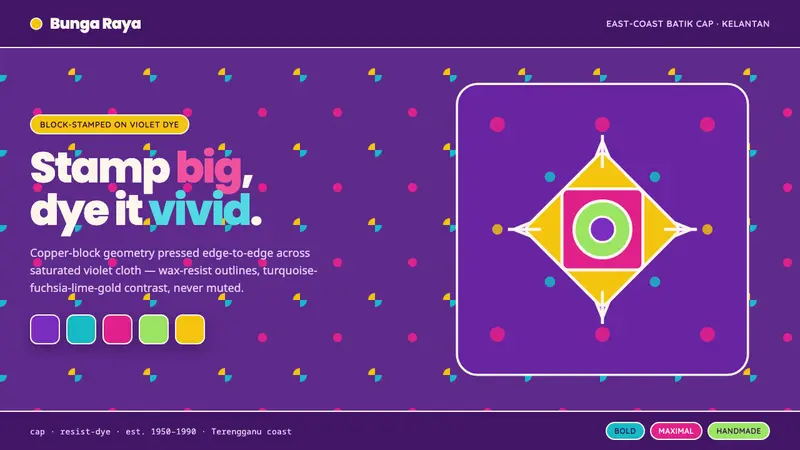 Kelantan Block BatikBright Malay batik, not Javanese brown. Oversized hibiscus stamped turquoise-fuchsia-gold on violet.
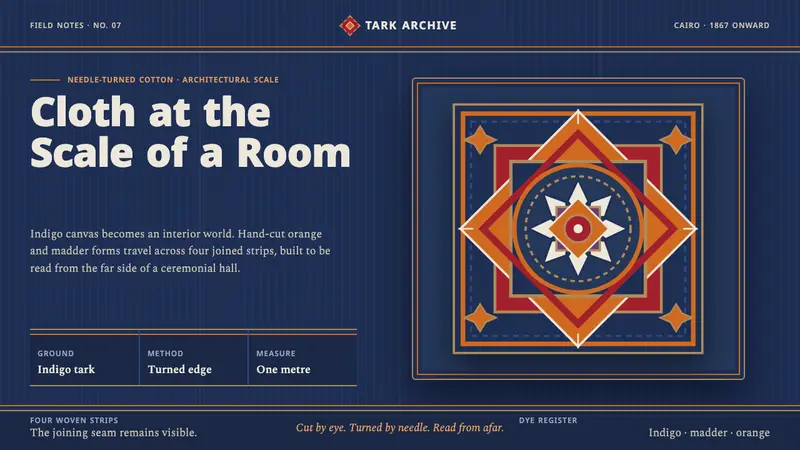 Khayamiya Tentmaker AppliquéCloth becomes architecture. Indigo canvas holds monumental orange and madder appliqué.
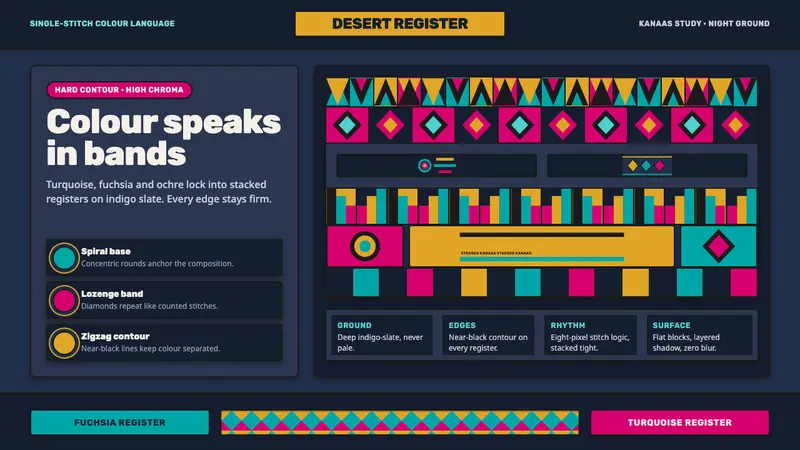 Wayuu Mochila CrochetColour speaks in bands. Turquoise, fuchsia and ochre stack on indigo-slate.