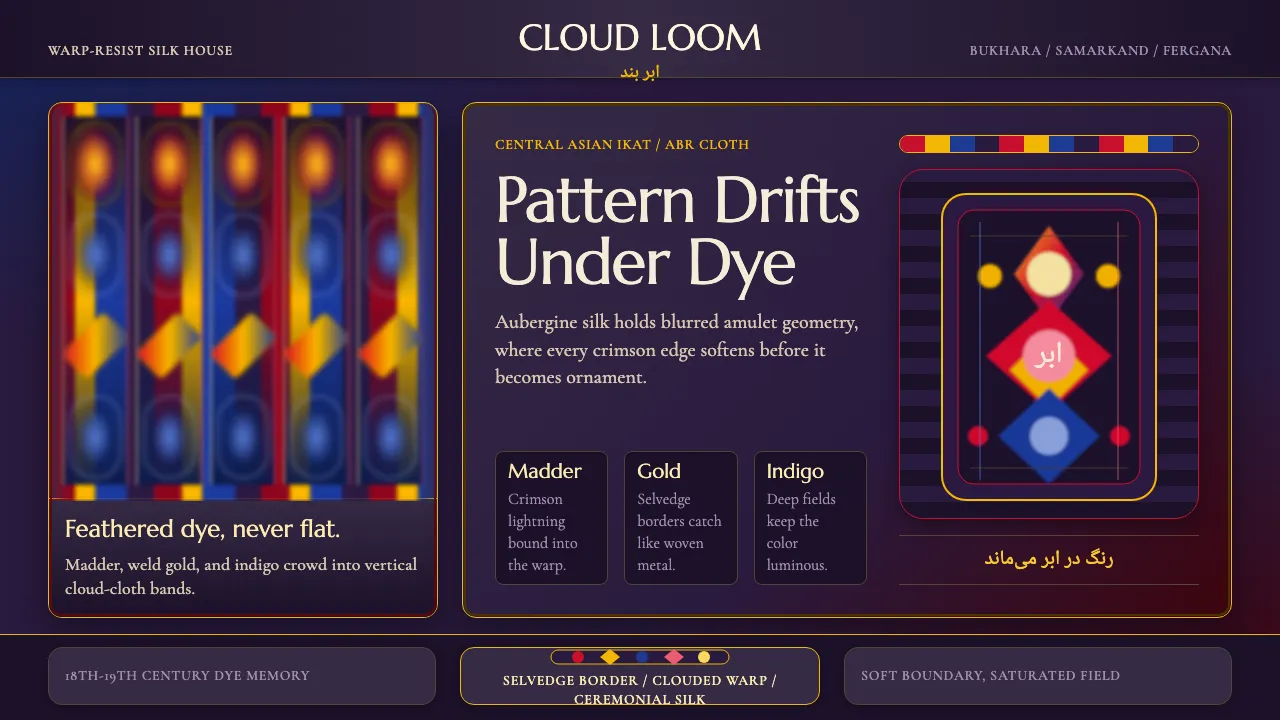
About Central Asian Ikat
Central Asian ikat — abr, "cloud cloth" — is the warp-resist silk of 18th–19th century Bukhara and Samarkand, where dyers bound and dipped bundles of thread before a single weft ever touched the loom. The dye never lands cleanly: every motif blooms with a feathered, blurred edge, as if the pattern were drifting underwater.
This system is built on that blur. Madder crimson, golden yellow, and deep indigo crowd together in vertical warp bands across an aubergine ground, carrying the lightning-bolt, pomegranate, and amulet shapes worn on flowing chapan robes. It is unapologetically maximal — saturated, kaleidoscopic, and soft at every boundary.
- Origin
- Central Asia — Bukhara, Samarkand, Fergana Valley (Uzbekistan / Tajikistan)
- Era
- pre-1900 (Central Asian ikat peak 18th–19th c.)
- Key figures
- Bukhara silk dyers · Margilan abrband masters · Uzbek-Tajik ikat weavers
- Movements
- ikat (abr) resist-dye weaving · Silk Road textiles · Central Asian decorative arts
Central Asian Ikat design spec
Colors
Typography
The other 11 sections — buttons, cards, spacing, motion, techniques and more — open once you unlock. Download the DESIGN.md or send it to your AI in one click. Unlock once, yours forever.
Sign up nowStyles similar to Central Asian Ikat
Also inspired by crafts & folk art, with a close feel.
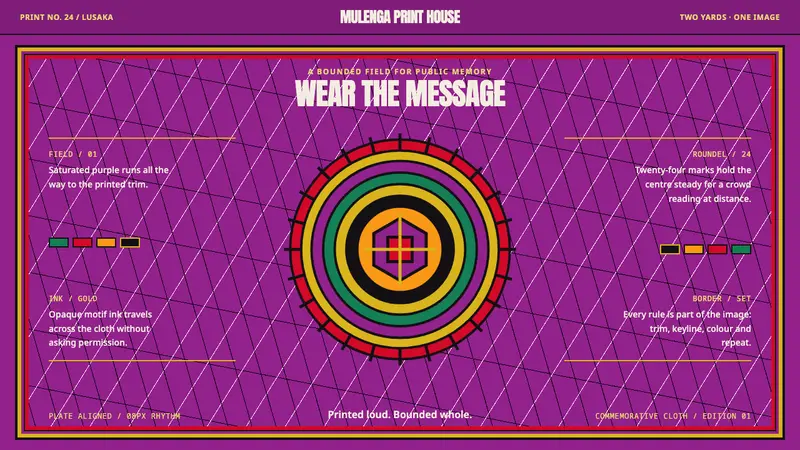 Zambian ChitengePublic memory refuses to whisper. Gold roundels and flag blocks strike across a bounded purple cloth.
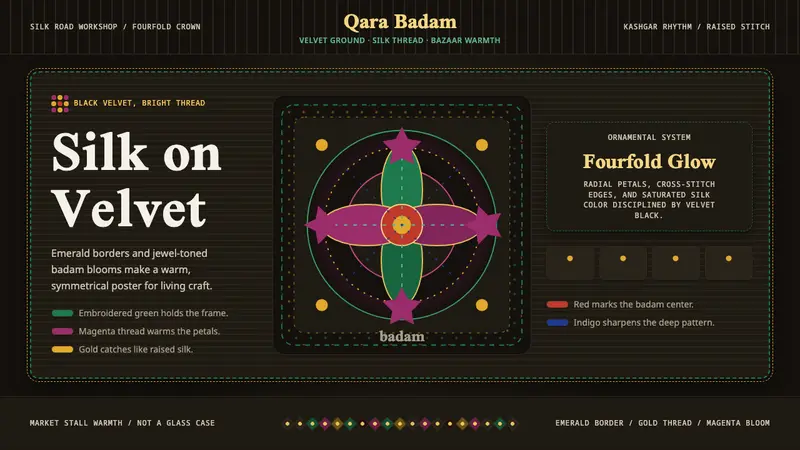 Uyghur Kashgar DoppaVelvet carries the blaze. Emerald borders, gold thread, and badam symmetry glow on black.
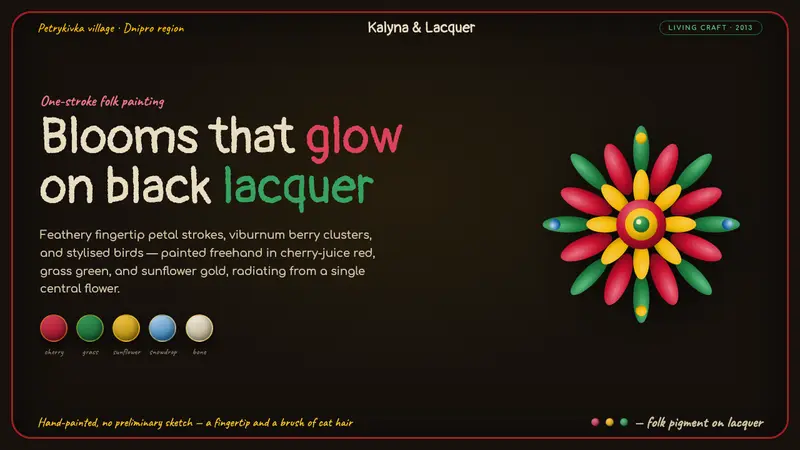 Petrykivka Folk PaintingFolk maximalism that glows. One-stroke red-green-gold blooms radiate from a center on black lacquer.
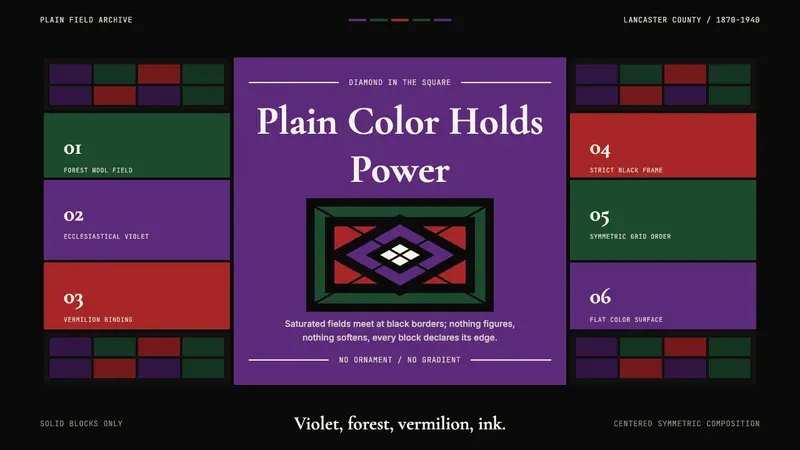 Amish Pennsylvania Quilt Bold GeometricRadical plainness. Violet, forest, and vermilion blocks lock into ink-black quilt geometry.