About Hausa Babban Riga
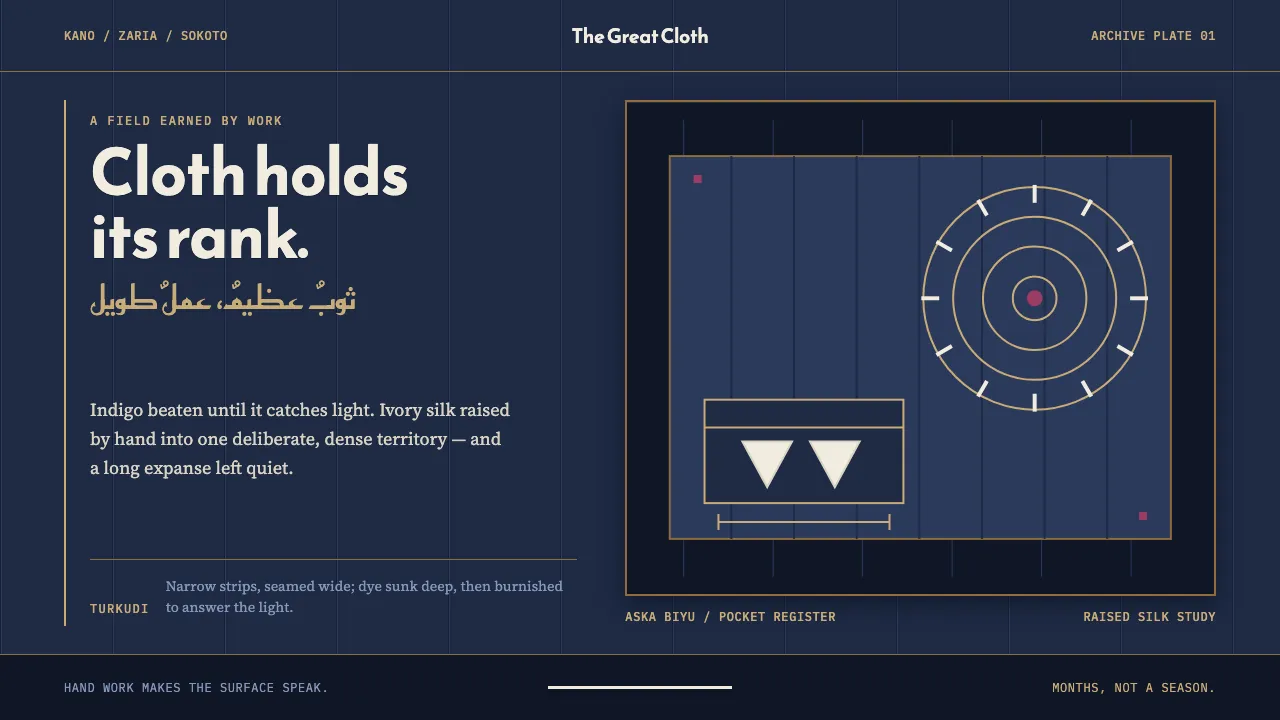
The babban riga is the great gown of Hausaland: cotton woven by men in narrow strips on horizontal treadle looms, seamed into a body over two metres wide, sunk in the Kano dye pits until the indigo will take no more, then beaten with a mallet until the surface answers light like hammered copper.
On that ground sits the work — `aska biyu`, two knives, paired triangles pointing down across the front pocket, with spirals turning tighter front-right and centre-back. Raised silk, couched by hand, several people, several months. This system keeps that order: dark burnished field, one dense worked zone, long quiet cloth elsewhere.
- Origin
- Hausaland — Kano, Zaria and Sokoto, northern Nigeria and southern Niger
- Era
- 19th century into the mid-20th century, on a much older Sudanic tradition
- Key figures
- Usman dan Fodio · Muhammadu Bello · Heinrich Barth · Philip J. Shea
- Movements
- Sokoto Caliphate court dress · Kano indigo pit-dyeing · trans-Saharan silk trade
Hausa Babban Riga design spec
Colors
Typography
The other 11 sections — buttons, cards, spacing, motion, techniques and more — open once you unlock. Download the DESIGN.md or send it to your AI in one click. Unlock once, yours forever.
Sign up nowStyles similar to Hausa Babban Riga
Also inspired by crafts & folk art, with a close feel.
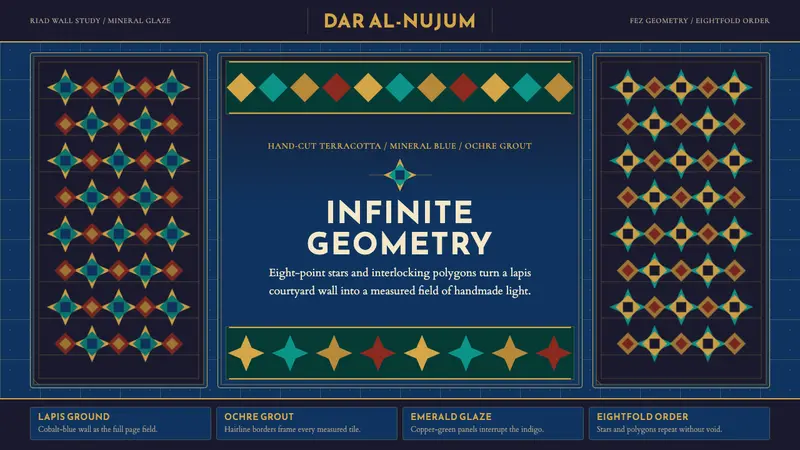 Moroccan Zellige TileLuxurious geometry without void. Lapis ground, ochre borders, and eight-point stars tessellate.
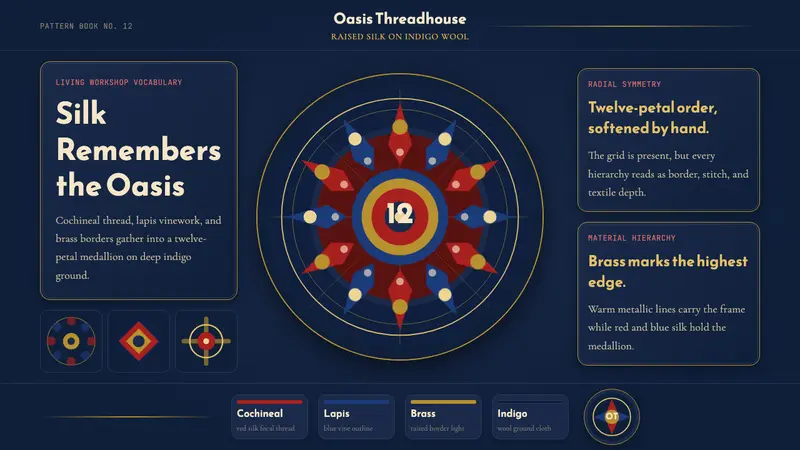 Uyghur Xinjiang Suzani EmbroiderySilk glows like memory. Cochineal and lapis medallions orbit brass on indigo wool.
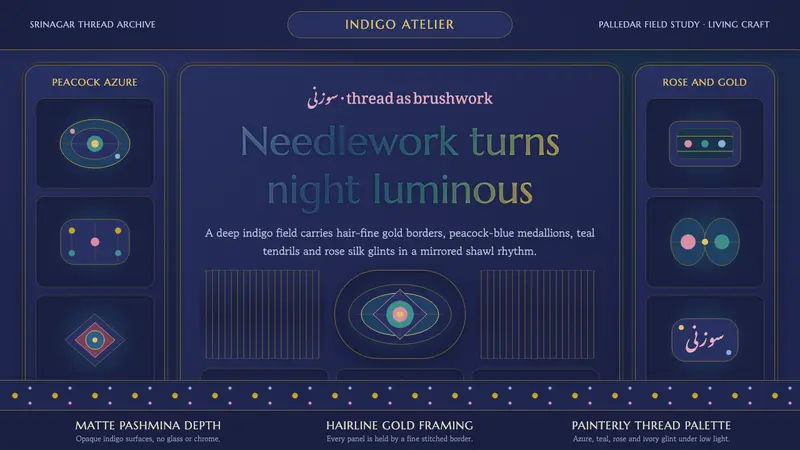 Kashmiri Sozni Shawl EmbroideryNight made luminous. Indigo ground, gold hairlines and silk medallions stitch the frame.
 Omani Khanjar Silver DaggerFormal craft gleams. Silver hairlines and seven-ring rhythm rest on indigo cloth.