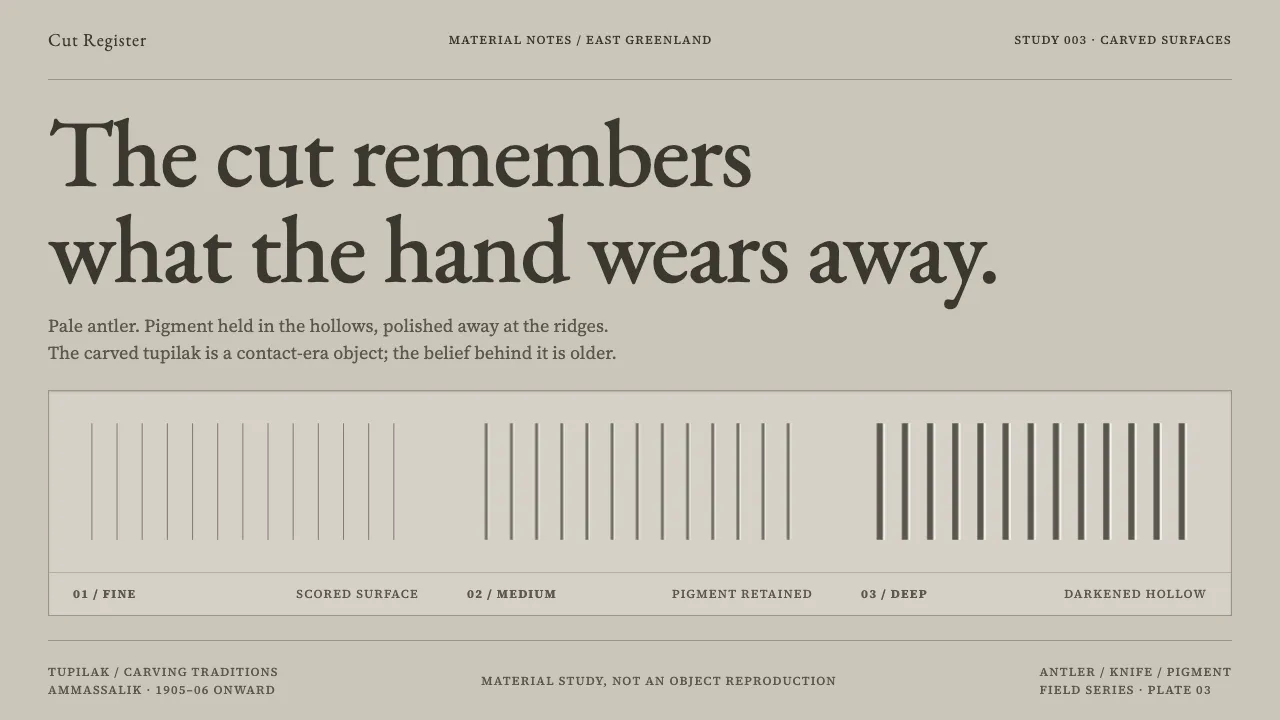
About Greenlandic Tupilak
A tupilak was never meant to be seen. It was assembled from animal and human parts, animated by ritual, and sent after an enemy — and it turned on its maker if the enemy was stronger. The thing you can hold is younger than that: when William Thalbitzer asked at Ammassalik in 1905–06, the shaman Mitsivarniannga carved him three, because the real one could not be handed over.
So the visual language is carving, not myth. Antler, sperm-whale tooth, walrus ivory, soapstone, driftwood — pale material cut with a knife and rubbed with dark pigment that stays in the grooves and wears off wherever a hand has held it. Grimacing mouth, coiled body, limbs fused between animal and person. Small objects, described in accession lines.
- Origin
- East Greenland — Ammassalik / Tasiilaq
- Era
- pre-1900 shamanic belief; the carved object from 1905–06 European contact onward
- Key figures
- Mitsivarniannga · William Thalbitzer
- Movements
- Inuit shamanic practice · Arctic ethnographic collecting · souvenir-carving trade
Greenlandic Tupilak design spec
Colors
Typography
The other 11 sections — buttons, cards, spacing, motion, techniques and more — open once you unlock. Download the DESIGN.md or send it to your AI in one click. Unlock once, yours forever.
Sign up nowStyles similar to Greenlandic Tupilak
Also inspired by crafts & folk art, with a close feel.
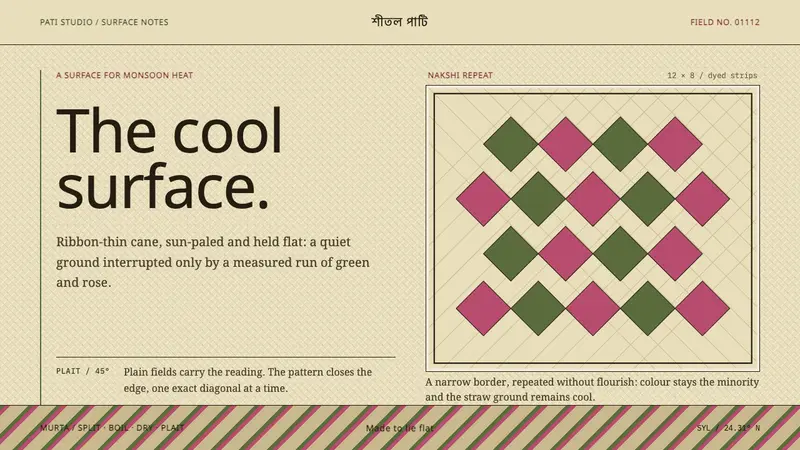 Sylheti Shital PatiCoolness lies flat. Pale straw fields hold cane-green and rose diamond repeats.
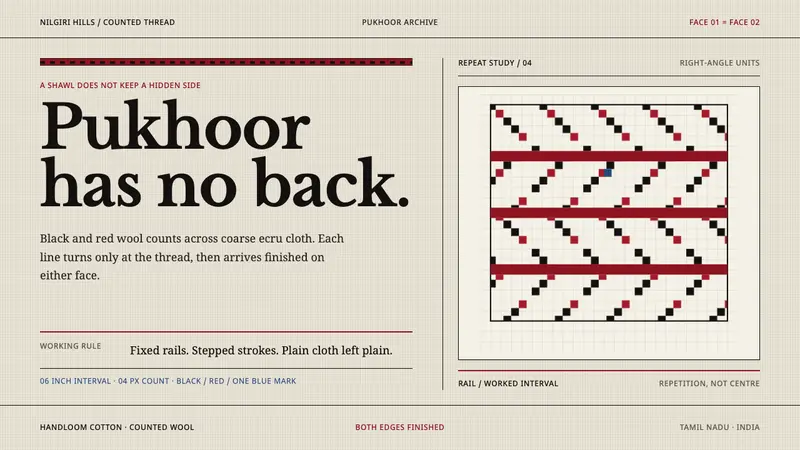 Toda PukhoorNo hidden side. Black-red stepped wool repeats across ecru rails, finished front and back.
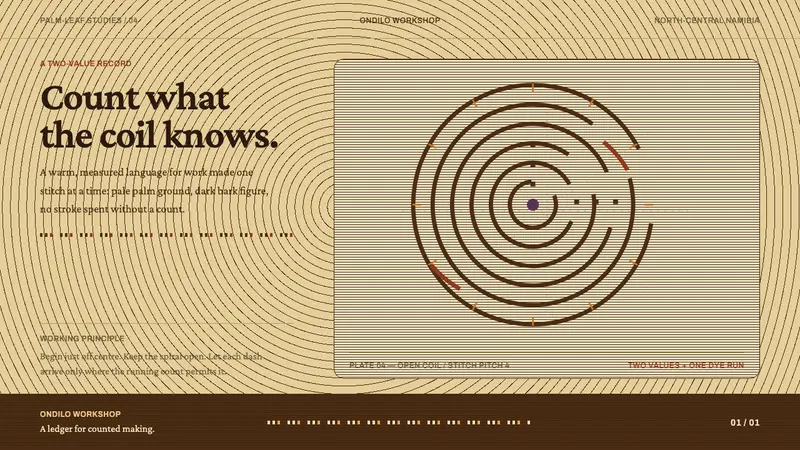 Ovambo BasketryPattern is counted, never drawn. Warm straw and omuve brown turn an open coil into order.
 Khanty Fish-Skin CoatThe seam is the structure. Parchment panels and one soot-ochre border hold the field.