About Ericsson Bakelite Telephone
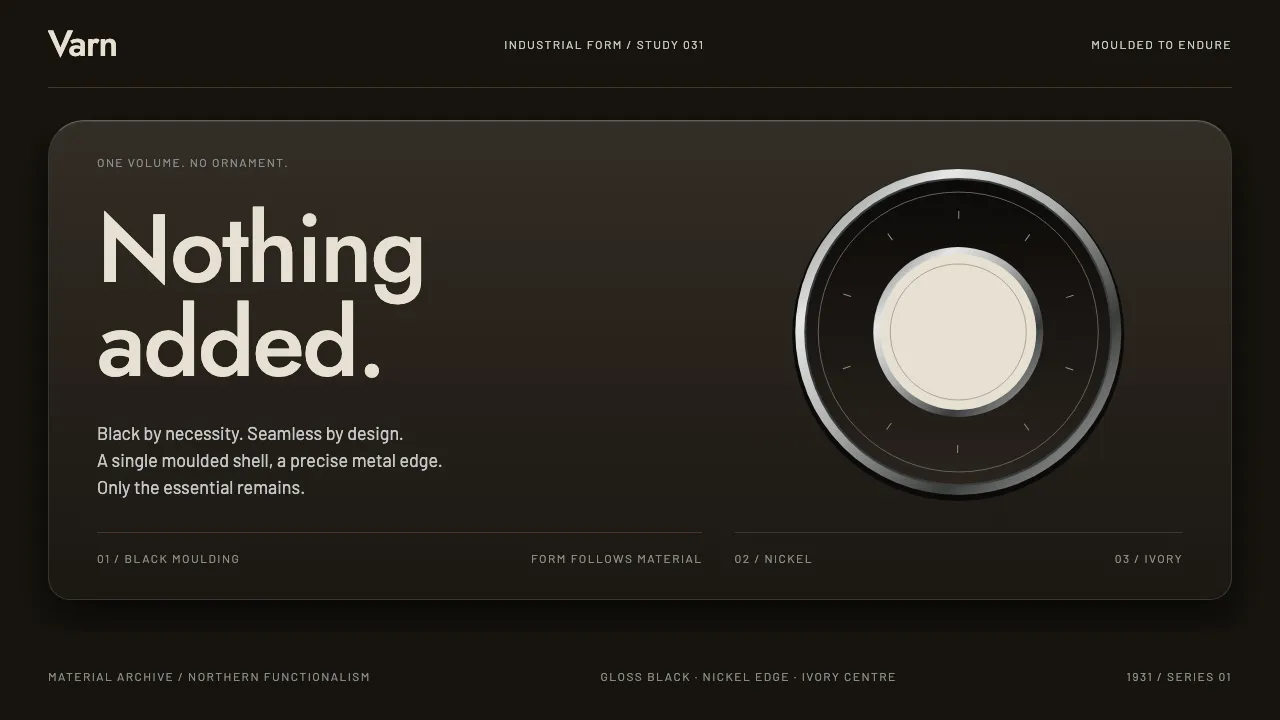
In 1931 L. M. Ericsson put the cradle, the dial and the ringer inside a single moulded body. Bjerknes solved the mechanism; the painter Jean Heiberg shaped the shell. Bakelite decided the colour — Ericsson's own history says black was, for technical reasons, the only possibility, or perhaps some related drab nuances.
This system takes the object literally. The ground is high-gloss black moulding. Every card is a shell with a hard specular edge. The only circle on the page is the dial, the only warm note is the braided cord, and the only bright surface is the ivory number card behind the finger wheel.
- Origin
- Stockholm, Sweden and Oslo, Norway
- Era
- designed 1930–31; produced 1931–1962; redesigned 1947
- Key figures
- Johan Christian Bjerknes · Jean Heiberg
- Movements
- interwar industrial design · functionalism · moulded-plastic single-piece object
Ericsson Bakelite Telephone design spec
Colors
Typography
The other 11 sections — buttons, cards, spacing, motion, techniques and more — open once you unlock. Download the DESIGN.md or send it to your AI in one click. Unlock once, yours forever.
Sign up nowStyles similar to Ericsson Bakelite Telephone
Also inspired by brands & products, with a close feel.
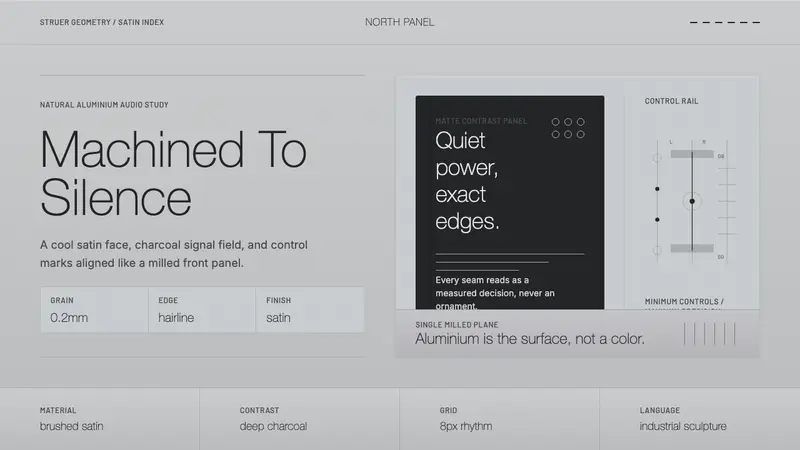 Bang & Olufsen AluminiumQuiet luxury, machined flat. Satin aluminium grain, hairlines, thin charcoal type.
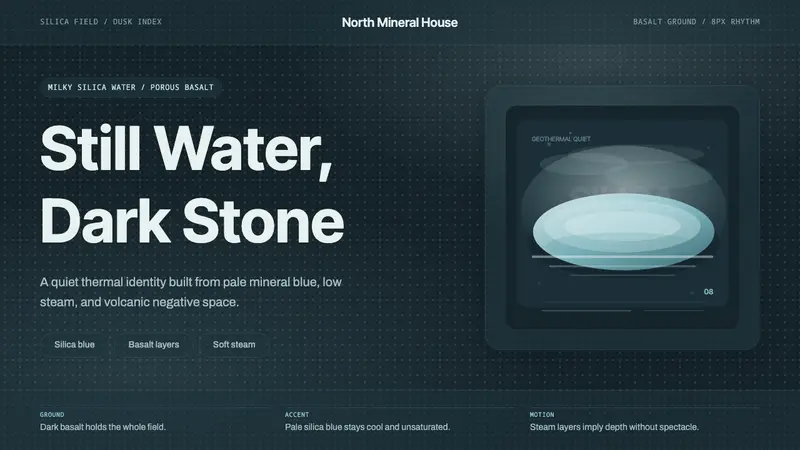 Glacial Teal LagoonQuiet feels elemental. Basalt darks and milky silica blue drift in a low-contrast stack.
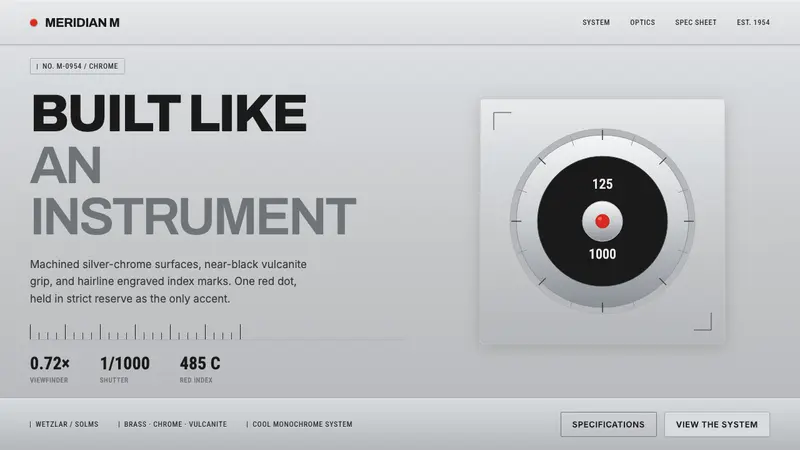 Leica M Silver ChromeBuilt like an instrument. Brushed silver-chrome on near-black vulcanite, one red dot, lone accent.
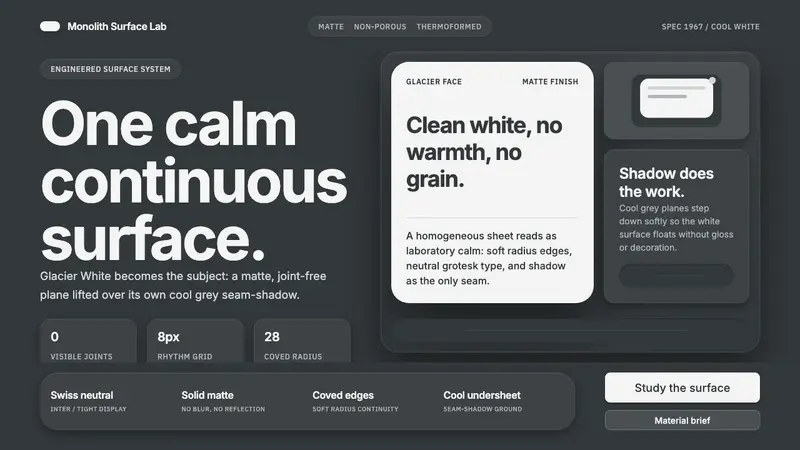 Corian Solid SurfaceSeamless matte calm. Glacier White floats over cool grey shadow with neutral Inter type.