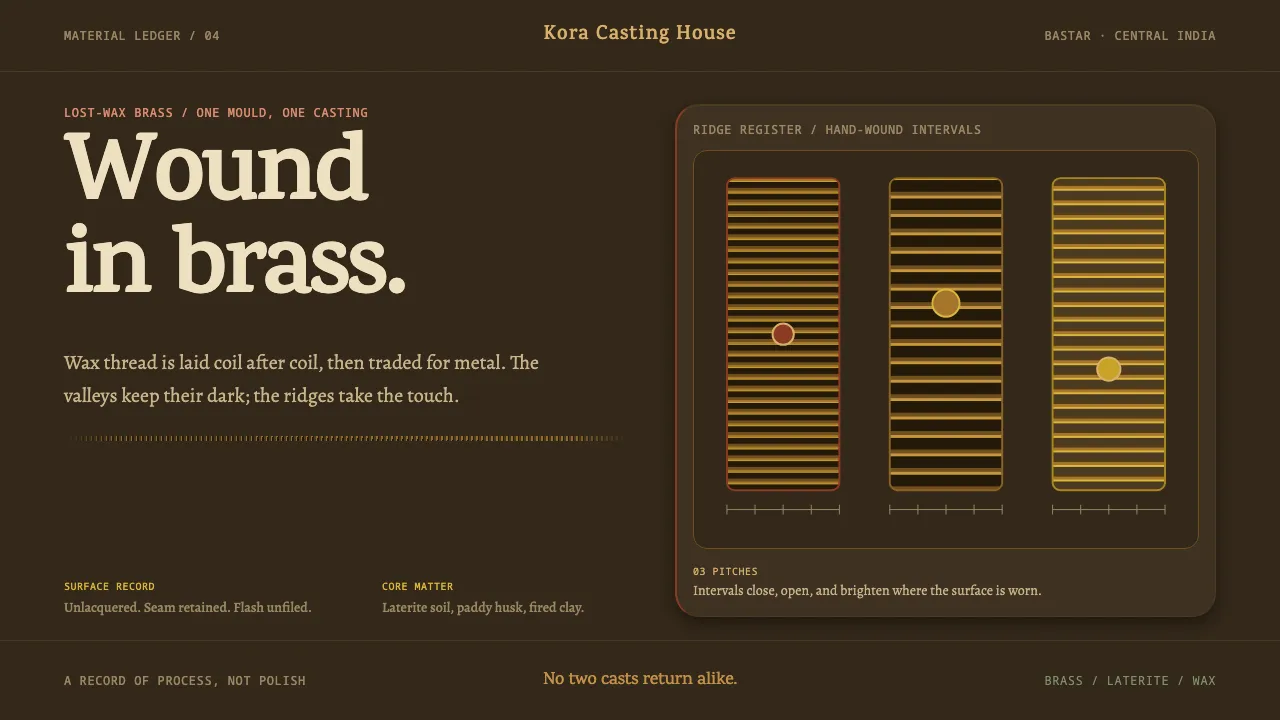
About Dhokra Bastar Bronze
Bastar Dhokra is lost-wax casting where the wax is never smoothed. It is rolled into threads and wound coil after coil around a core of red soil, cow dung and paddy husk, so the finished brass keeps every ridge the caster's fingers laid down. Figures come out stretched — limbs drawn to wire, weight carried in the head.
Unlacquered, the metal reads as a dull brownish bronze: dark in the valleys between coils, rubbed brassy where hands and cloth have touched the crests. Flash, seams and sprue stubs stay on the piece. The mould is broken to free each cast, so nothing repeats. This system is built from that surface, not from statuary.
- Origin
- Bastar district, Chhattisgarh, central India
- Era
- Technique ~4,000 years old in South Asia; Bastar workshops documented through the 20th century, GI-registered in the modern period
- Key figures
- Ghadwa metalsmith families of Bastar · Dhokra Damar itinerant casters of Bengal and Odisha
- Movements
- Indian tribal metalcraft · cire perdue (lost-wax) hollow casting · GI protection and craft revival
Dhokra Bastar Bronze design spec
Colors
Typography
The other 11 sections — buttons, cards, spacing, motion, techniques and more — open once you unlock. Download the DESIGN.md or send it to your AI in one click. Unlock once, yours forever.
Sign up nowStyles similar to Dhokra Bastar Bronze
Also inspired by crafts & folk art, with a close feel.
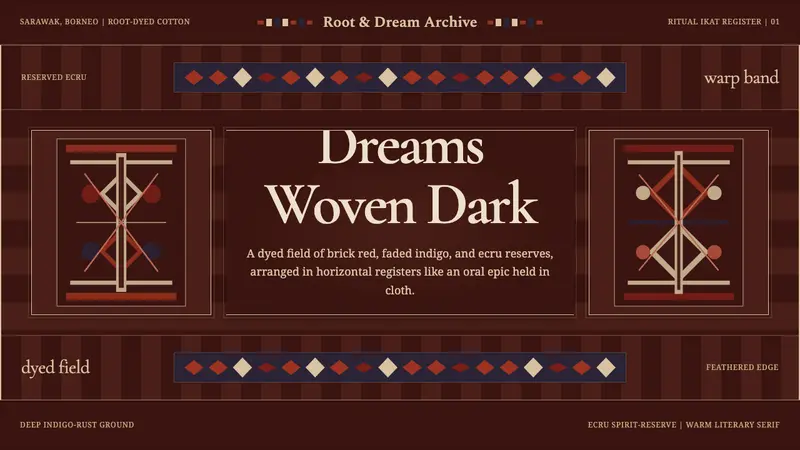 Iban Pua KumbuSacred cloth logic. Indigo-rust bands, ecru reserves, and blurred ikat edges carry it.
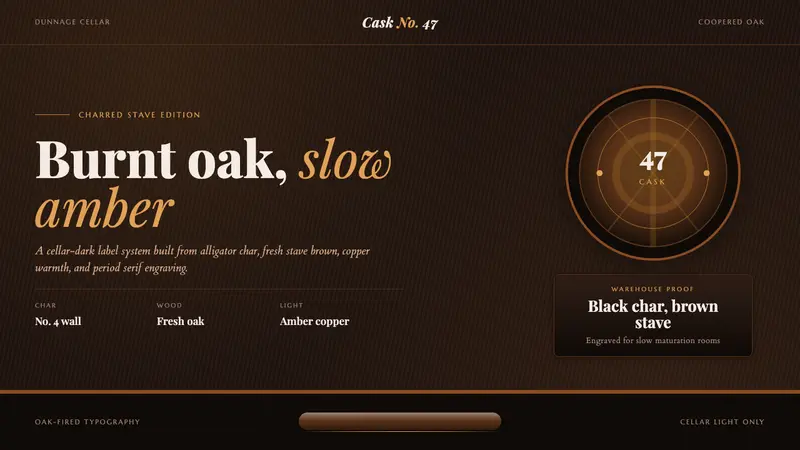 Whisky CooperageBuilt for the long dark. Charred black grounds copper hoops and engraved serif cartouches.
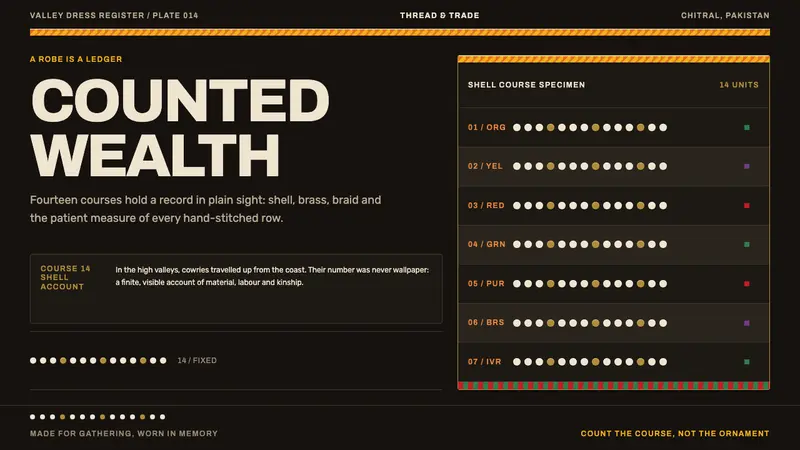 Kalash KupasDensity carries value. Ivory shell courses and orange braid are counted on warm black.
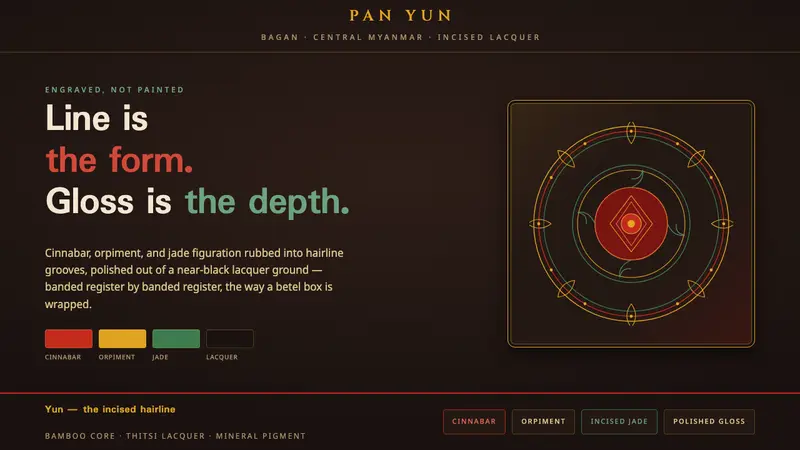 Bagan Yun LacquerwareEngraved, not painted. Cinnabar, orpiment and jade hairlines polished from near-black lacquer.