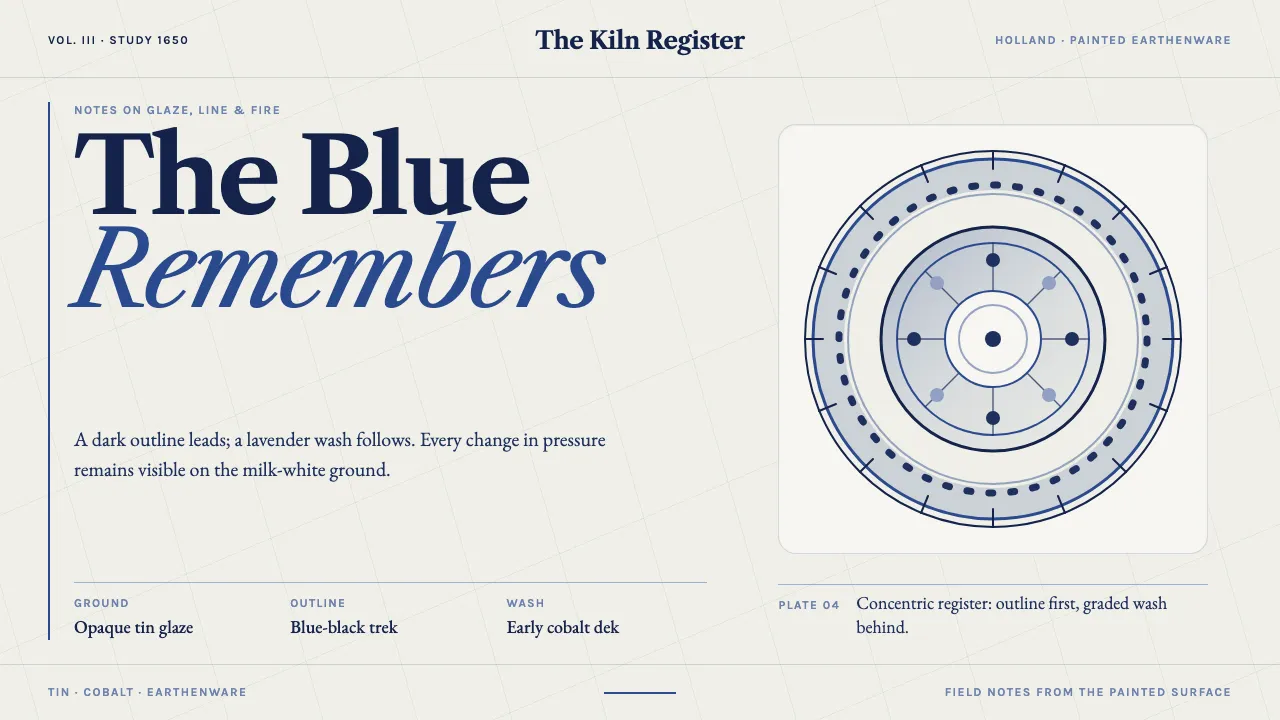
About Delft Blauw
Delftware solved a commercial problem with a chemical trick: tin oxide turned a glaze opaque milk-white, so cheap red Dutch clay could pass for Chinese porcelain. Everything else follows from that surface. The white glaze is the ground; the cobalt is brushwork laid onto it, never a field printed behind it.
At 1650 the blue is still light — a lavender wash carrying dark blue-black outlines — before the full-strength cobalt of the late-century workshops. Delft painters copied Kraak plates and quietly made them Dutch: chinoiserie sprigs sharing a rim with tulips, windmills and low-horizon landscapes.
- Origin
- Delft, Holland, in the Dutch Republic
- Era
- 1640s–1680s, with 1650 as the referent moment
- Key figures
- Wouter van Eenhoorn · Samuel van Eenhoorn · Frederik van Frytom
- Movements
- Tin-glazed earthenware (maiolica / faience) · Dutch Golden Age · European imitation of Chinese Kraak porcelain
Delft Blauw design spec
Colors
Typography
The other 11 sections — buttons, cards, spacing, motion, techniques and more — open once you unlock. Download the DESIGN.md or send it to your AI in one click. Unlock once, yours forever.
Sign up nowStyles similar to Delft Blauw
Also inspired by crafts & folk art, with a close feel.
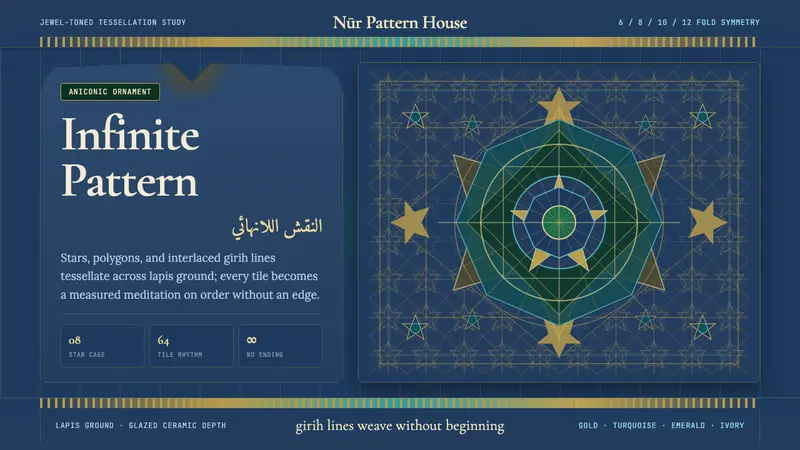 Islamic Geometric ArtInfinite order, fully tiled. Lapis ground with gold girih lines and turquoise star cells.
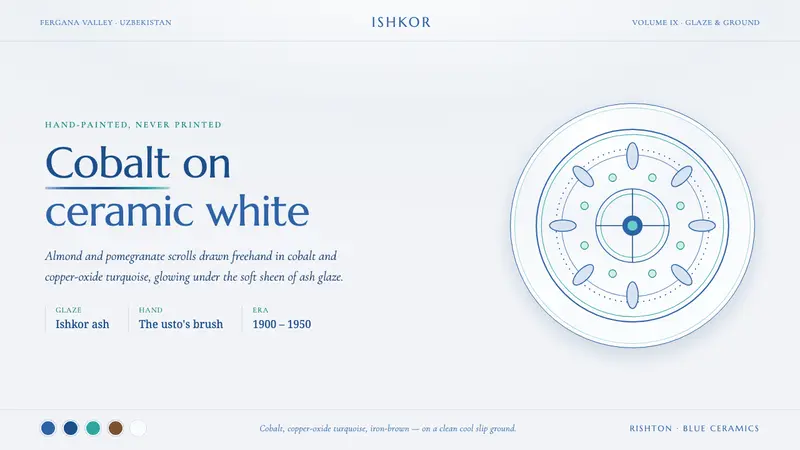 Rishton Blue CeramicsGlaze, not print. Cobalt and copper turquoise florals brushed freehand on cool ceramic white.
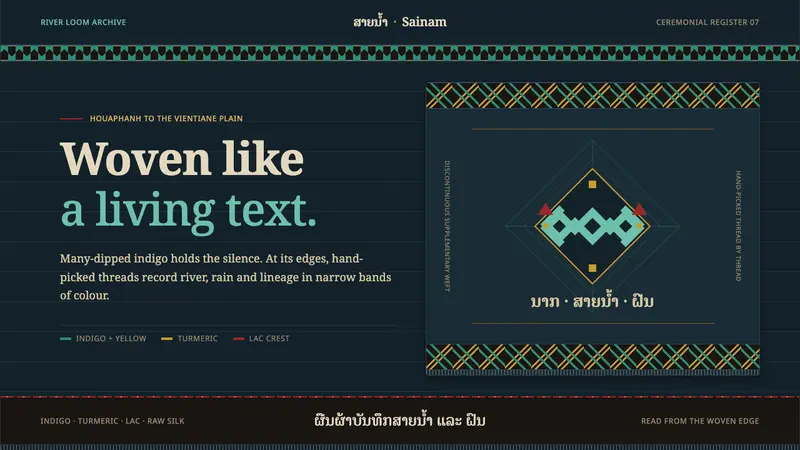 Lao Naga TextileDarkness becomes woven memory. Turquoise and turmeric bands speak across many-dipped indigo.
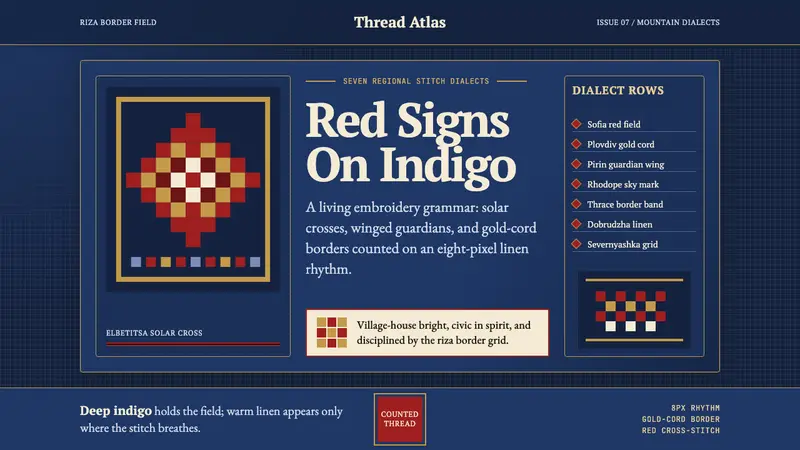 Bulgarian Shevitsa Folk EmbroideryVillage-bright code. Deep indigo carries shevitsa red crosses and gold-cord borders.