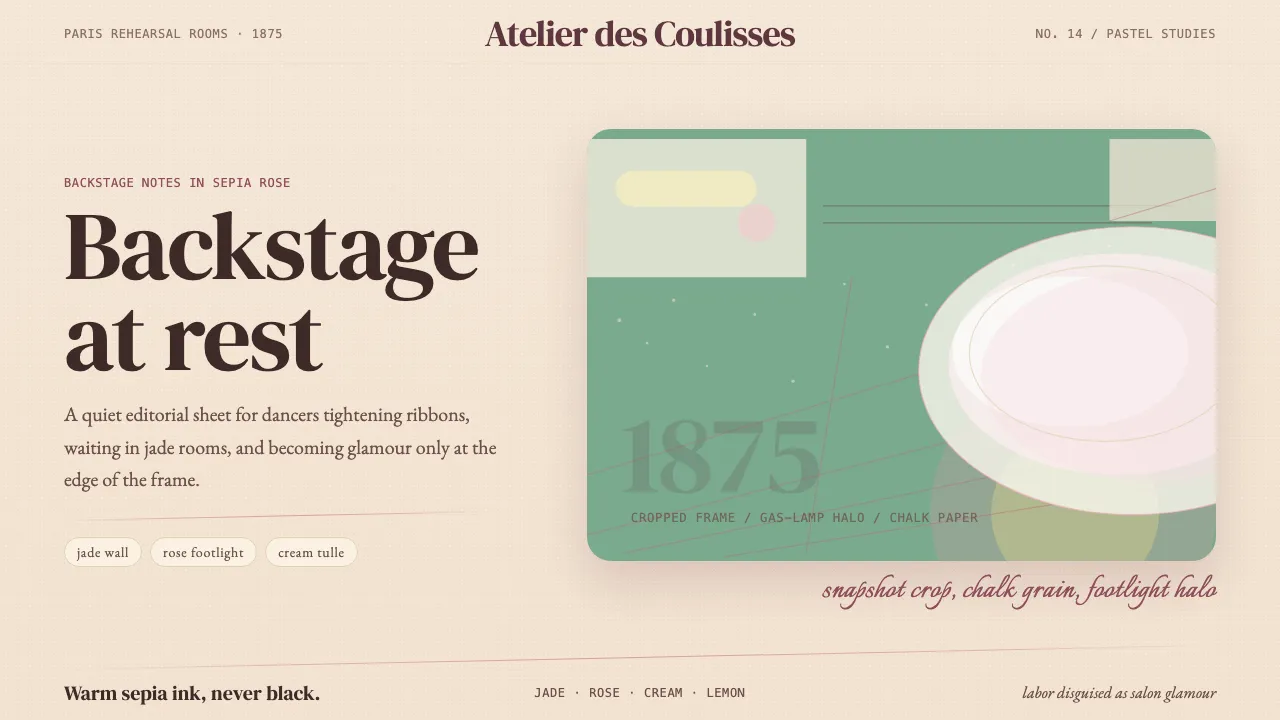
About Degas Ballet Pastels
Edgar Degas spent twenty-five years in the corridors of the Palais Garnier painting what the audience never saw: dancers yawning at the barre, tightening a slipper, scratching a shoulder, waiting in jade-green dressing rooms lit by gas-lamp rose. The pastels are labor disguised as glamor — cropped at the frame edge like a snapshot, indebted to ukiyo-e he collected by the trunkful.
This system inherits that backstage stance: warm cream paper, jade walls, footlight rose blooms, sepia-rose ink instead of black, and compositions that always crop the subject slightly off-balance. Belle Époque serifs carry the type; pastel-stipple textures replace glassy gradients; every shadow is a soft halo of footlight glow rather than a hard drop.
- Origin
- France — Paris, Palais Garnier (Opéra de Paris)
- Era
- French Impressionism 1870–1895 (Degas 1834–1917; ballet motif peak 1870–1895)
- Key figures
- Edgar Degas · Mary Cassatt · Marie van Goethem · Henri Rouart
- Movements
- French Impressionism · Japonisme · Pastel Medium Revival
Degas Ballet Pastels design spec
Colors
Typography
The other 11 sections — buttons, cards, spacing, motion, techniques and more — open once you unlock. Download the DESIGN.md or send it to your AI in one click. Unlock once, yours forever.
Sign up nowStyles similar to Degas Ballet Pastels
Also inspired by art & artists, with a close feel.
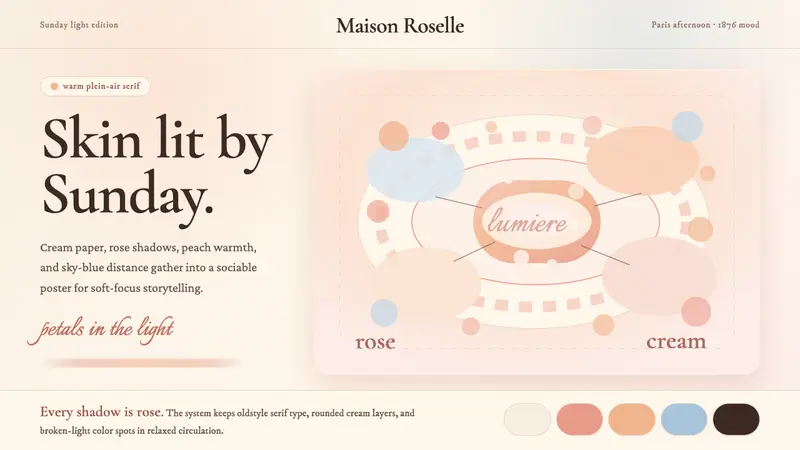 Renoir ImpressionismWarmth refuses haste. Rose shadows and Cormorant curves drift across cream.
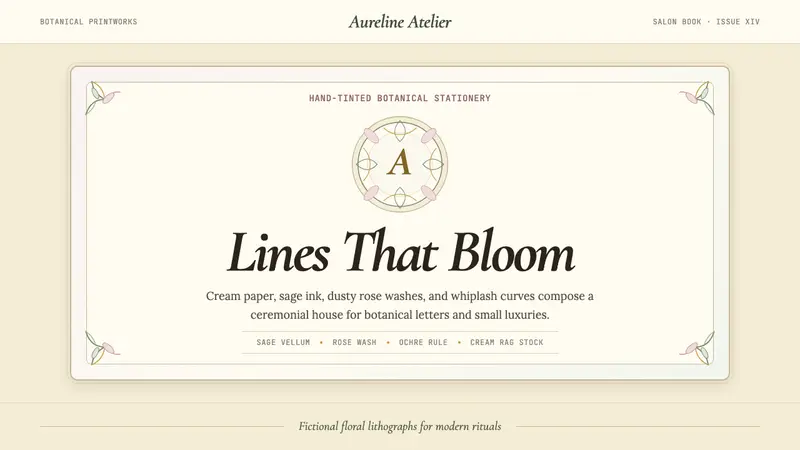 Art Nouveau (Mucha)Mucha's whiplash arabesques. Botanical halos, muted lithograph palette, no machine-cut edges.
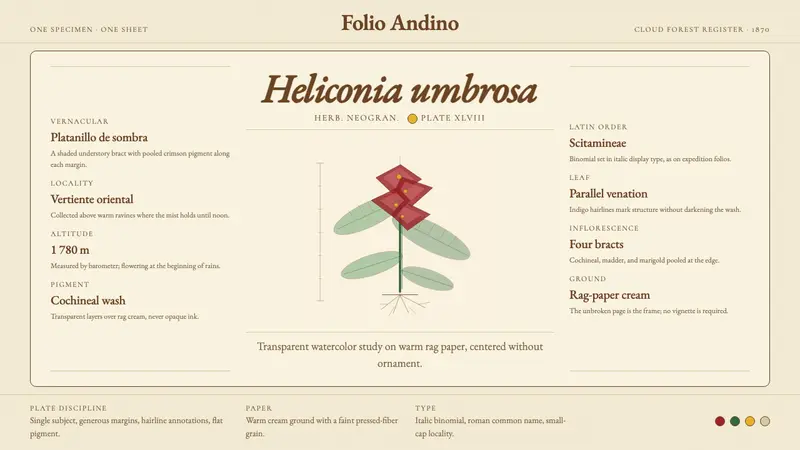 Colombian Botanical (Triana)Observation becomes ornament. Crimson watercolor specimen breathes on cream rag paper.
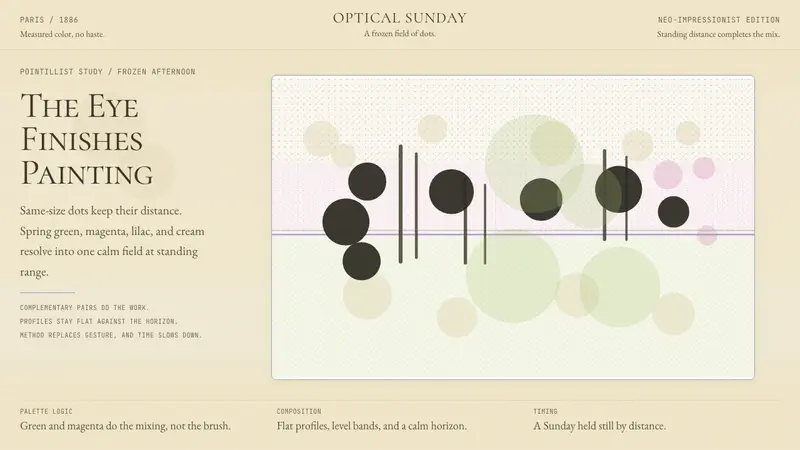 Seurat — Grande Jatte PointillismThe eye does the painting. Cream, green, magenta, and cobalt mix in a frozen dot-field.