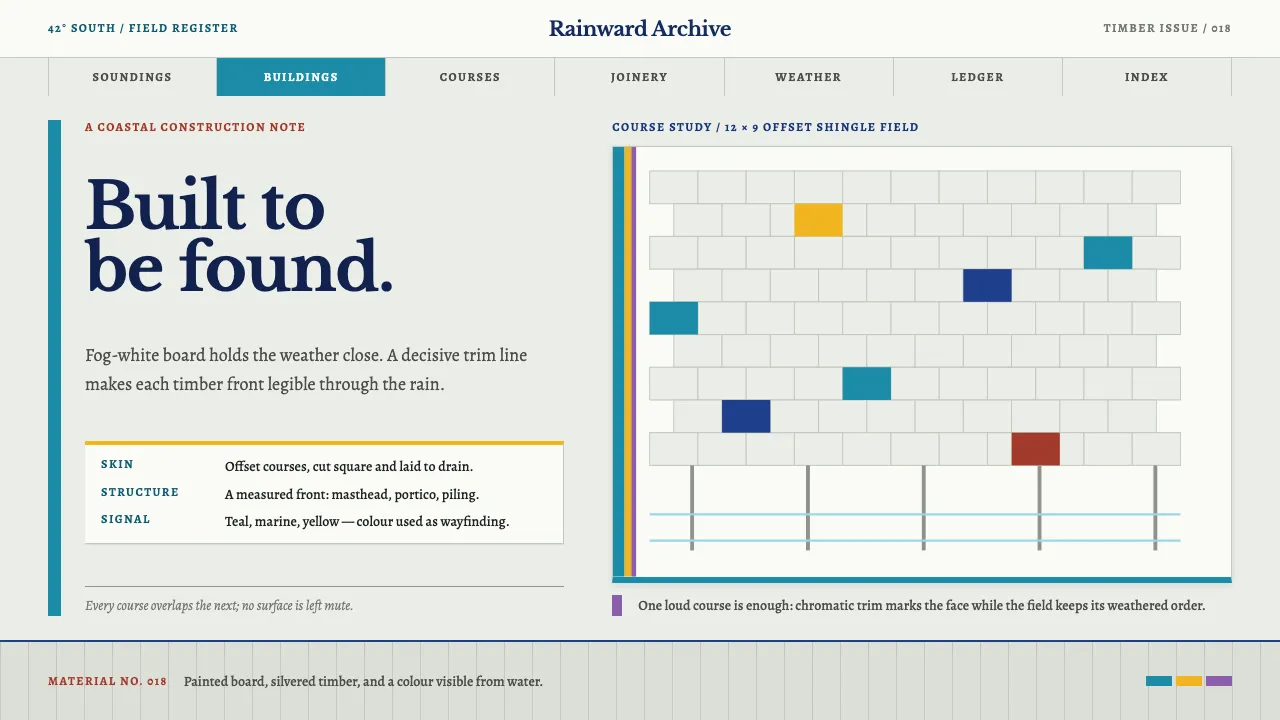
About Chiloé Palafito
Chiloé's builders were boatwrights first. Asked for churches, they framed the naves like upturned hulls and wrapped everything — walls, towers, porticoes — in alerce shingle, the tejuela, cut square or pointed or fish-scale and laid in offset courses that shed constant rain. The shingle was valuable enough to spend: the Real de Alerce circulated as money.
This system takes that logic literally. The ground is the cool grey-white of painted board seen through sea fog; every plane is a course, not a flat field; and the trim is saturated on purpose — teal, marine blue, chrome yellow, violet, oxide red — because in a foggy archipelago colour is how a building announces itself.
- Origin
- Chiloé archipelago, Los Lagos, southern Chile — Castro, Tenaún, Nercón, Vilupulli, Achao, Aldachildo
- Era
- Jesuit misión circular from 1608; surviving church fabric largely 18th–19th century; UNESCO inscription 2000
- Key figures
- Eduardo Provasoli · Jesuit and Franciscan missionaries of the misión circular · Chilote shipwright-carpenters
- Movements
- Escuela Chilota de arquitectura religiosa en madera · Chilota vernacular building
Chiloé Palafito design spec
Colors
Typography
The other 11 sections — buttons, cards, spacing, motion, techniques and more — open once you unlock. Download the DESIGN.md or send it to your AI in one click. Unlock once, yours forever.
Sign up nowStyles similar to Chiloé Palafito
Also inspired by architecture & places, with a close feel.
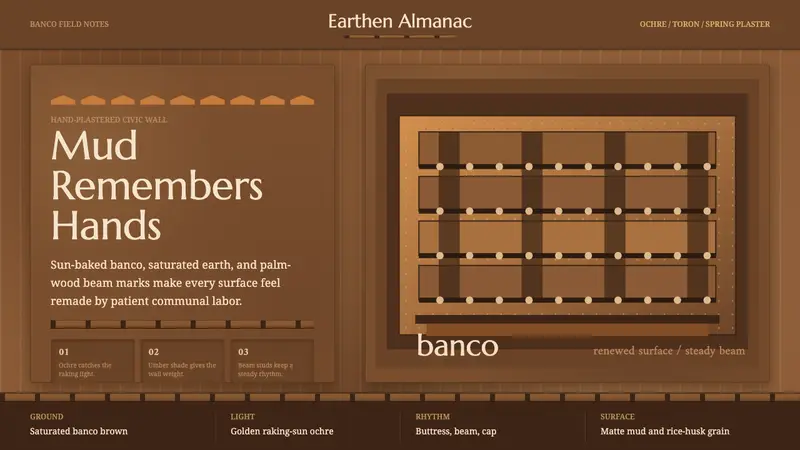 Djenné Mud MosqueBuilt from renewal. Banco brown, ochre caps, and toron grids feel hand-plastered.
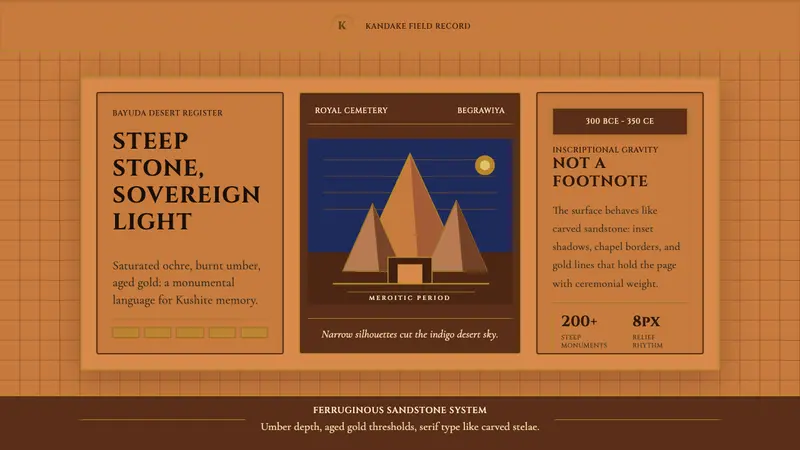 Sudanese Nubian Meroë PyramidMonumental, not muted. Ochre sandstone, umber depth, gold borders, and Cinzel stelae type.
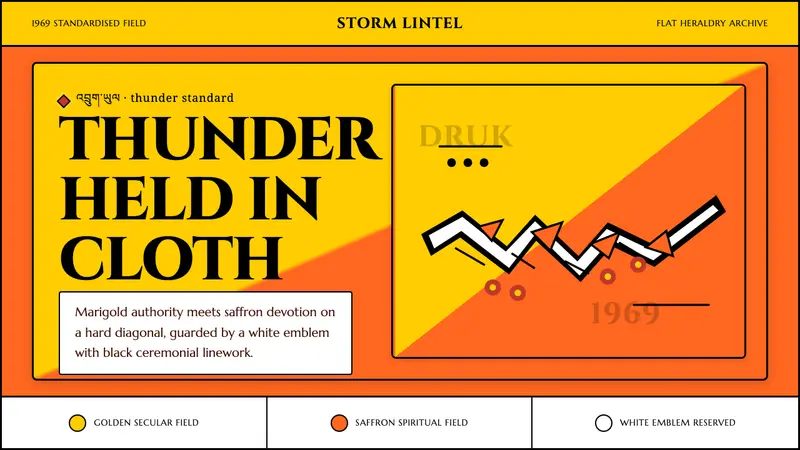 Bhutan Thunder Dragon Flag (1969)Heraldry hits like thunder. Marigold and saffron split hard around a white emblem.
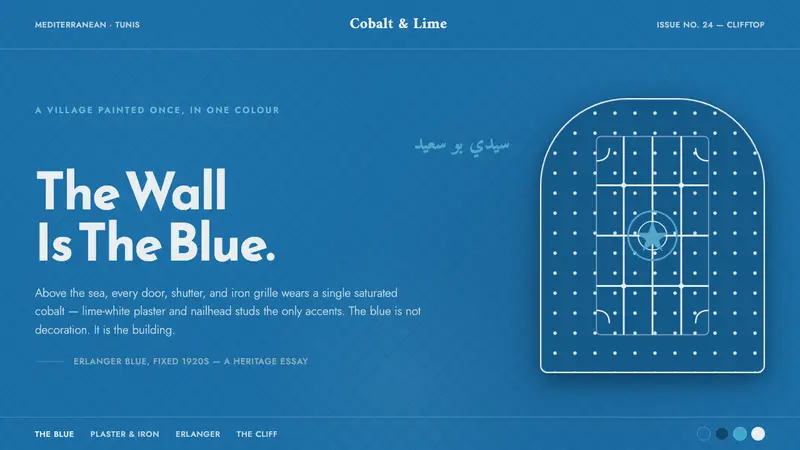 Sidi Bou Said BlueThe village is the blue. Saturated cobalt ground, white plaster frames, iron lattice in Reem Kufi.