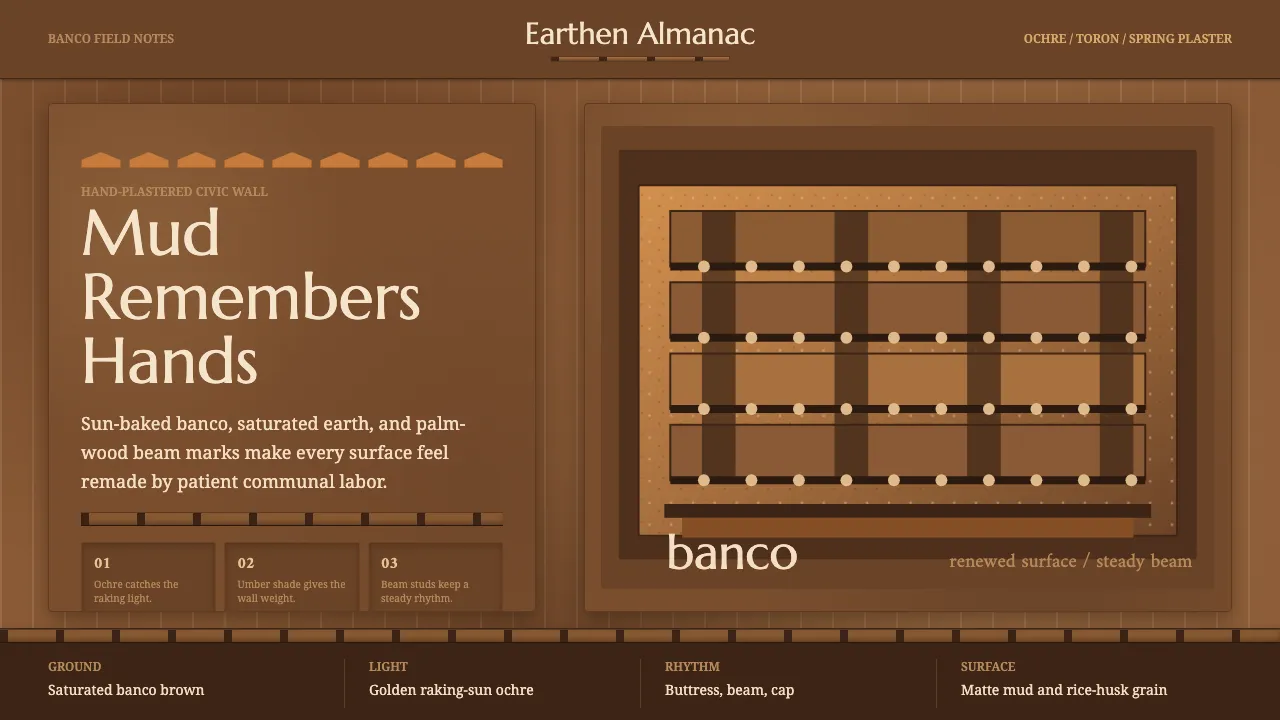
About Djenné Mud Mosque
The Great Mosque of Djenné is the largest mud-brick building on earth — a hand-plastered banco monument re-skinned every spring by the whole town. This system borrows its substance: golden raking-sun ochre laid over a saturated earth-brown ground, ribbed by the projecting palm-wood toron beams and crowned with conical pinnacles.
Nothing here is slick. Surfaces carry the grain of sun-baked mud-and-rice-husk plaster, dividers keep the steady rhythm of buttress and beam, and the warmth deepens from ochre in light to umber in shade — a built thing made by hands, not a screen pretending to be one.
- Origin
- Djenné, Mali (Inland Niger Delta)
- Era
- pre-1900 (current structure 1907, on 13th-c. foundations)
- Key figures
- Djenné masons' guild (barey ton) · Sudano-Sahelian building tradition
- Movements
- Sudano-Sahelian architecture · West-African adobe construction · Mali earthen heritage
Djenné Mud Mosque design spec
Colors
Typography
The other 11 sections — buttons, cards, spacing, motion, techniques and more — open once you unlock. Download the DESIGN.md or send it to your AI in one click. Unlock once, yours forever.
Sign up nowStyles similar to Djenné Mud Mosque
Also inspired by architecture & places, with a close feel.
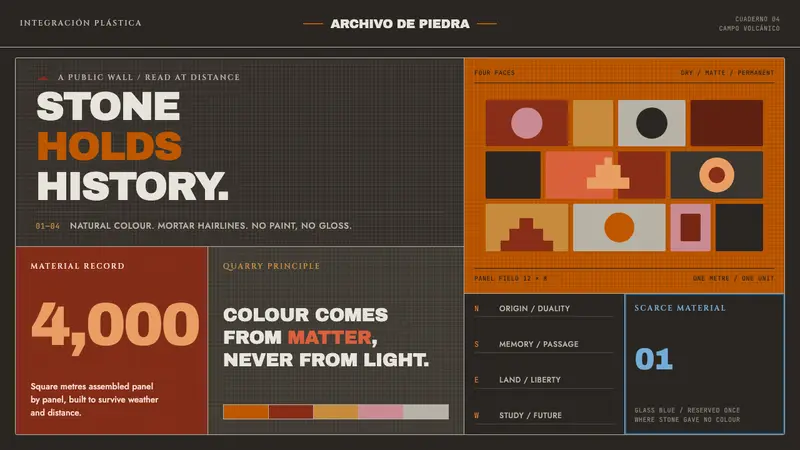 UNAM Library MosaicStone outlasts paint. Burnt-orange panels lock across volcanic gray with one glass-blue seam.
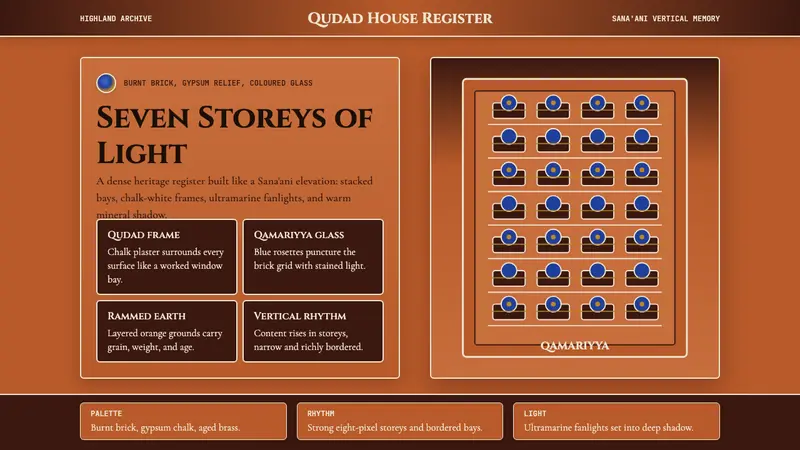 Yemeni Sana'a Old City Tower-HouseVertical memory, densely framed. Brick orange, gypsum white, and blue rosettes stack upward.
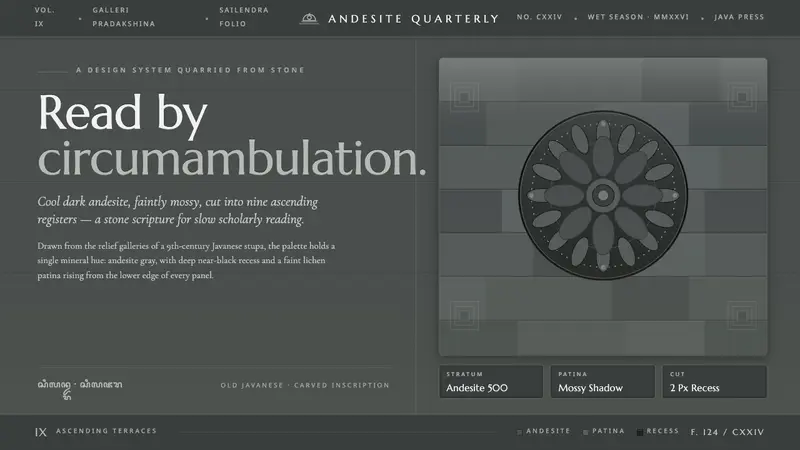 Borobudur Andesite GrayStone read like scripture. Cool andesite gray, near-black recess, mossy patina, carved Marcellus.
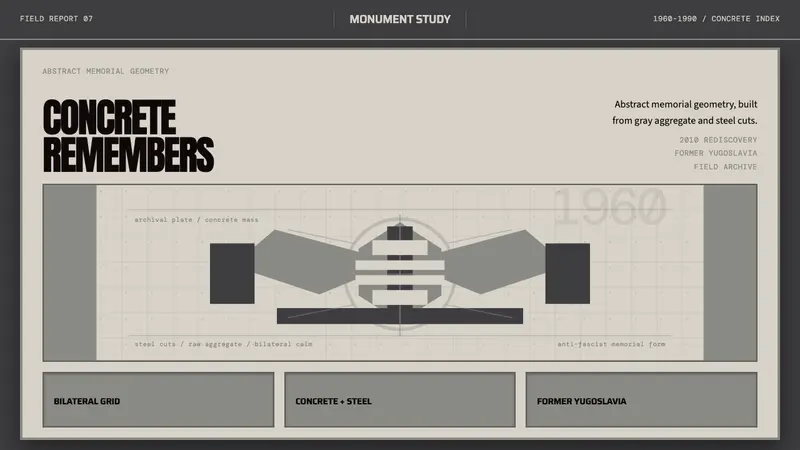 Spomenik Yugoslav Monument (1960)Memory, stripped bare. Gray symmetry and winged concrete geometry.