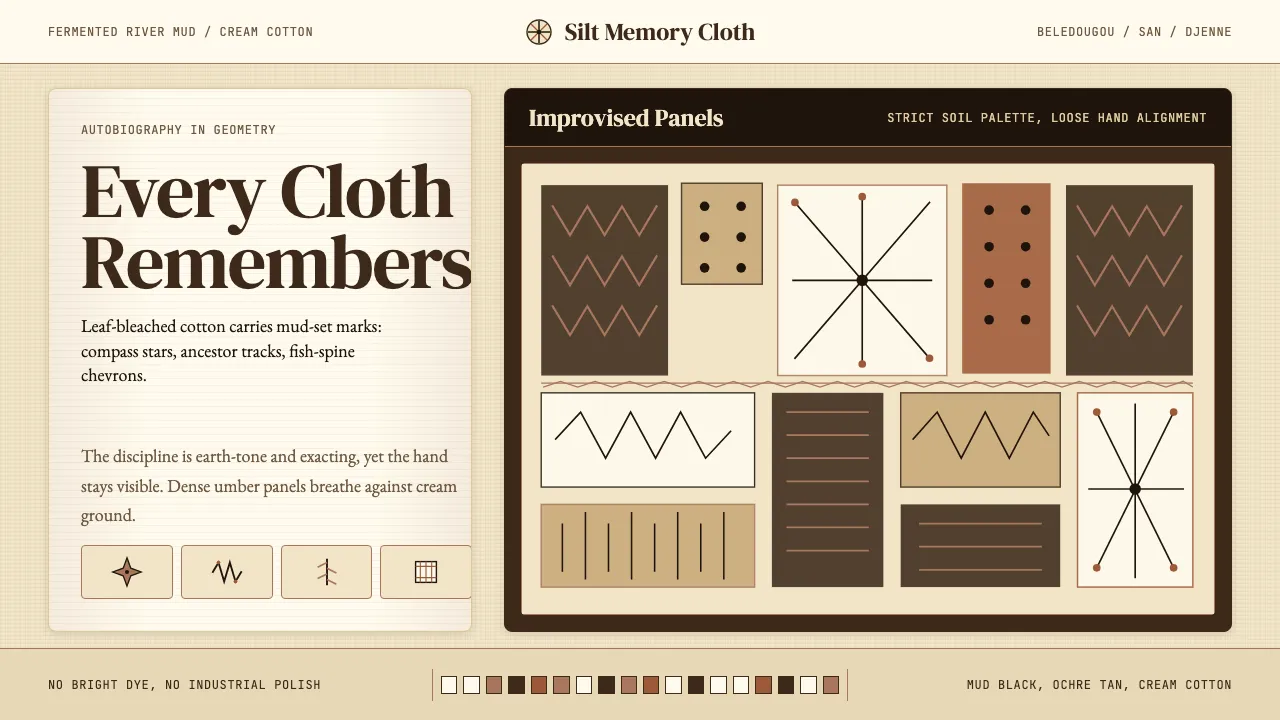
About Mali Bògòlanfini (Bambara Mud-Cloth)
Bògòlanfini — literally "mud cloth" in Bambara — is the centuries-old women's craft of southern Mali, where leaf-tea bleaches hand-woven cotton and iron-rich riverbed mud is hand-painted on as permanent dye. Each cloth is the painter's autobiography in geometry: compass-stars, ancestor-tracks, fish-spine chevrons, lightning-zigzags improvised across a cream ground.
The discipline is strict earth-tone monochrome — deep umber-brown, warm ochre-tan, fermented-mud-black, cream-undyed cotton — with patterned density breathing through negative cream space. The cloth carries the actual silt of the Niger River, transformed into pigment by ancestral fermentation.
Learn more about the Mali Bògòlanfini (Bambara Mud-Cloth) style
- Origin
- Mali — Beledougou, San, and Djenné regions of southern Mali; broader Mande cultural area (Burkina Faso, Côte d'Ivoire, Senegal in variants)
- Era
- centuries-old Bambara women's tradition; first externally documented 19c; internationalized via Chris Seydou's 1980s Malian fashion atelier; post-1990s diaspora popularization
- Key figures
- Chris Seydou · Aminata Dramane Traoré · Boubacar Doumbia · Pascal James Imperato
- Movements
- West African textile traditions · Bambara cultural identity · Pan-African design revival
Mali Bògòlanfini (Bambara Mud-Cloth) design spec
Colors
Typography
The other 11 sections — buttons, cards, spacing, motion, techniques and more — open once you unlock. Download the DESIGN.md or send it to your AI in one click. Unlock once, yours forever.
Sign up nowStyles similar to Mali Bògòlanfini (Bambara Mud-Cloth)
Also inspired by crafts & folk art, with a close feel.
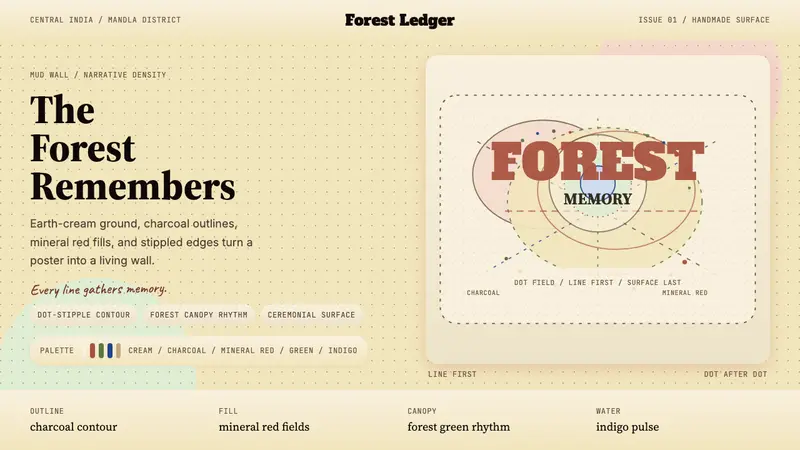 Gond Tribal Art (Madhya Pradesh)The wall becomes a forest. Earth-cream, charcoal, and stippled red make it ceremonial.
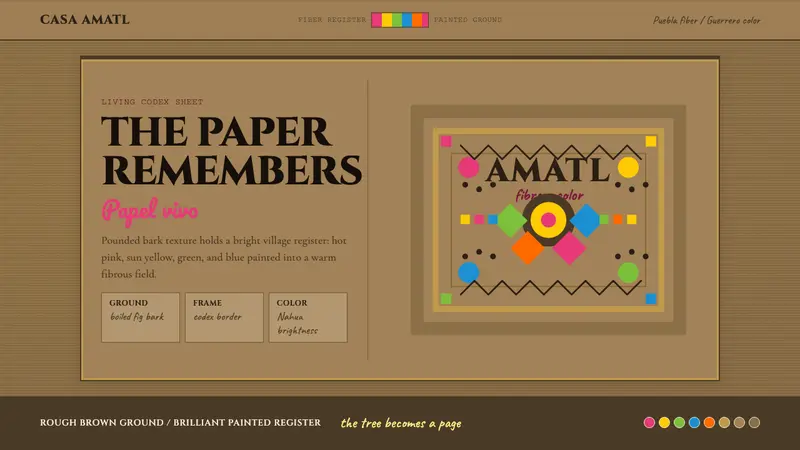 Mexican Amate Bark PaperLiving craft, not nostalgia. Bark-brown fiber carries hot pink and sun-yellow codex geometry.
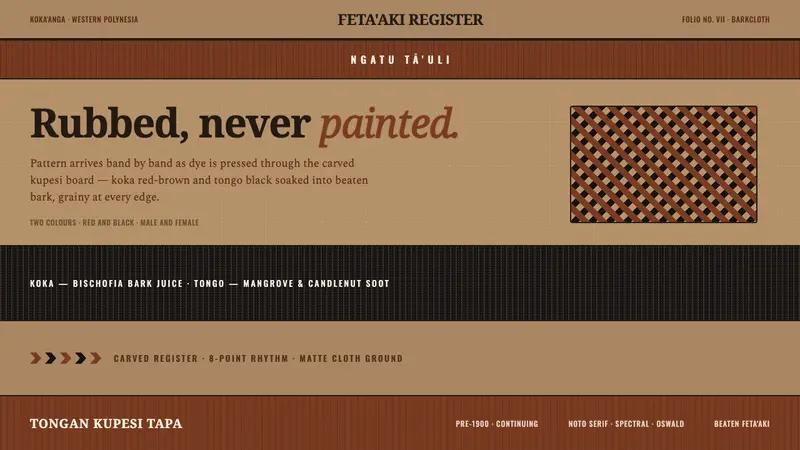 Tongan Kupesi TapaRubbed, never painted. Koka red and tongo black soak into beaten tan bark as stacked grainy bands.
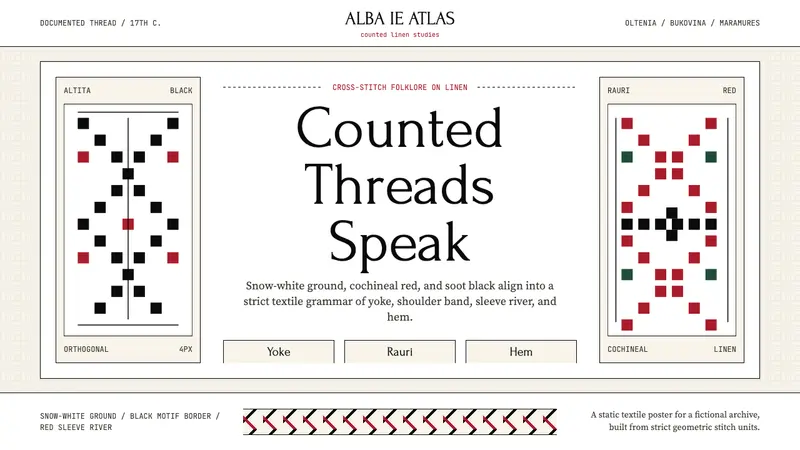 Romanian Ie (folk embroidered blouse)Folklore becomes grid. Cochineal red and soot black stitch strict bands on linen white.