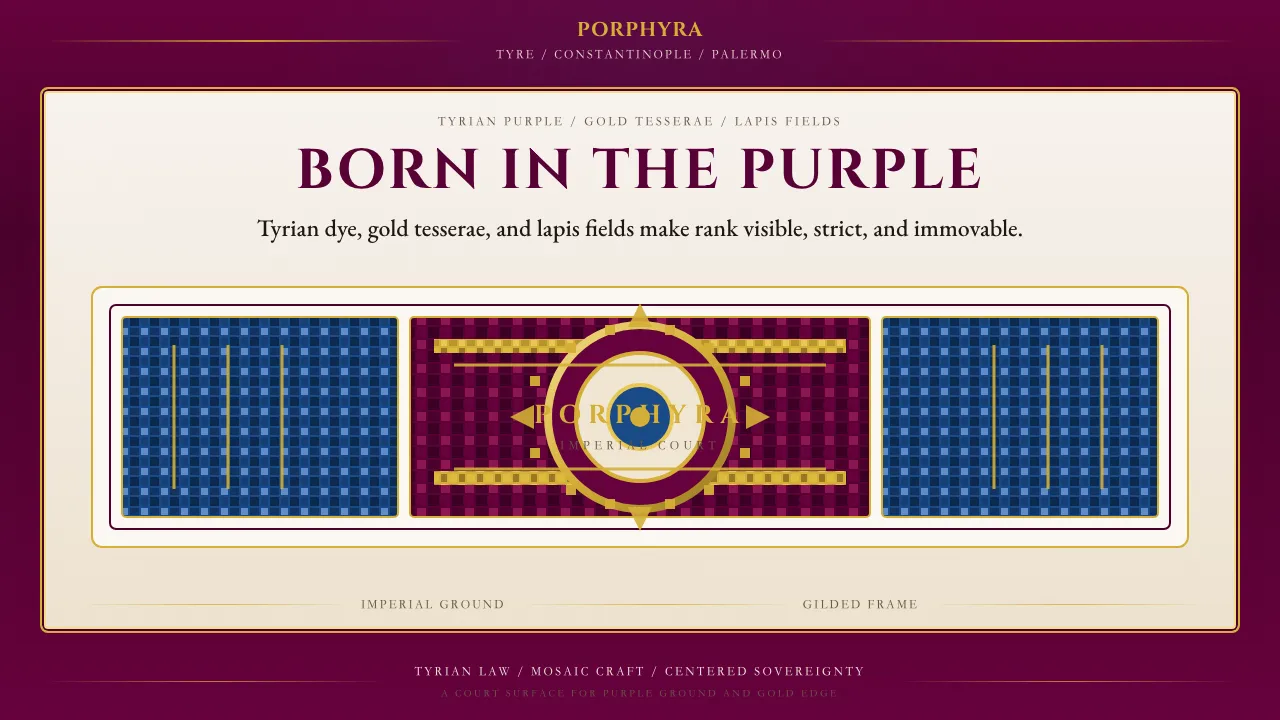
About Byzantine Tyrian Purple (Imperial Court)
Tyrian purple was never merely a color — it was law. Extracted from 12,000 murex snails per gram, reserved by imperial edict for the emperor alone, this pigment encoded absolute sovereignty into cloth. This system channels the Byzantine court's mosaic-dense, gold-tessera-encrusted visual language: deep blood-mineral purple grounds, imperial gold accents, lapis mosaic fields, and cream-tessera content surfaces framed by hairline gilded borders.
Every element references the specific visual grammar of Hagia Sophia's mosaics, Ravenna's San Vitale portraits, and the Palatine Chapel's Norman-Byzantine synthesis — rigorously ornamented, symmetrically composed, and unapologetically imperial.
Learn more about the Byzantine Tyrian Purple (Imperial Court) style
- Origin
- Tyre (modern Lebanon), Constantinople, Norman Sicily
- Era
- Phoenician dye production c. 1500 BCE; Byzantine imperial codification 4th–15th century
- Key figures
- Constantine I · Empress Theodora · Justinian I · Roger II
- Movements
- Byzantine iconography · Ravenna mosaic schools · Norman-Byzantine synthesis
Byzantine Tyrian Purple (Imperial Court) design spec
Colors
Typography
The other 11 sections — buttons, cards, spacing, motion, techniques and more — open once you unlock. Download the DESIGN.md or send it to your AI in one click. Unlock once, yours forever.
Sign up nowStyles similar to Byzantine Tyrian Purple (Imperial Court)
Also inspired by art & artists, with a close feel.
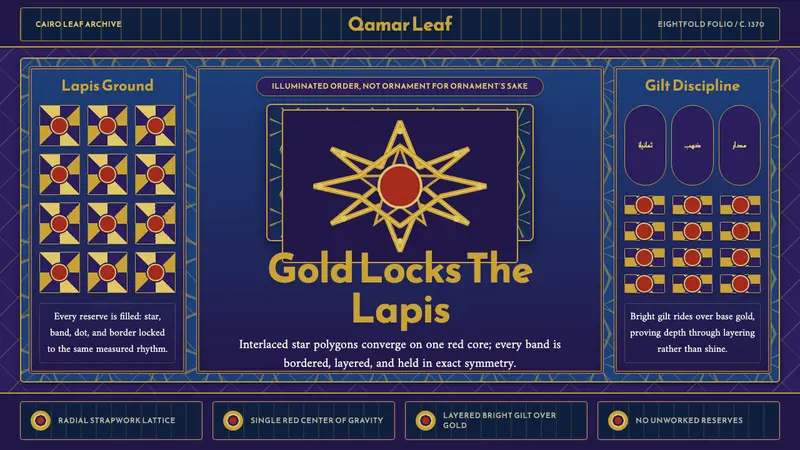 Mamluk Quran IlluminationGilded density rules. Lapis ground, eightfold gold strapwork, and one red core lock the page.
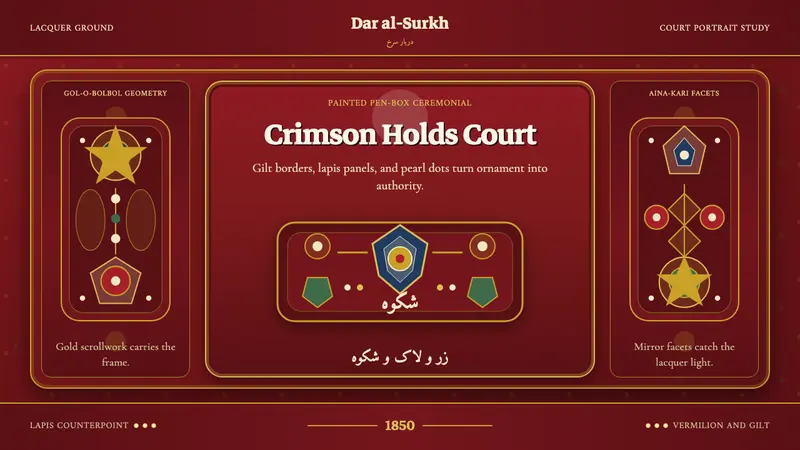 Qajar PersiaOpulence commands. Lacquer red, gilt borders, pearl dots, and lapis geometry.
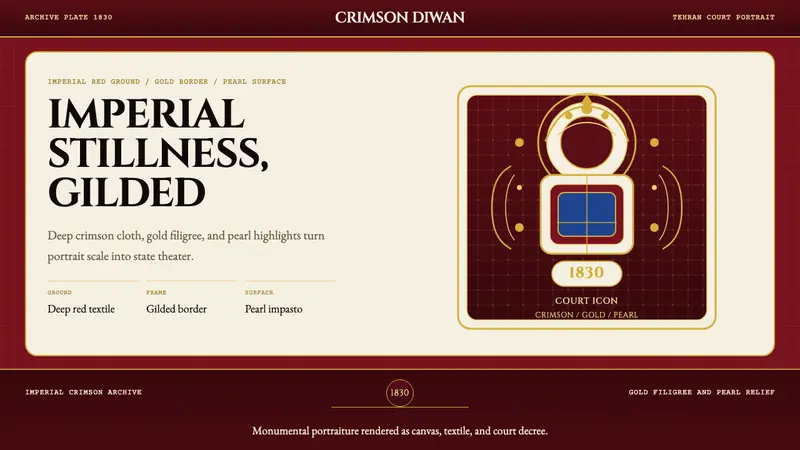 Persian Qajar Portrait (1830)Imperial stillness, gilded. Deep crimson, gold filigree, and pearl accents stage a royal icon.
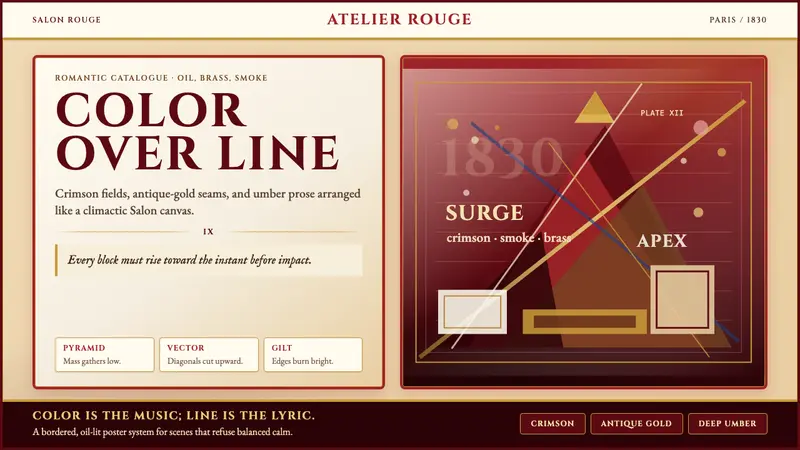 Delacroix French RomanticismOperatic color erupts. Crimson parchment, gilt borders, and diagonal pyramids force climax.