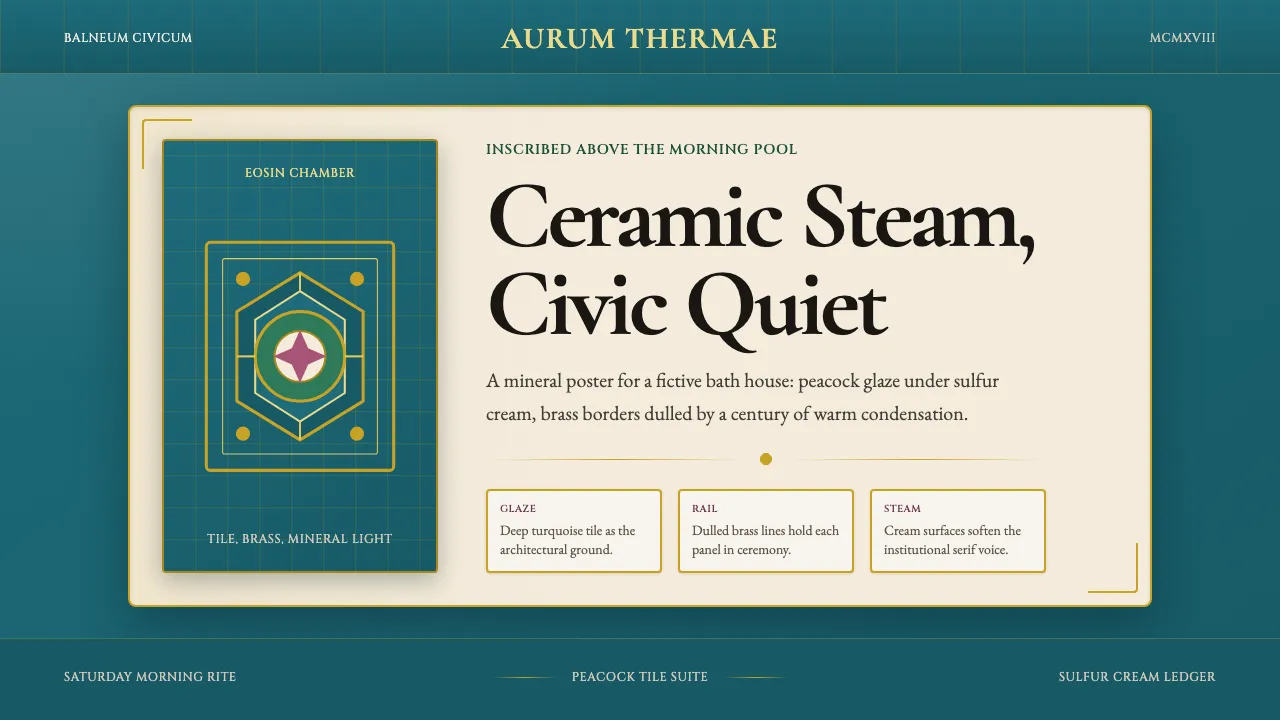
About Budapest Thermal Bath Art Deco
Budapest's grand thermal bathhouses — Széchenyi, Gellért, Lukács — define a uniquely Hungarian design language of peacock-turquoise Zsolnay ceramic tile, dulled brass handrails, and barrel-vaulted steam chambers. This system captures that Saturday-morning-at-Gellért atmosphere: deep ceramic-glaze turquoise as the dominant ground, sulfur-cream card surfaces, and Habsburg-era serif typography inscribed like Latin dedications above bath entrances.
The palette draws directly from Ödön Lechner's Hungarian Secession ornament and the Zsolnay workshop's eosin-lustre glazes — muted, mineral, warm despite the cool turquoise dominance. Every element carries the weight of 105 years of sulfur-steam patina.
- Origin
- Budapest, Hungary
- Era
- 1881–1937; Hungarian Secession peak 1900–1930; visual lineage referenced 2010–present
- Key figures
- Ödön Lechner · Vilmos Zsolnay · Ármin Hegedűs · Győző Czigler
- Movements
- Hungarian Secession · Art Nouveau Habsburg variant · Art Deco late-period
Budapest Thermal Bath Art Deco design spec
Colors
Typography
The other 11 sections — buttons, cards, spacing, motion, techniques and more — open once you unlock. Download the DESIGN.md or send it to your AI in one click. Unlock once, yours forever.
Sign up nowStyles similar to Budapest Thermal Bath Art Deco
Also inspired by architecture & places, with a close feel.
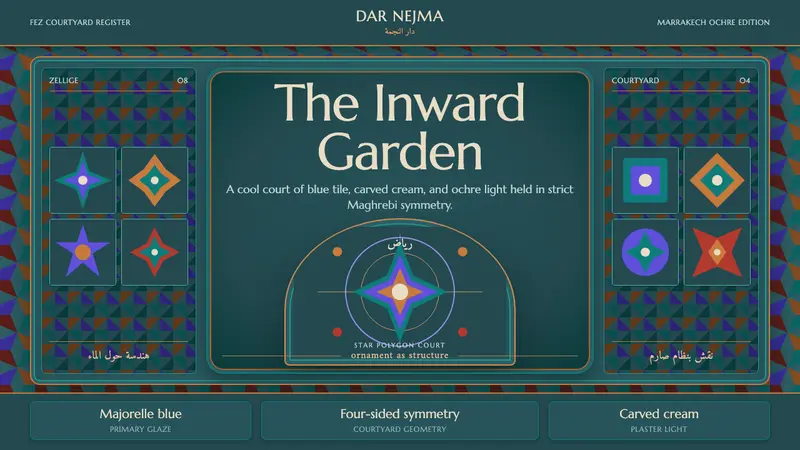 Moroccan RiadOrnament is structure. Majorelle blue and teal zellige frame a symmetrical arch.
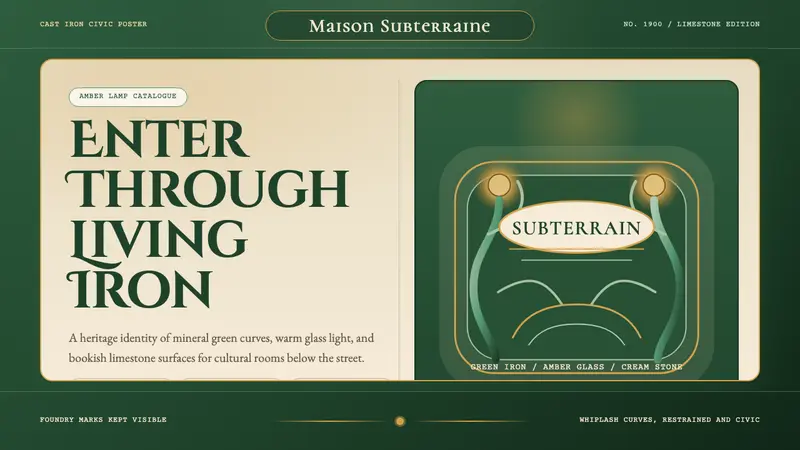 Paris Metro Guimard (1900)Civic sculpture, softly lit. Metro green ironwork frames amber glow and limestone type.
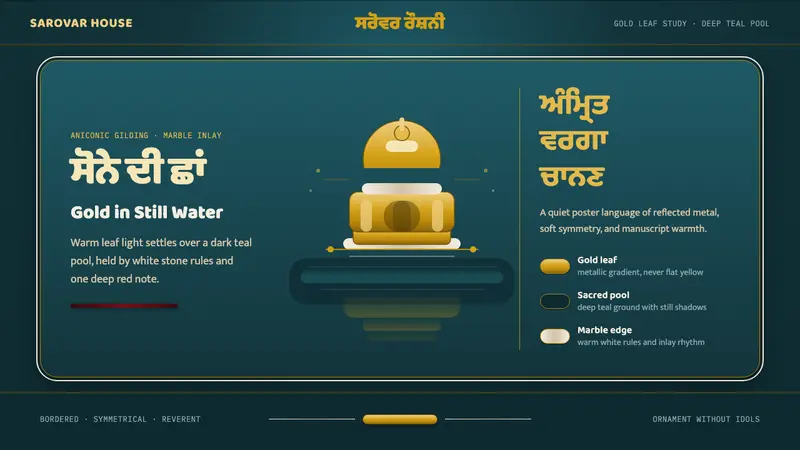 Sikh Golden TempleReverent gold in dark water. Teal ground, Gurmukhi type, marble rules hold the glow.
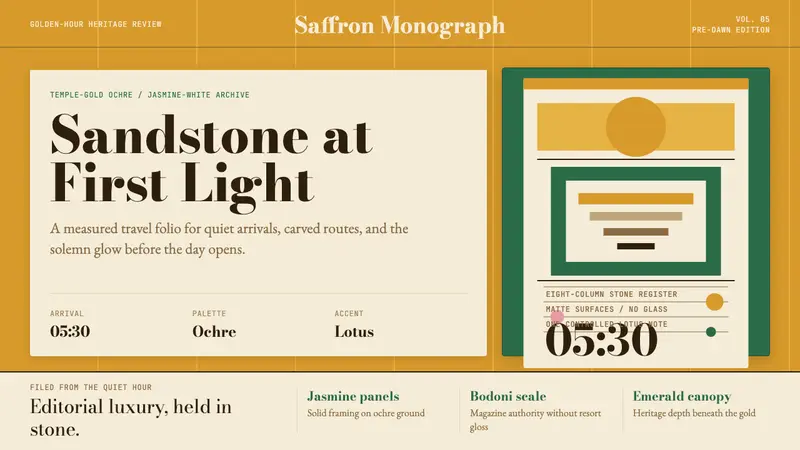 Cambodian Angkor Tourism ModernQuiet authority at dawn. Ochre ground, Bodoni serif, jasmine panels, one lotus-pink note.