About BSL-4 Biohazard Lab
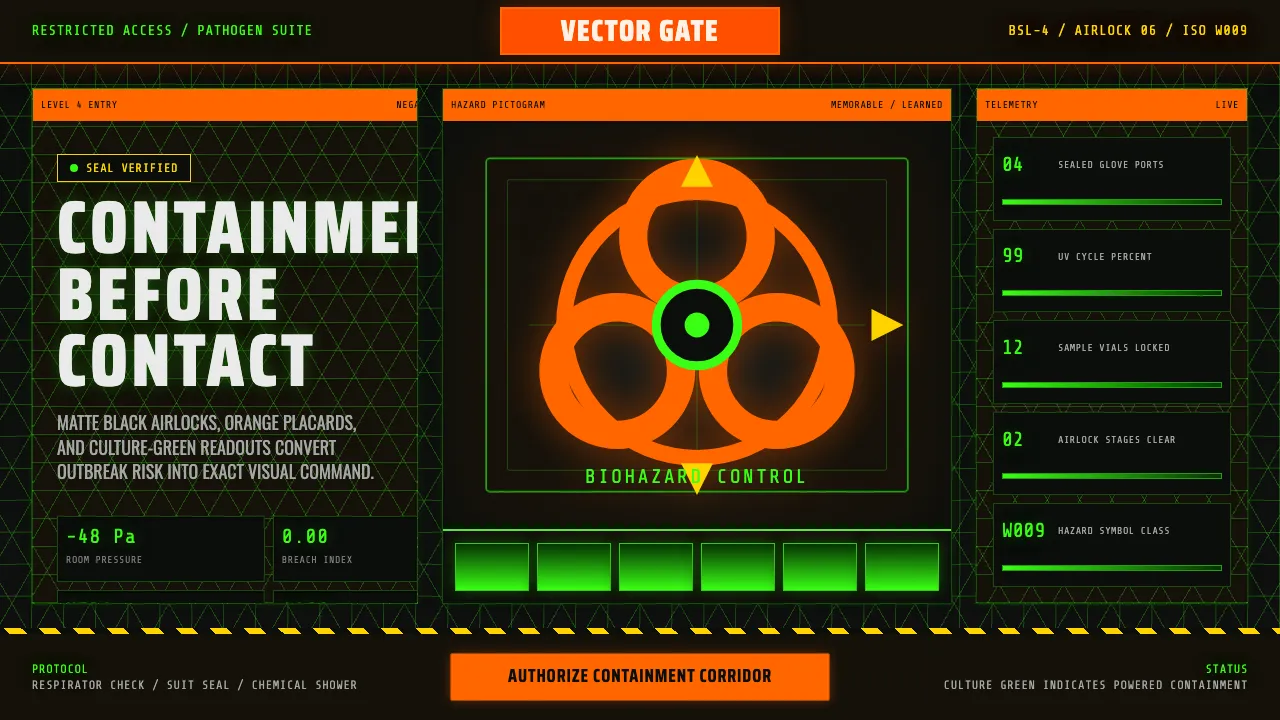
The Biosafety Level 4 aesthetic is the visual grammar of high-containment science: matte black airlocks, hex-grid pressure panels, fluorescent-orange hazard placards, and the glow of green culture vials behind sealed glass. Its anchor is the international biohazard trefoil, designed by Charles Baldwin and the Dow Chemical team in 1966 to be memorable yet meaningless until learned.
This system turns outbreak-thriller signage into an interface language — stencil hazard type, Share Tech Mono airlock readouts, hazard-stripe borders, and warning-orange call-to-action plates set against a containment-black ground that never goes cream or white.
- Origin
- Global / Internet (international biosafety standards, ISO 7010, US CDC/NIH lab signage)
- Era
- 1950–1990 (biohazard symbol introduced 1966; modern BSL containment standards)
- Key figures
- Charles Baldwin · Dow Chemical team · ISO 7010 W009
- Movements
- postwar safety-signage design · BSL containment architecture · outbreak/contagion visual culture
BSL-4 Biohazard Lab design spec
Colors
Typography
The other 11 sections — buttons, cards, spacing, motion, techniques and more — open once you unlock. Download the DESIGN.md or send it to your AI in one click. Unlock once, yours forever.
Sign up nowStyles similar to BSL-4 Biohazard Lab
Also inspired by science & nature, with a close feel.
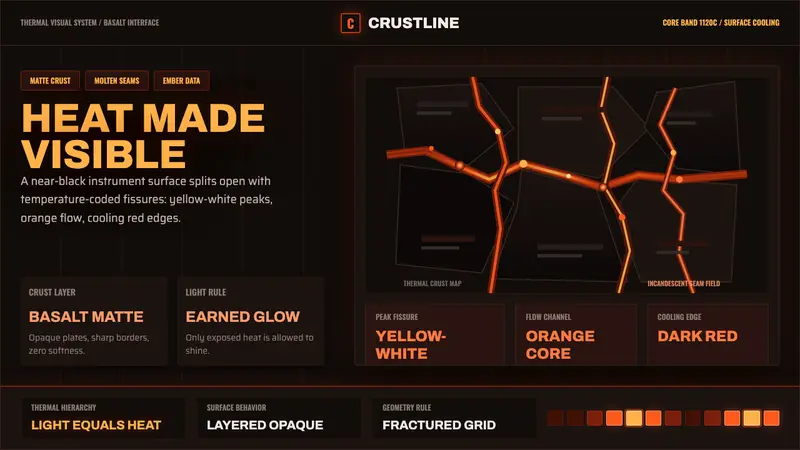 Kīlauea Lava FlowHeat earns its light. Matte basalt grid, molten orange fissures, ember telemetry.
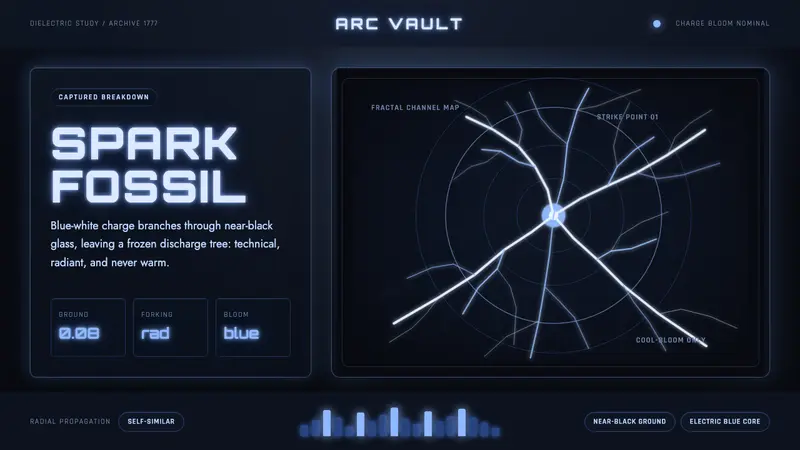 Lichtenberg FigureA spark fossil. Blue-white fractals bloom across near-black dielectric glass.
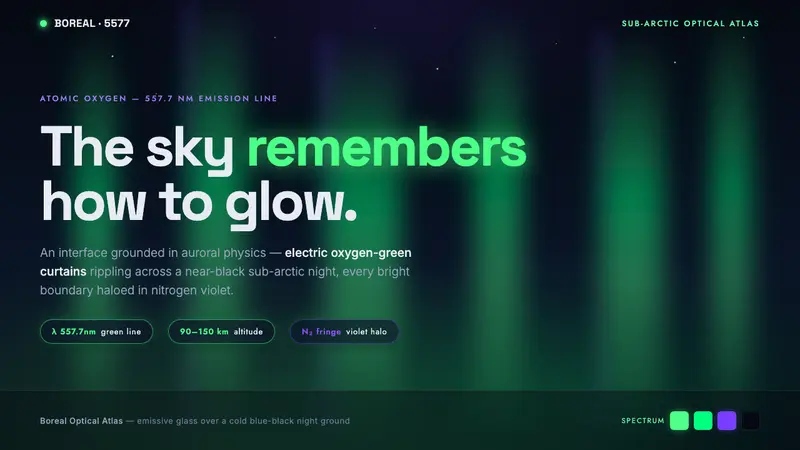 Yukon Northern LightsPhysics as interface. Electric oxygen-green curtains glow over blue-black night, fringed in violet.
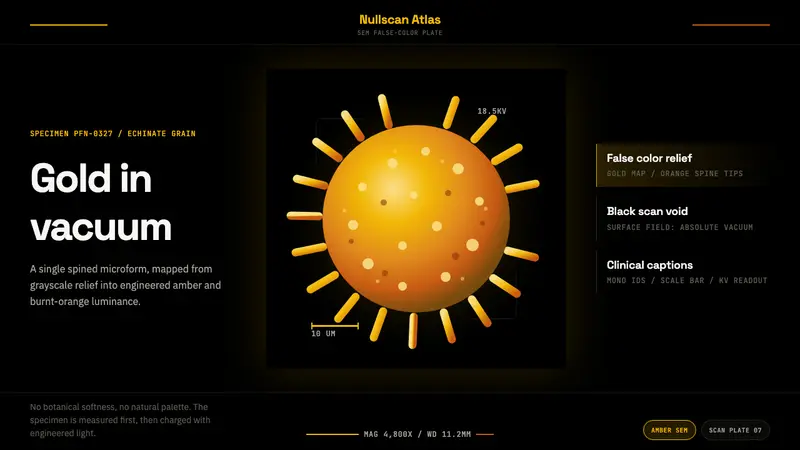 Pollen MicrographMeasured, then made luminous. Gold SEM grain floats in black with mono scale marks.