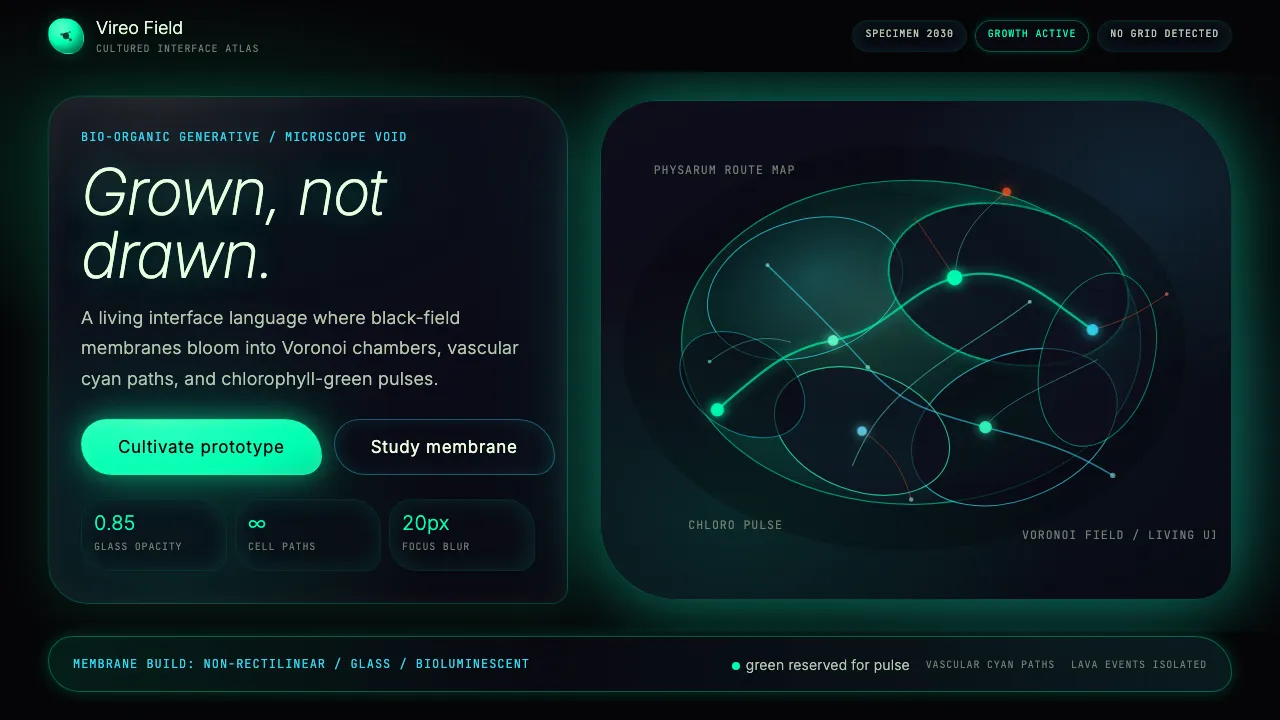
About Bio-Organic Generative
Bio-Organic Generative is the speculative 2030 aesthetic of interfaces grown rather than drawn. Refik Anadol's data hallucinations, Neri Oxman's silk pavilions, and *Physarum* slime molds converge into voronoi cells, mycelium branches, and bioluminescent blooms. Every surface is a membrane, every accent emits light, and every curve is a path no human designer would plot — a living cell rendered under the microscope of a machine.
- Origin
- Istanbul / Los Angeles / Cambridge MA / Milan / Tokyo
- Era
- 2018 Machine Hallucinations watershed; speculative 2030 trajectory
- Key figures
- Neri Oxman · Refik Anadol · Patricia Urquiola · Iris van Herpen · Marcos Novak
- Movements
- biomimicry design · parametric architecture · generative AI form-finding
Bio-Organic Generative design spec
Colors
Background
Surface
Primary
Secondary
Accent
Text
Typography
Inter DisplayHeadings
InterBody
JetBrains MonoMono
Unlock for 1 credit
The other 11 sections — buttons, cards, spacing, motion, techniques and more — open once you unlock. Download the DESIGN.md or send it to your AI in one click. Unlock once, yours forever.
Sign up nowHave an account? Sign in
Styles similar to Bio-Organic Generative
Also inspired by design movements, with a close feel.
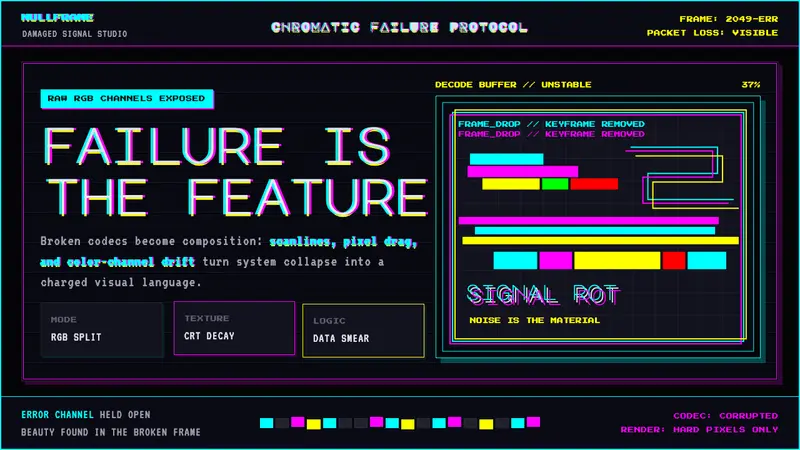 Glitch DatamoshErrors as composition. Corrupted JPEGs, RGB splits, scanlines — failure treated as feature.
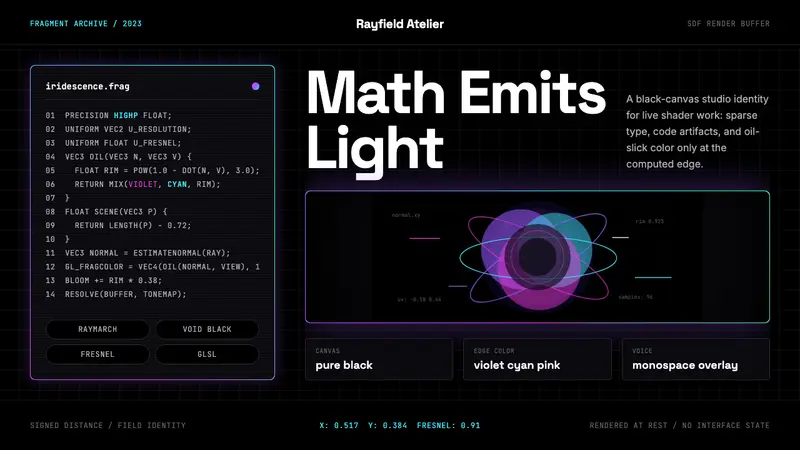 WebGL Shader Iridescent (2023)GPU math turns luminous. Black canvas, mono code, and violet-cyan-pink Fresnel bloom.
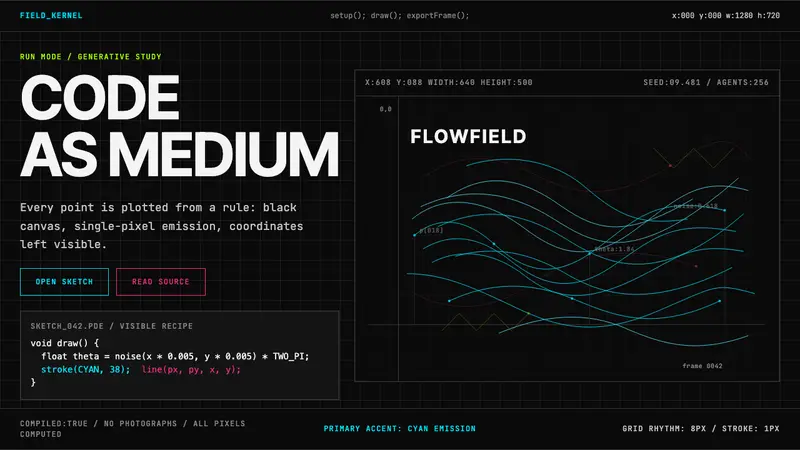 Processing / GenerativeCode becomes image. Cyan hairlines trace black-grid flowfields with mono coordinates.
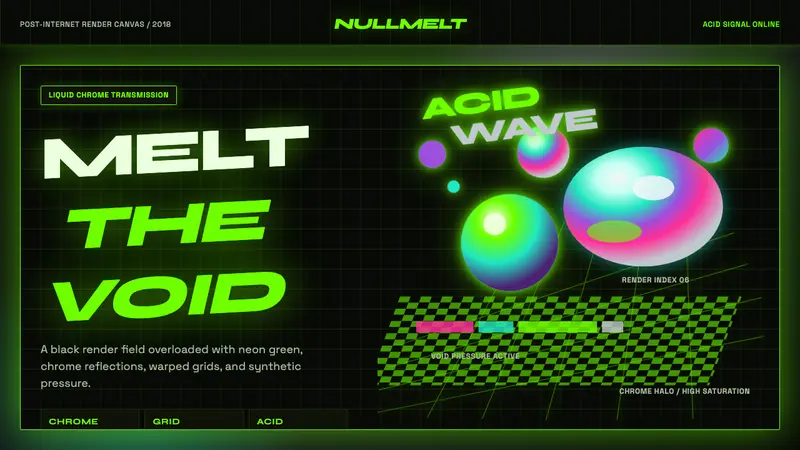 Acidwave 3D RenderPsychedelia hits the render engine. Neon green, chrome orbs, and warped grids burn over black.