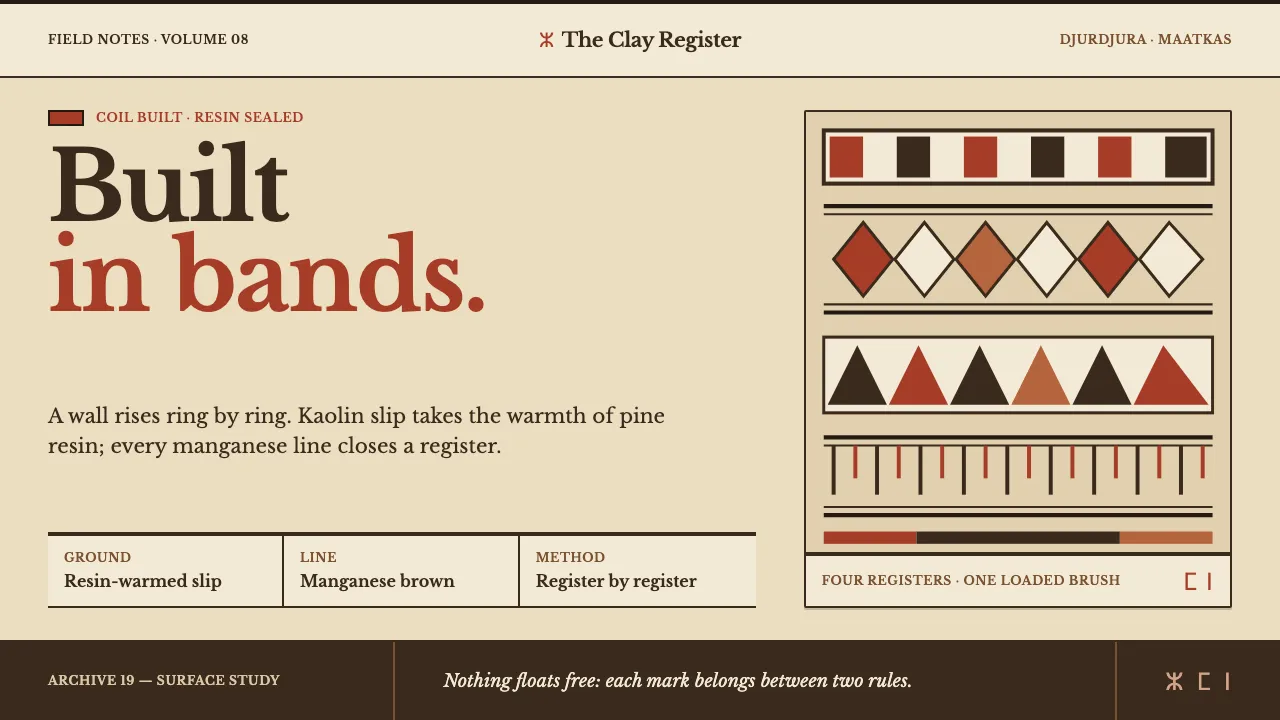
About Kabyle Pottery
Kabyle pots are coiled by hand, never thrown. Women in the Djurdjura villages build a jar wall upward in rings, coat it in kaolin slip, and paint it in stacked horizontal registers — checkerboards, chevrons, combs, lozenge chains, the eye motif — each band closed off by a pair of dark rules.
Hot pine resin seals the finished pot and yellows the white slip to a warm beige with a satin, faintly sticky sheen. This system inherits that surface and that discipline: everything sits in a band, every band has a top and a bottom, and every line carries the weight of a loaded brush.
- Origin
- Grande Kabylie, Djurdjura massif, Algeria
- Era
- 19th century and earlier, continuous into the 20th (V&A jar acquired 1868)
- Key figures
- the women potters of Maatkas · the women potters of Ath Kheir
- Movements
- Amazigh (Berber) domestic ceramics · Maghrebi pre-Islamic geometric ornament · Tifinagh-adjacent sign systems
Kabyle Pottery design spec
Colors
Typography
The other 11 sections — buttons, cards, spacing, motion, techniques and more — open once you unlock. Download the DESIGN.md or send it to your AI in one click. Unlock once, yours forever.
Sign up nowStyles similar to Kabyle Pottery
Also inspired by crafts & folk art, with a close feel.
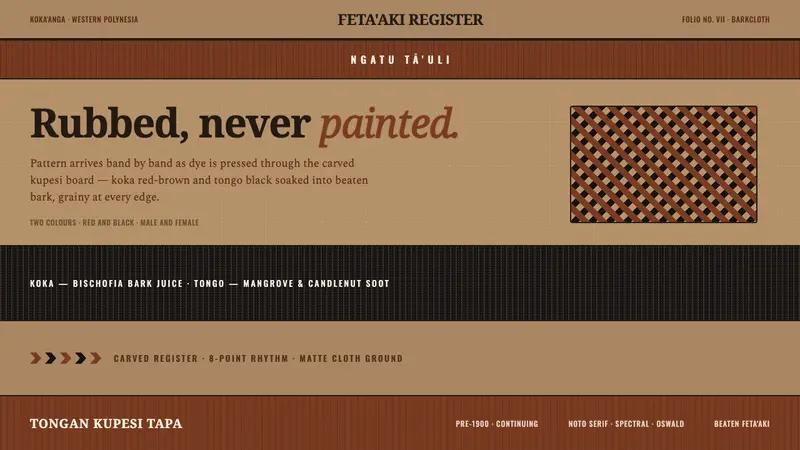 Tongan Kupesi TapaRubbed, never painted. Koka red and tongo black soak into beaten tan bark as stacked grainy bands.
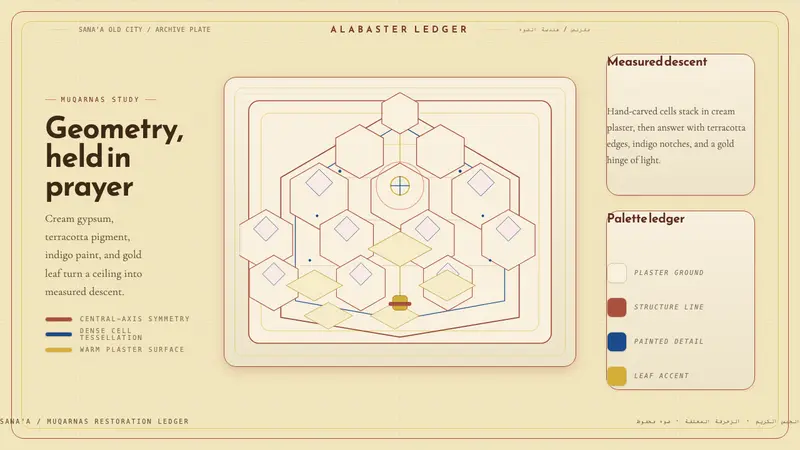 Yemeni Mukarras VaultSolemn geometry, warmed by plaster. Cream gypsum, terracotta, and indigo build the vault.
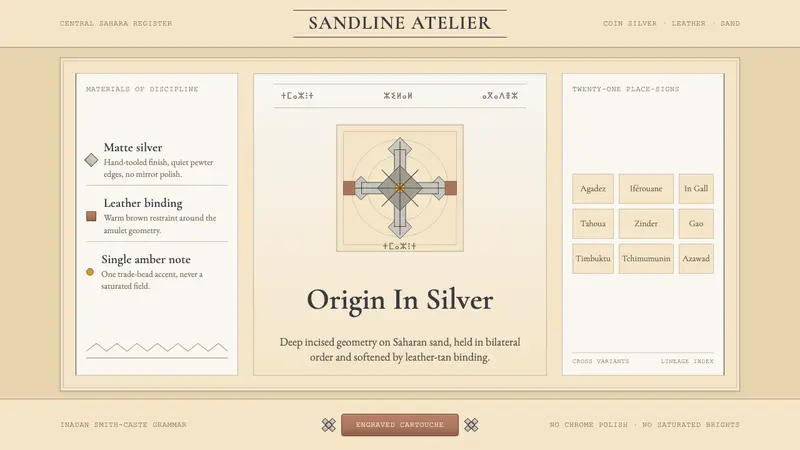 Tuareg Silver Jewelry (Sahara)Strict desert luxury. Matte silver geometry on Saharan sand, bound by leather-tan lines.
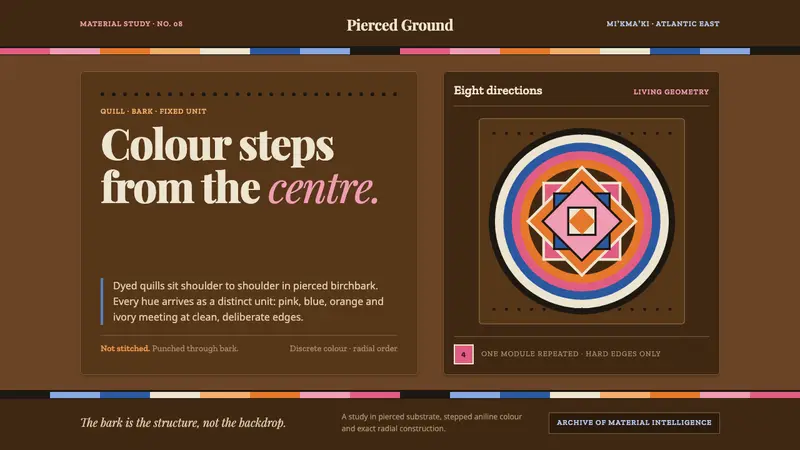 Miʼkmaq QuillworkColour never blends. Bright quill bands step across dark birchbark toward an eight-point star.