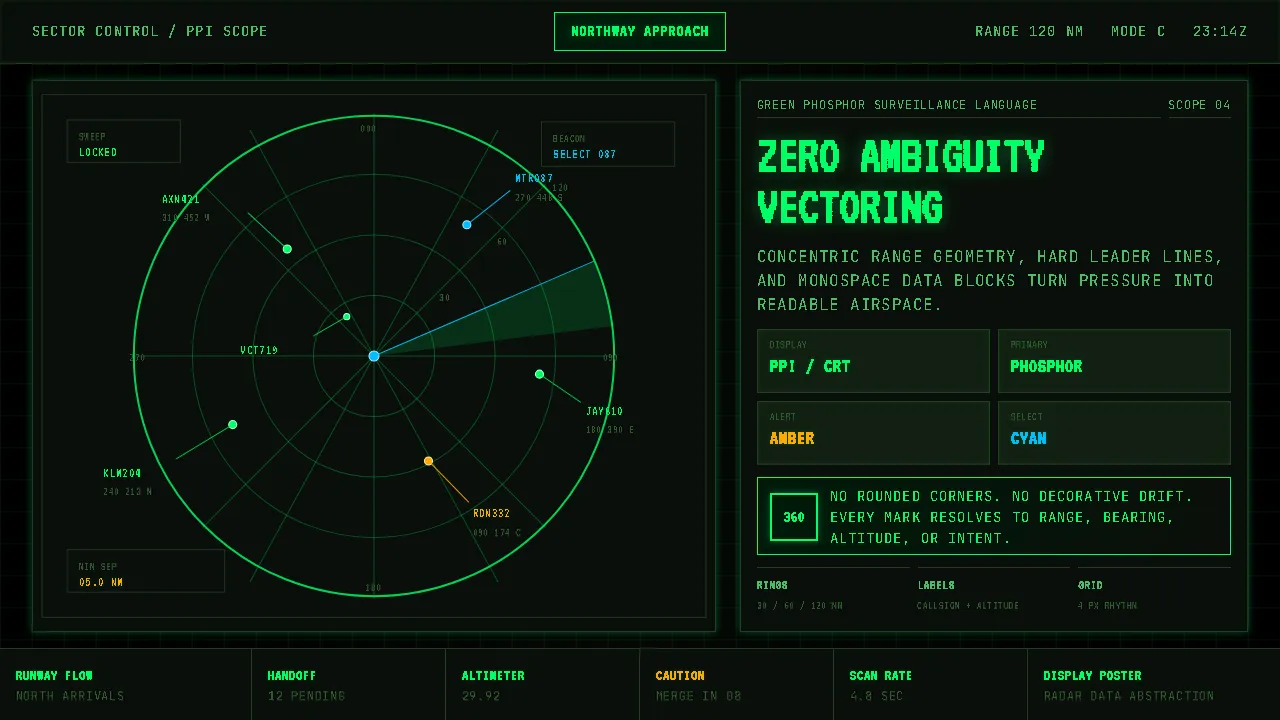
About Air Traffic Control Radar
Air Traffic Control Radar distills the visual language of Plan Position Indicator displays — the sweeping radial beam, concentric range rings, and phosphor-green target blips that have guided aircraft since the 1950s. It is a system built for zero-ambiguity legibility under life-or-death pressure.
Every element references real FAA STARS and ERAM consoles: monospace callsign tags, leader-lines connecting blips to data blocks, and the unmistakable green-on-black palette burned into CRT phosphor. The aesthetic is military-industrial, pixel-precise, and unapologetically functional.
- Origin
- United States / United Kingdom
- Era
- 1940s WWII radar development; PPI display ~1950s; modern STARS/ERAM 2000s–2024
- Key figures
- Robert Watson-Watt · Luis Walter Alvarez · FAA Air Traffic Organization · Lockheed Martin
- Movements
- Air-traffic control engineering · Radar-display industrial design · Glass-cockpit digital instrumentation
Air Traffic Control Radar design spec
Colors
Typography
The other 11 sections — buttons, cards, spacing, motion, techniques and more — open once you unlock. Download the DESIGN.md or send it to your AI in one click. Unlock once, yours forever.
Sign up nowStyles similar to Air Traffic Control Radar
Also inspired by architecture & places, with a close feel.
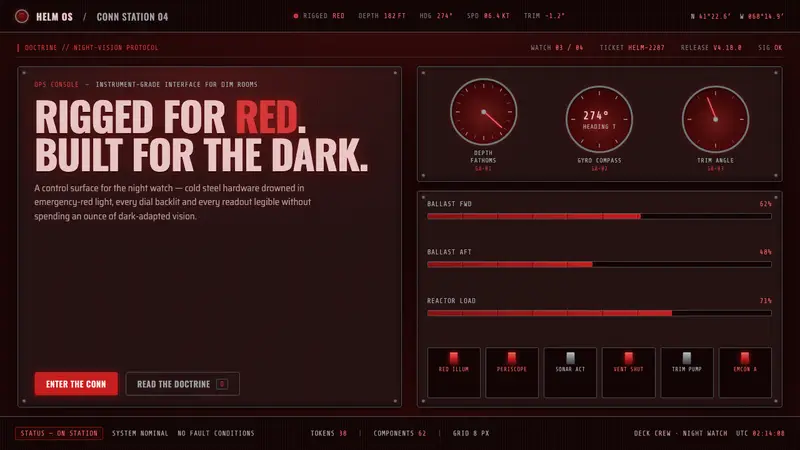 Submarine Control RoomRigged for red. Steel hardware drowned in emergency lamplight, every dial backlit, hull near-black.
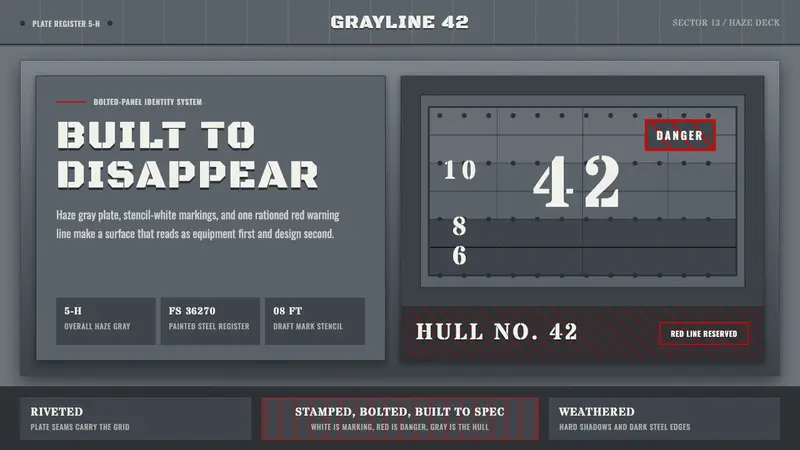 Battleship Naval GrayBuilt to spec. Haze gray steel, rivet grids, stencil white, and one danger-red rule.
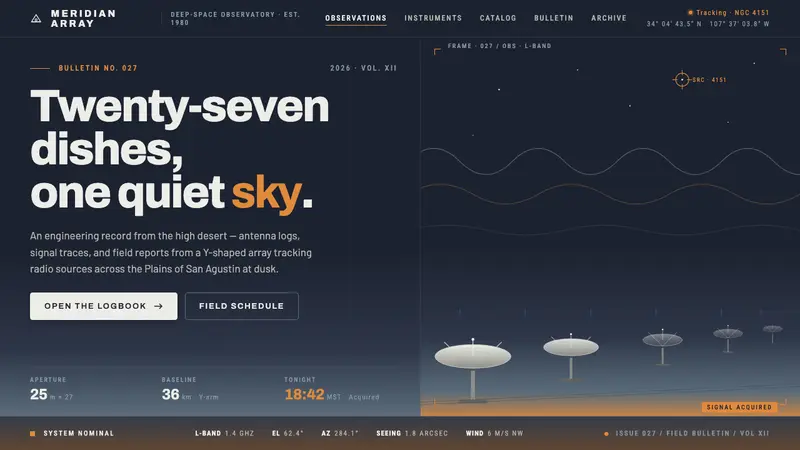 Radio Telescope ArrayEngineering at dusk. Steel-white dishes tilt against a twilight sky bleeding to horizon amber.
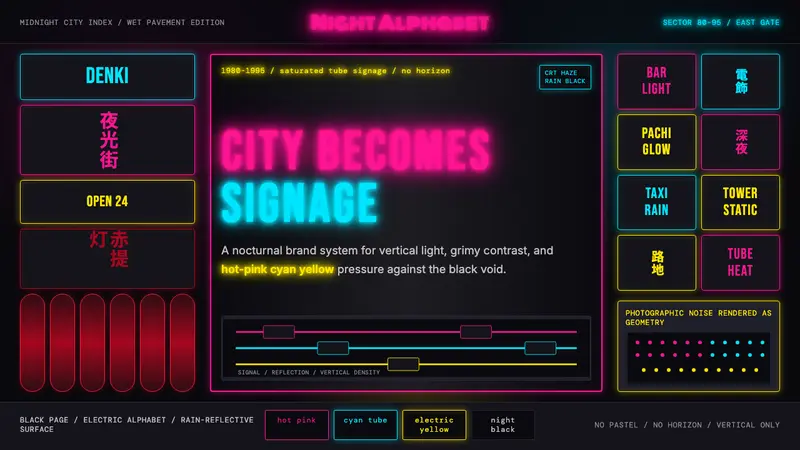 Tokyo Shinjuku Neon (1980)Night turns into alphabet. Hot pink, cyan, and yellow stack as glowing vertical signs.