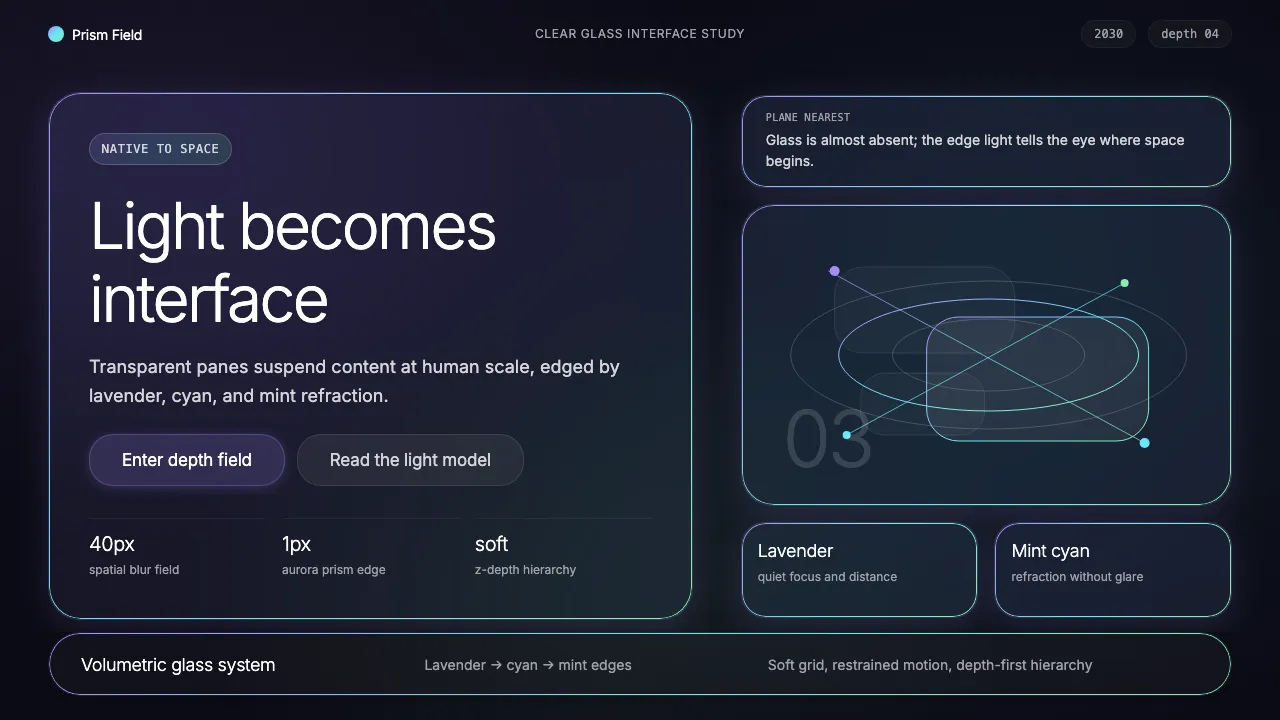
About Vision Pro Spatial UI (2030)
Vision Pro Spatial UI is the design language of head-worn mixed reality at maturity — clear glass panels suspended in actual three-dimensional space, with aurora-iridescent edge lighting, parallax depth, and ultra-light typography that feels woven from light itself. Born from visionOS 1.0 in 2024, this 2030 extrapolation imagines the language fully refined: every surface is translucent, every accent shimmers with a lavender-cyan-mint aurora gradient, and the dark ground behind is the real world itself.
Where Apple's Liquid Glass (2024) brought spatial metaphors to flat screens, Spatial UI 2030 is native to space. Content floats on clear glass at varying depths, soft-shadow blur creates natural focal hierarchy, and iridescent hairline borders catch light like the edge of a prism. The result is an interface that feels less like software and more like structured light.
- Origin
- Cupertino, California
- Era
- 2024 visionOS launch; 2030 maturity (speculative — extrapolated from current Apple Spatial trajectory)
- Key figures
- Alan Dye · Imran Chaudhri · Bret Victor
- Movements
- Apple Spatial UI evolution · Post-flat design · Glassmorphism maturation · Mixed-reality UI
Vision Pro Spatial UI (2030) design spec
Colors
Typography
The other 11 sections — buttons, cards, spacing, motion, techniques and more — open once you unlock. Download the DESIGN.md or send it to your AI in one click. Unlock once, yours forever.
Sign up nowStyles similar to Vision Pro Spatial UI (2030)
Also inspired by brands & products, with a close feel.
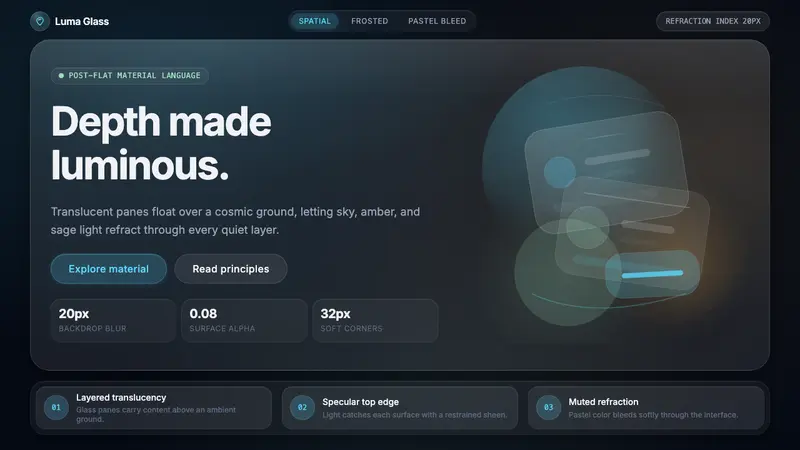 Apple Liquid Glass 2024Skeuomorphism, reborn for spatial. Frosted panels, specular highlights, depth as a design material.
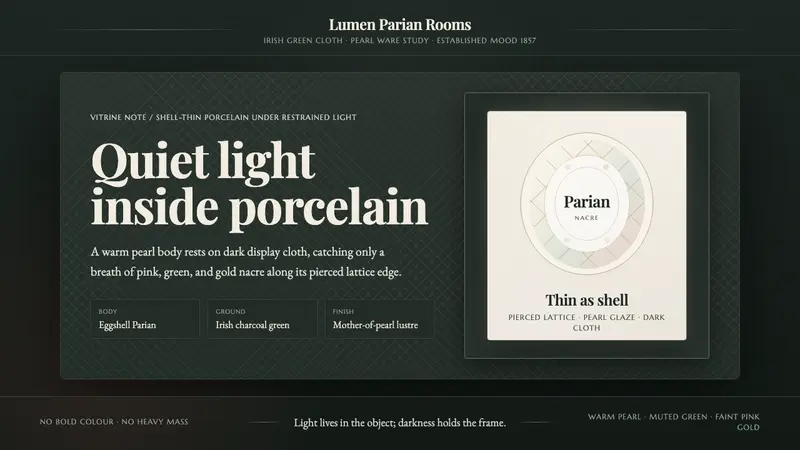 Belleek Parian ChinaPorcelain glows in restraint. Pearl white, nacre tints, and lattice sit on dark green cloth.
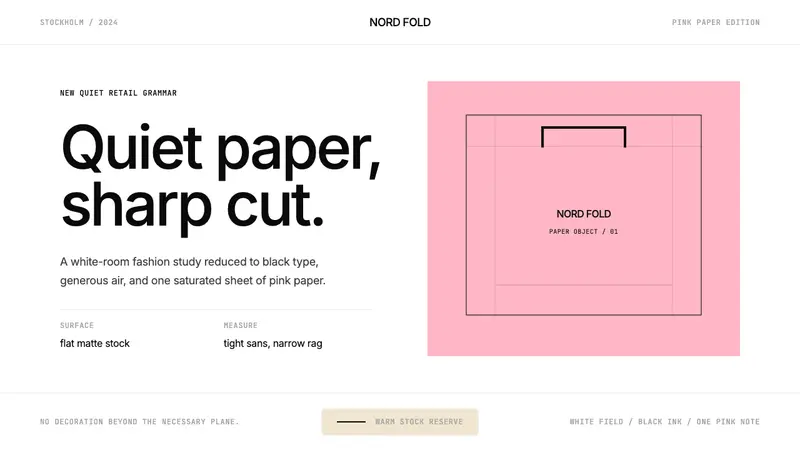 Acne Studios Pink-PaperQuiet luxury in one pink plane. Inter type floats on white with a bag-like rectangle.
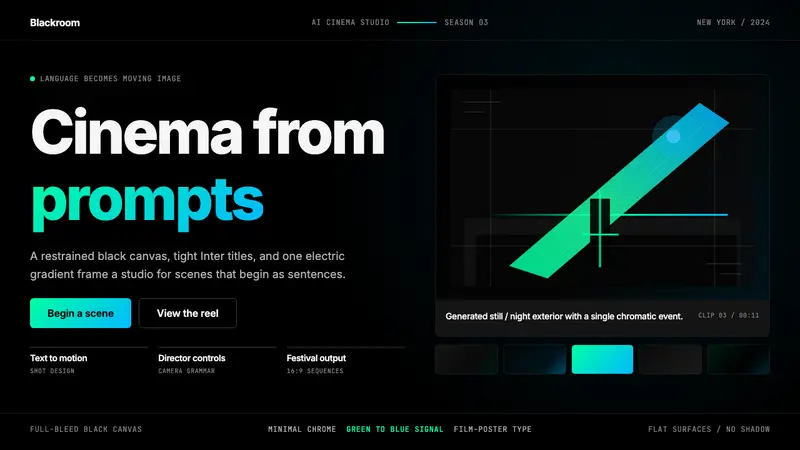 Runway MLCinema, not dashboard. Deep black frames tight Inter type and one green-blue electric signal.