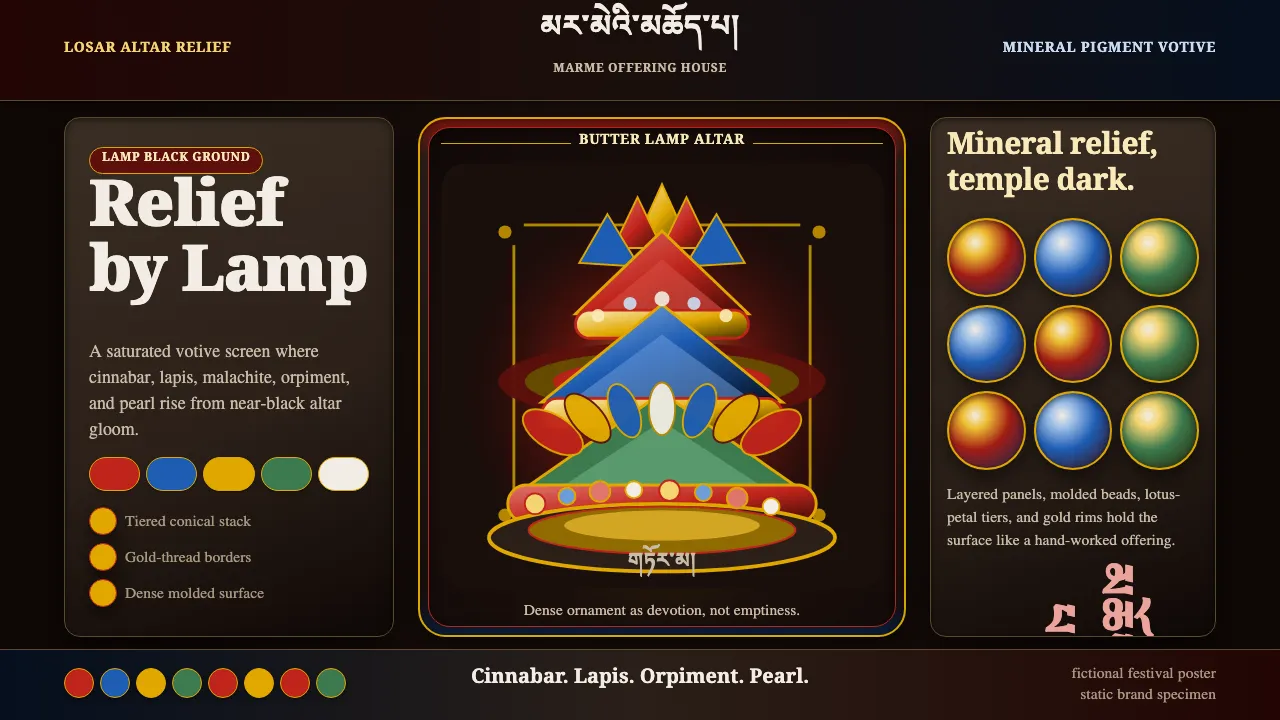
About Tibetan Butter Sculpture
Tibetan butter sculpture — torma, or tsepdro — is a votive relief art molded from dyed yak butter and barley flour, tinted with the same mineral pigments that color thangka painting: cinnabar, azurite, malachite, orpiment, pearl. Stacked into tiered conical forms and crowned with flame and lotus-petal ornament, the offerings are set on dark monastery altars and read by butter-lamp light, especially at Losar, the Tibetan New Year. This system translates that altar into a screen: a saturated, densely ornamented bright relief glowing out of near-black temple gloom, every surface hand-worked and maximally detailed.
- Origin
- Tibetan plateau, monastery temples
- Era
- pre-1900 (living monastic tradition; Losar festival art)
- Key figures
- Monastic butter-sculpture workshops · Gelug ritual artisans
- Movements
- Tibetan Buddhist ritual art · Losar festival torma offering
Tibetan Butter Sculpture design spec
Colors
Typography
The other 11 sections — buttons, cards, spacing, motion, techniques and more — open once you unlock. Download the DESIGN.md or send it to your AI in one click. Unlock once, yours forever.
Sign up nowStyles similar to Tibetan Butter Sculpture
Also inspired by crafts & folk art, with a close feel.
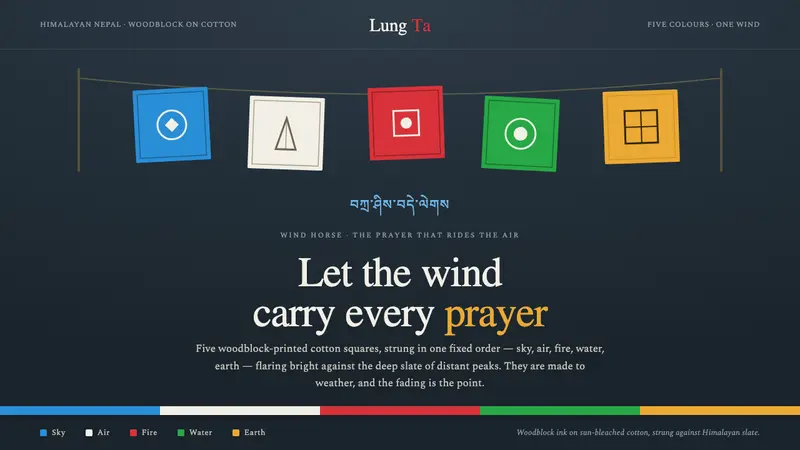 Nepali Lungta Prayer FlagsLet the wind carry the prayer. Five woodblock flags flare in fixed order against Himalayan slate.
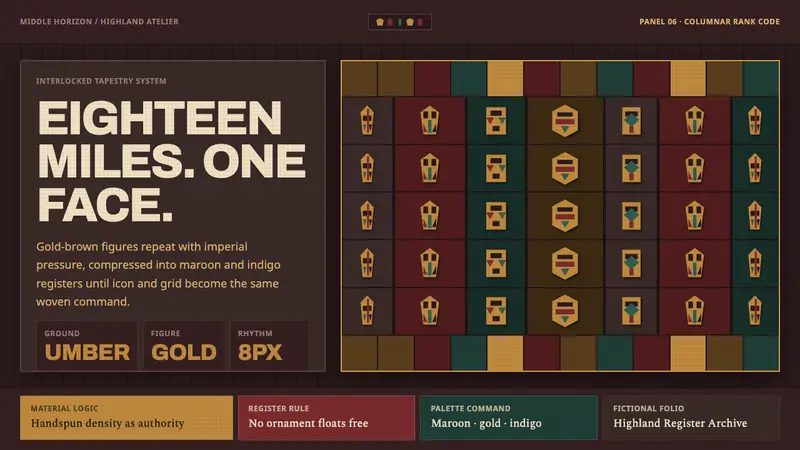 Wari Tapestry TunicAuthority woven into columns. Gold figures march on maroon-umber, compressed by rigid grids.
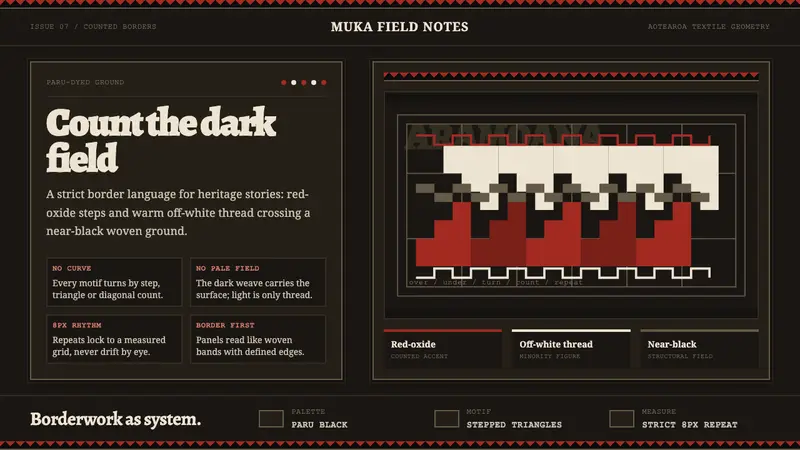 Māori Tāniko Border WeaveCounted darkness. Red-oxide steps and off-white thread cross a paru-black grid.
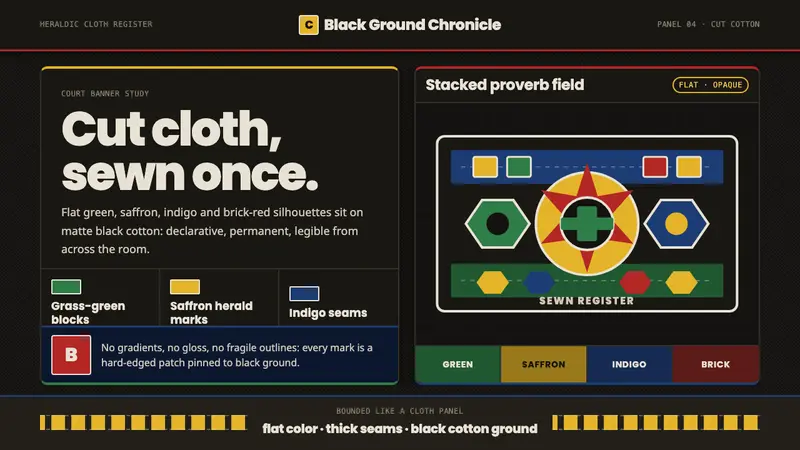 Fon Appliqué BannerRoyal cloth speaks plainly. Flat saffron, green and indigo silhouettes on black cotton.