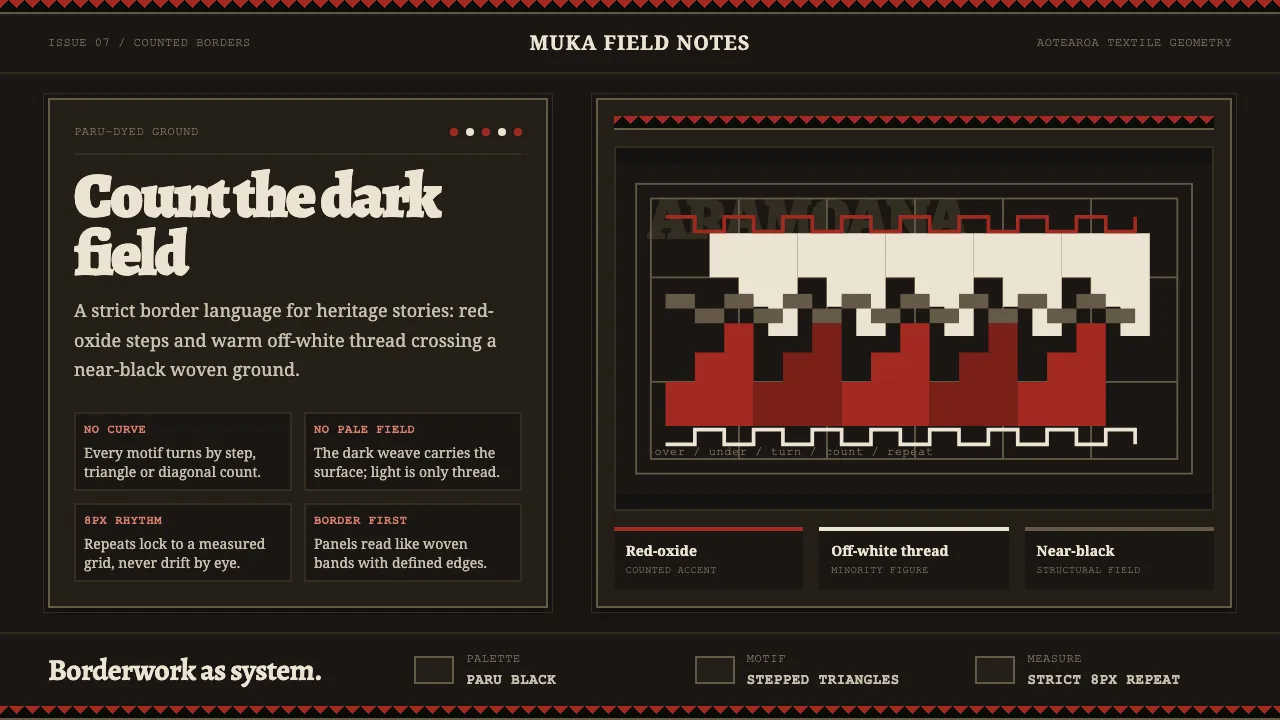
About Māori Tāniko Border Weave
Along the border of a classic-period Māori cloak runs a dense band of finger-twined muka — flax fibre worked by hand into a geometry of steps, triangles and diamonds. This is tāniko, one of the most technically demanding textile arts in the world, built stitch by stitch with no loom, only fingers counting threads. The palette is deliberately narrow: a near-black ground dyed in iron-rich paru mud, red-oxide accents, and a warm off-white pattern thread. The aramoana zigzag — "pathway of the sea" — jumps across the dark field in strict diagonals. Nothing curves. Nothing is cream. The dark weave is always the field, never the figure.
- Origin
- Aotearoa / New Zealand (Oceania)
- Era
- pre-1900 (classic-period Māori weaving)
- Key figures
- kairaranga master weavers · whatu twining practitioners
- Movements
- Māori raranga / whatu textile tradition · tāniko borderwork on kaitaka and korowai cloaks
Māori Tāniko Border Weave design spec
Colors
Typography
The other 11 sections — buttons, cards, spacing, motion, techniques and more — open once you unlock. Download the DESIGN.md or send it to your AI in one click. Unlock once, yours forever.
Sign up nowStyles similar to Māori Tāniko Border Weave
Also inspired by crafts & folk art, with a close feel.
 Nepali Lungta Prayer FlagsLet the wind carry the prayer. Five woodblock flags flare in fixed order against Himalayan slate.
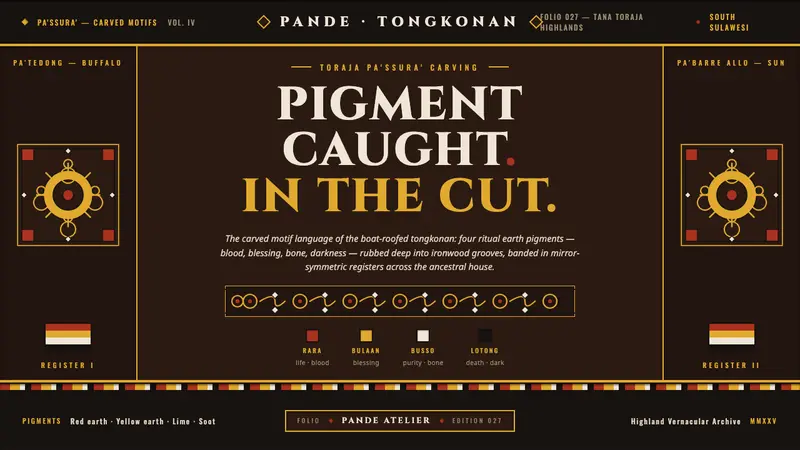 Toraja Pa'ssura' CarvingPigment caught in the cut. Red, yellow, lime, soot rubbed into ironwood grooves in mirror symmetry.
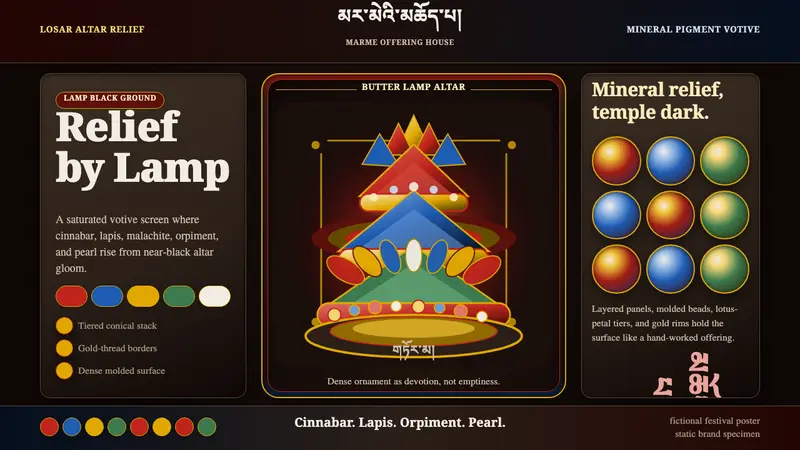 Tibetan Butter SculptureDevotion made dense. Cinnabar, lapis, and gold relief glow from altar black.
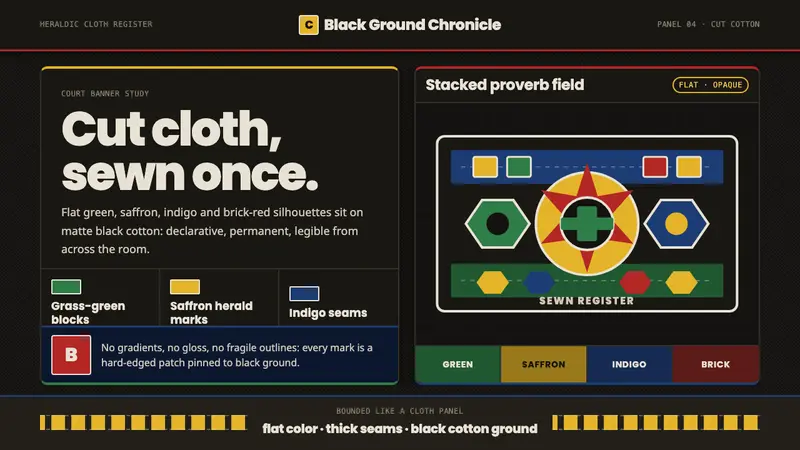 Fon Appliqué BannerRoyal cloth speaks plainly. Flat saffron, green and indigo silhouettes on black cotton.