About Sombrero Vueltiao
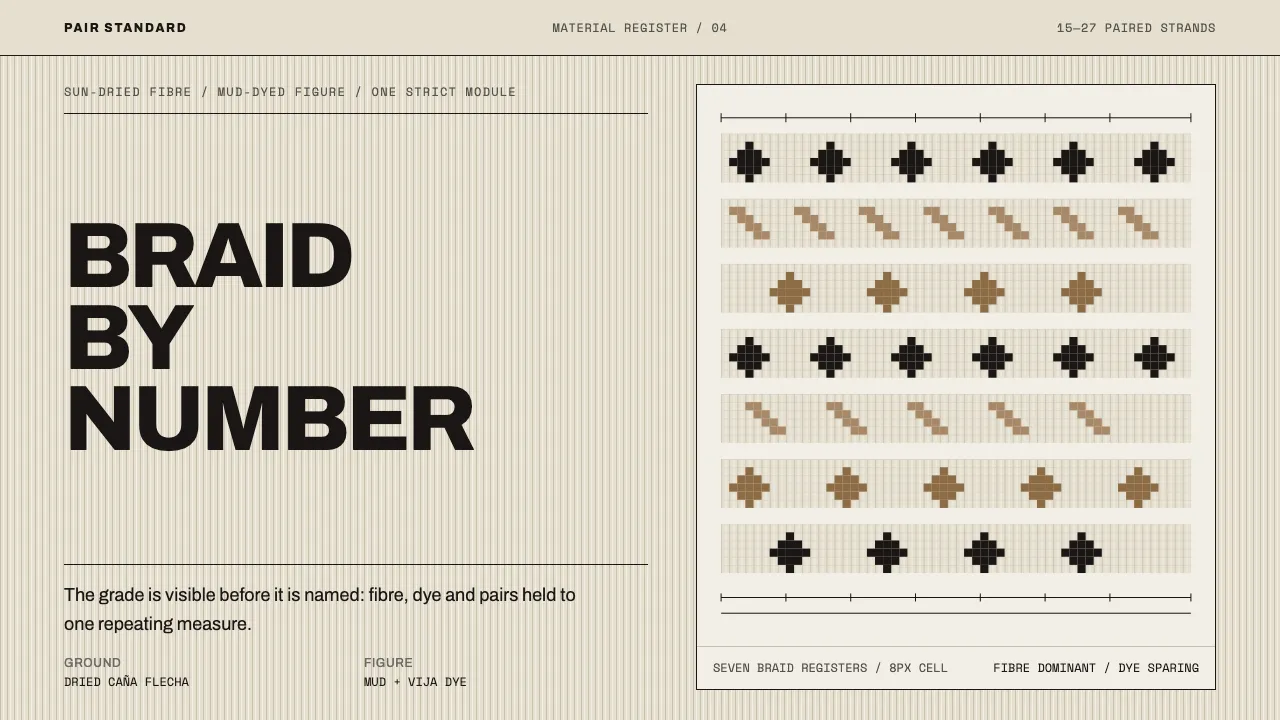
The sombrero vueltiao is a counting system before it is a hat. Caña flecha is split into strips; half dry in the sun to a beige-white, half sit three or four days in black mud and are boiled with vija until they hold a brown-black that never quite becomes black. Plaited together, the two make a braid whose repeating figures — pintas — carry Zenú clans, animals and landmarks around the circuit.
Quality is counted in paired strands: fifteen at the coarse end, twenty-seven at the finest. This system takes the same measure. Everything is a band on a strict cell module, the black is a dye rather than an ink, and the surface stays matte — dried grass has no shine.
- Origin
- Tuchín and the Zenú resguardo, Córdoba and Sucre, Caribbean Colombia
- Era
- pre-Columbian Zenú weaving, in continuous production; national symbol by Law 908 of 8 September 2004
- Key figures
- the Zenú weaving families of Tuchín
- Movements
- Zenú textile and basketry tradition · Colombian artesanía as national identity
Sombrero Vueltiao design spec
Colors
Typography
The other 11 sections — buttons, cards, spacing, motion, techniques and more — open once you unlock. Download the DESIGN.md or send it to your AI in one click. Unlock once, yours forever.
Sign up nowStyles similar to Sombrero Vueltiao
Also inspired by crafts & folk art, with a close feel.
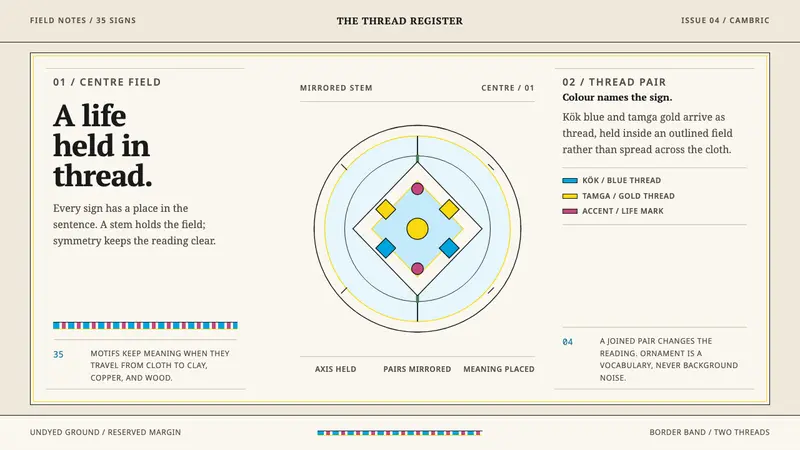 Crimean Tatar OrnekOrnament that can be read. Kök blue and tamga gold hold a mirrored stem on undyed cambric.
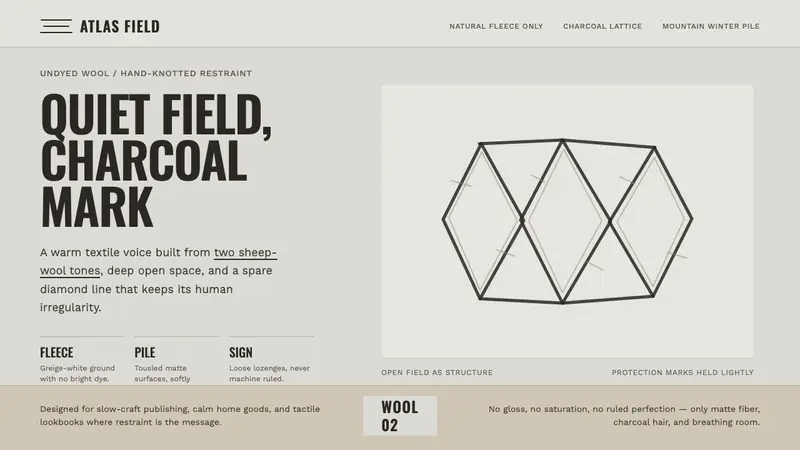 Beni Ourain Berber CarpetRestraint feels tactile. Greige wool field, Oswald type, and a loose charcoal lattice.
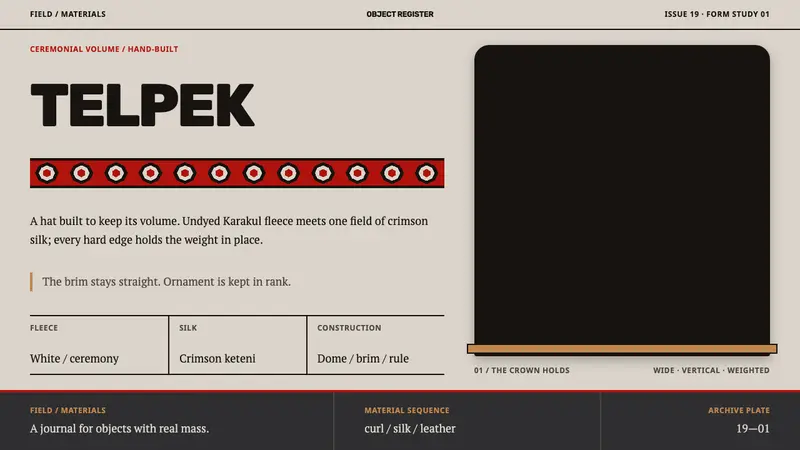 Turkmen TelpekWeight without gloss. Warm fleece ground, heavy black type, and a strict crimson gül band.
 Setu Leelo SilverEvery line returns changed. Matte silver rings answer across linen, cut by one red band.