About Shaker Hassan Al Said
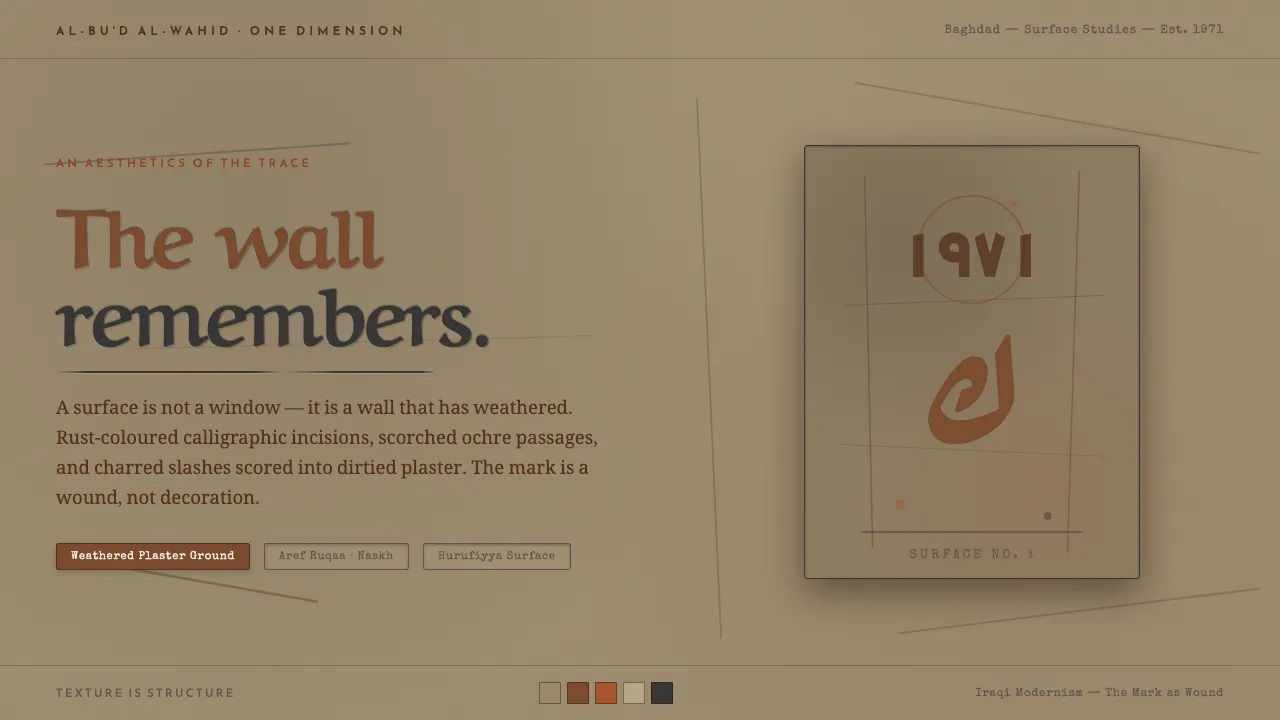
Shakir Hassan Al Said (1925–2004) was the Iraqi painter-theorist who abandoned easel painting for the "rugged aesthetic of the urban wall." His mature surfaces read as weathered plaster — cracked, burnt, scratched, and slashed — carrying graffiti-like Arabic letters and numerals as an "aesthetics of the trace."
This design system rebuilds that wall on screen: a warm, dirtied ochre-grey ground, rust-coloured calligraphic scars, and incised marks that look weathered rather than typeset. Texture is structure; the mark is a wound, not decoration.
- Origin
- Middle East / Iraq (Baghdad)
- Era
- 1950–1990 (One Dimension / al-Bu'd al-Wahid founded 1971)
- Key figures
- Shakir Hassan Al Said
- Movements
- One Dimension (al-Bu'd al-Wahid) · Baghdad Modern Art Group · Iraqi modernism · Hurufiyya
Shaker Hassan Al Said design spec
Colors
Typography
The other 11 sections — buttons, cards, spacing, motion, techniques and more — open once you unlock. Download the DESIGN.md or send it to your AI in one click. Unlock once, yours forever.
Sign up nowStyles similar to Shaker Hassan Al Said
Also inspired by art & artists, with a close feel.
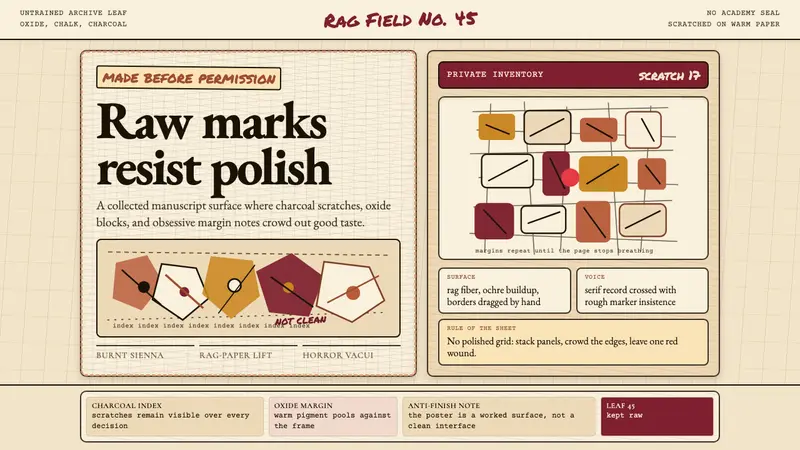 Art Brut (Dubuffet)Polish is refused. Bone-cream paper, earth pigments, scratched borders, dense margins.
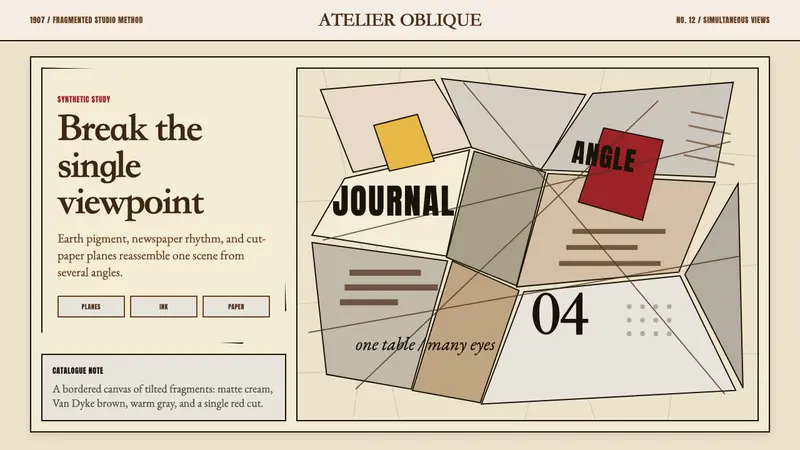 Picasso CubismSingle sight is shattered. Cream collage paper fractures brown-gray planes with one red cut.
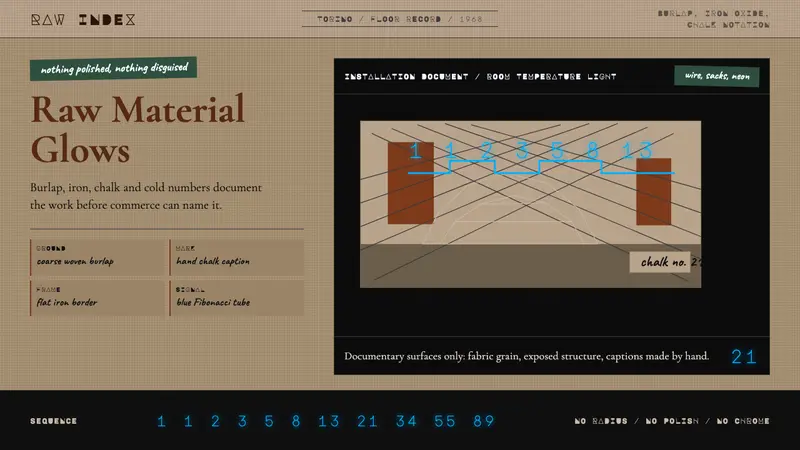 Arte Povera (Merz, 1968)Material refuses polish. Burlap ground, rust serif, chalk marks, neon Fibonacci.
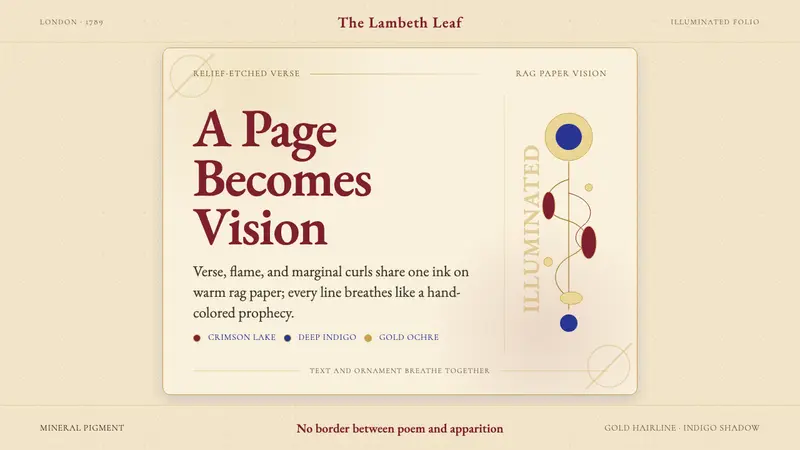 William Blake IlluminatedThe page becomes a vision. Crimson, indigo, and gold ornament breathe on rag paper.