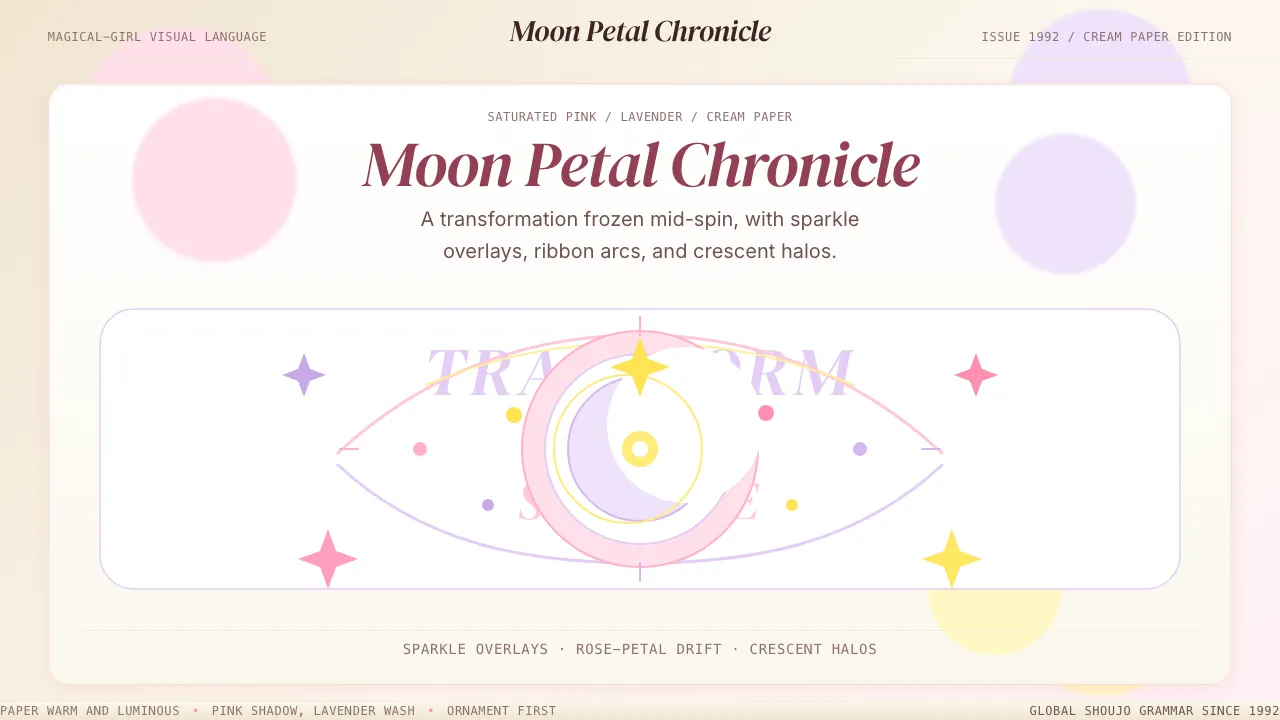
About Sailor Moon Shoujo
Sailor Moon Shoujo is the canonical 1990s magical-girl visual language: saturated pink and lavender, cream paper backdrops, sparkle overlays, rose petals, and ornate transformation-sequence flourishes. Born in Naoko Takeuchi's manga and Toei Animation's 1992 anime, it set the template for shoujo romance and magical-girl genres for decades.
The aesthetic feels like a transformation sequence frozen mid-spin — saturated pastel-rainbow swirls, crescent-moon tiaras, ribbons, and editorial italic flourishes. Sweet, ornate, narrative, unmistakably shoujo.
- Origin
- Japan; global magical-girl and shoujo-anime influence
- Era
- 1991 manga debut (Nakayoshi); 1992 anime; ongoing through Sailor Moon Crystal 2014+
- Key figures
- Naoko Takeuchi · Toei Animation · Junichi Sato · Kunihiko Ikuhara
- Movements
- 1990s magical-girl anime · shoujo manga golden age · bishoujo aesthetic
Sailor Moon Shoujo design spec
Colors
Typography
The other 11 sections — buttons, cards, spacing, motion, techniques and more — open once you unlock. Download the DESIGN.md or send it to your AI in one click. Unlock once, yours forever.
Sign up nowStyles similar to Sailor Moon Shoujo
Also inspired by film, games & music, with a close feel.
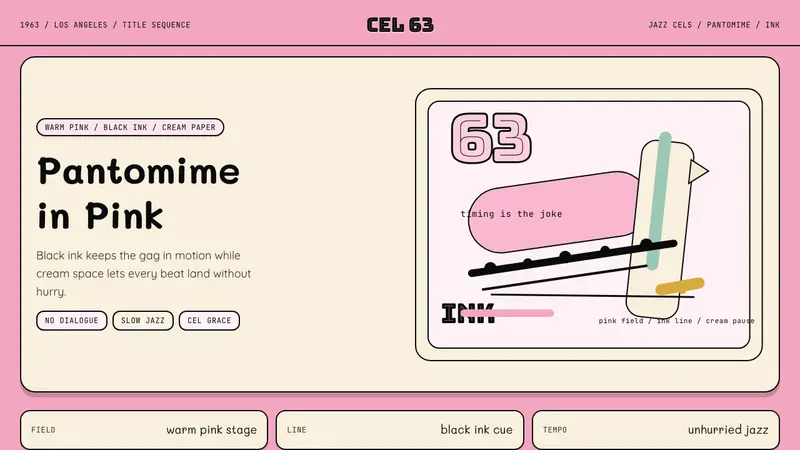 Pink Panther Cartoon (1963)Cool silence with a grin. Pink field, black ink, cream cel space.
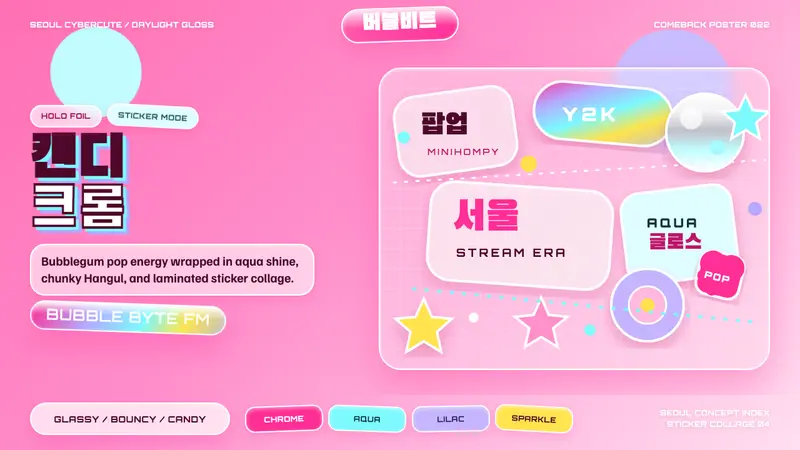 K-Pop Y2K SeoulCandy chrome goes maximal. Hot pink, aqua, Hangul type, and sticker collage shine.
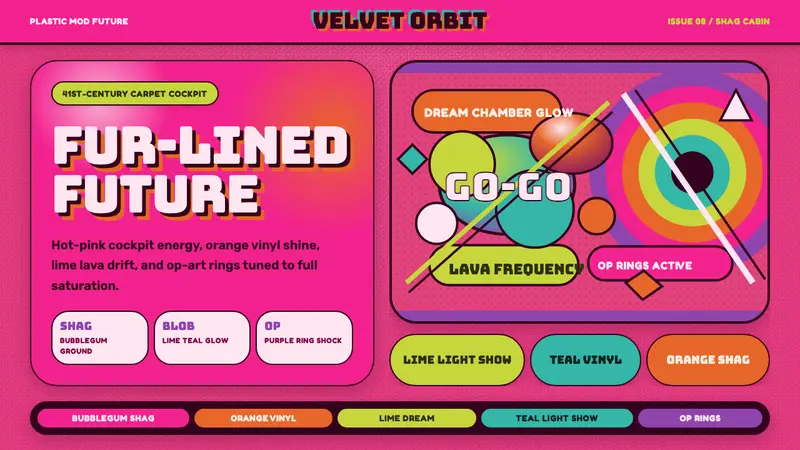 Barbarella (1968)Space-camp overload. Hot pink shag, lava blobs, and op-art rings collide.
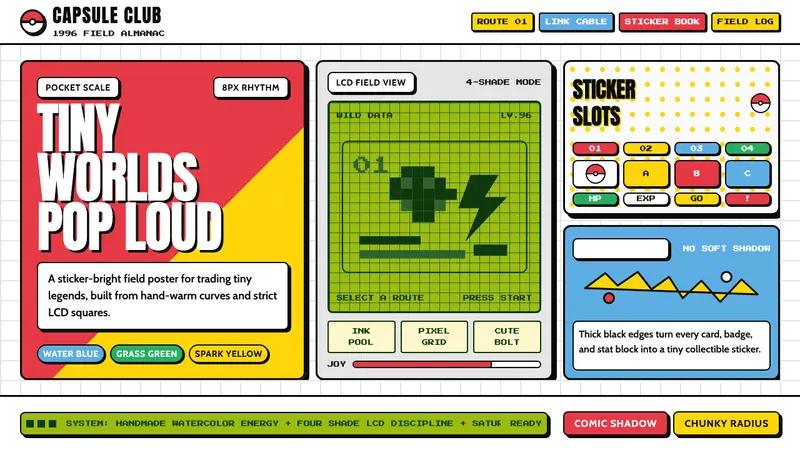 Pokémon Game BoyKawaii meets cartridge logic. Capsule red, LCD green, Anton heft, and 8px grids collide.