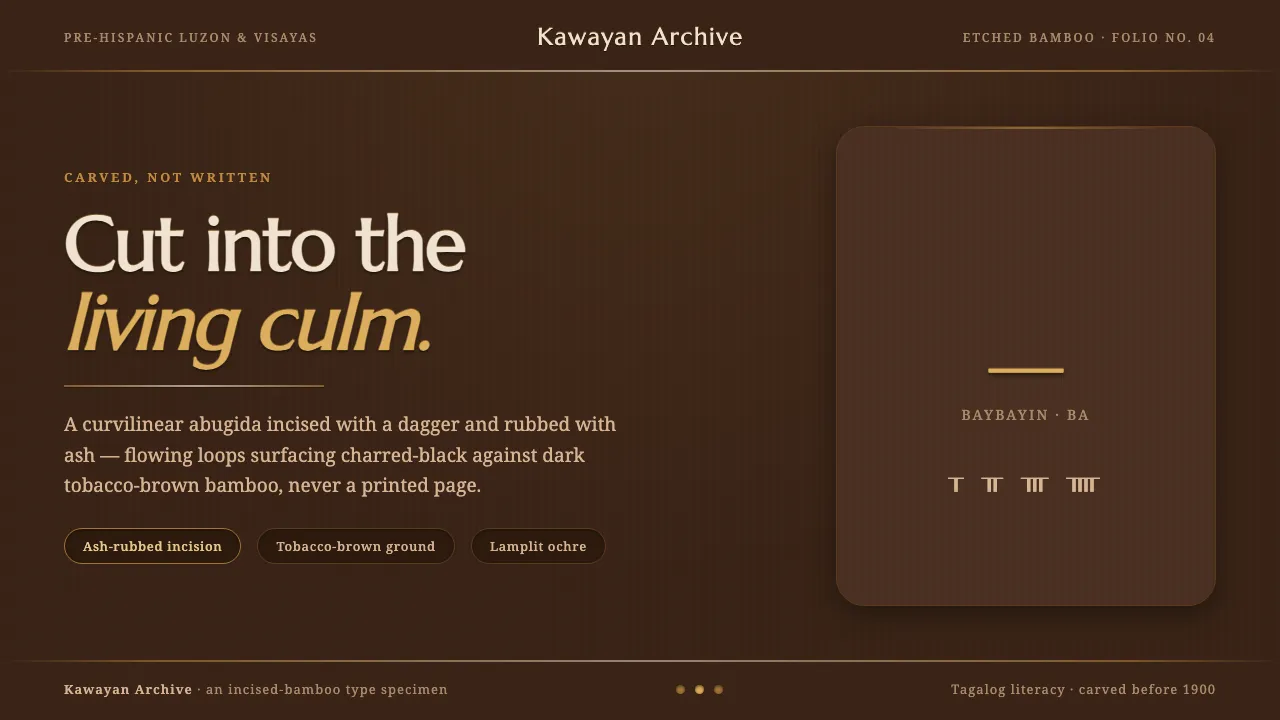
About Baybayin Script
Baybayin is the curvilinear abugida that Tagalog and other Philippine peoples carved into bamboo before 1900. Glyphs were incised with a dagger or sharpened bamboo split, then rubbed with ash and charcoal so the flowing forms read charred-black against the dark tobacco-brown culm.
This system translates that incised craft into screen: a tobacco-brown ground, ash-black carved lines, ochre lit by lamplight, and rounded loops that never feel printer-crisp. The surface is tactile and earthen — etched bamboo, not written paper.
- Origin
- Philippines (Tagalog Luzon and the Visayas)
- Era
- Pre-1900 (pre-colonial / pre-Hispanic Philippine writing)
- Key figures
- Indigenous Tagalog scribes · Early Spanish chroniclers · Pedro Chirino · Francisco Lopez
- Movements
- Brahmic-derived Southeast Asian abugida · Bamboo etching craft · Pre-Hispanic Philippine literacy
Baybayin Script design spec
Colors
Typography
The other 11 sections — buttons, cards, spacing, motion, techniques and more — open once you unlock. Download the DESIGN.md or send it to your AI in one click. Unlock once, yours forever.
Sign up nowStyles similar to Baybayin Script
Also inspired by crafts & folk art, with a close feel.
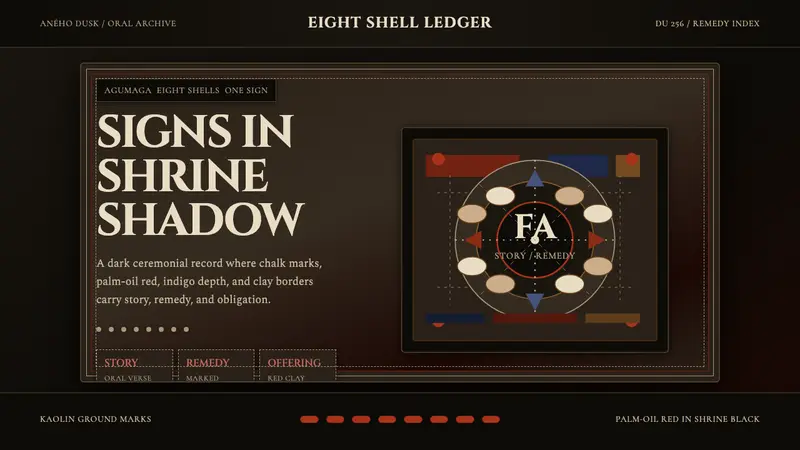 Togolese Vodun Fa DivinationSacred clutter speaks. Shrine-black layers, chalk marks, and palm-oil red build ritual weight.
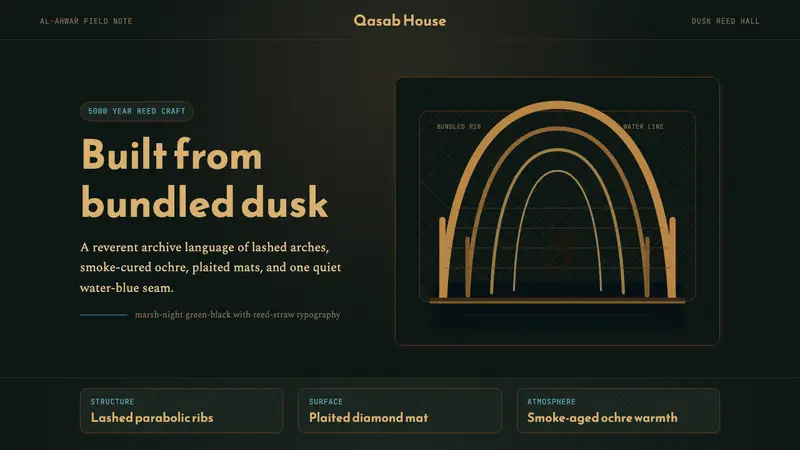 Iraqi Marsh Arab Mudhif ReedReverent reed darkness. Kufi arches, ochre lattice, and one water-blue line hold dusk.
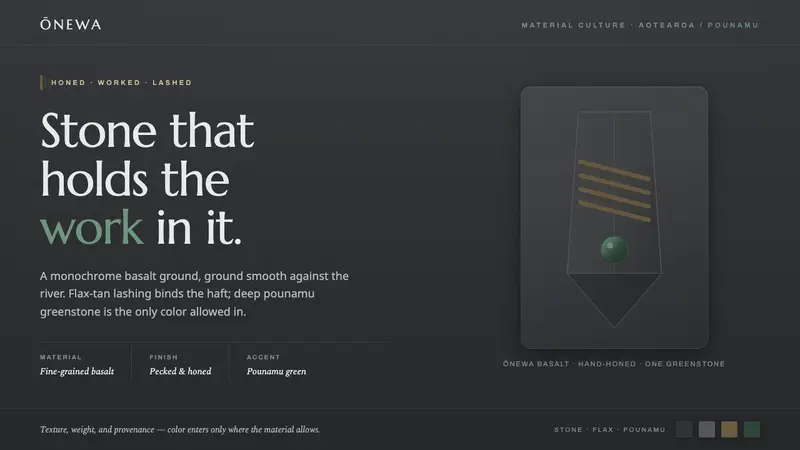 Māori Volcanic StoneColor enters only where the stone allows. Honed charcoal basalt, flax lashing, one pounamu green.
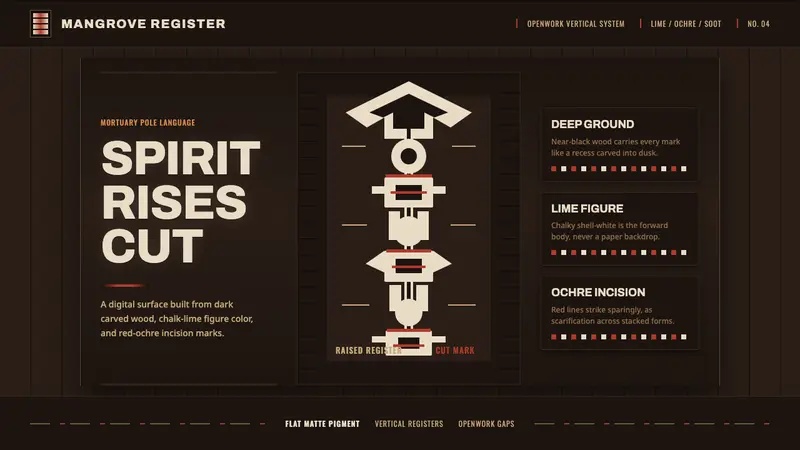 Asmat Bisj Ancestor PoleCeremonial vertical force. Lime-white figures rise from dark wood with red-ochre cuts.