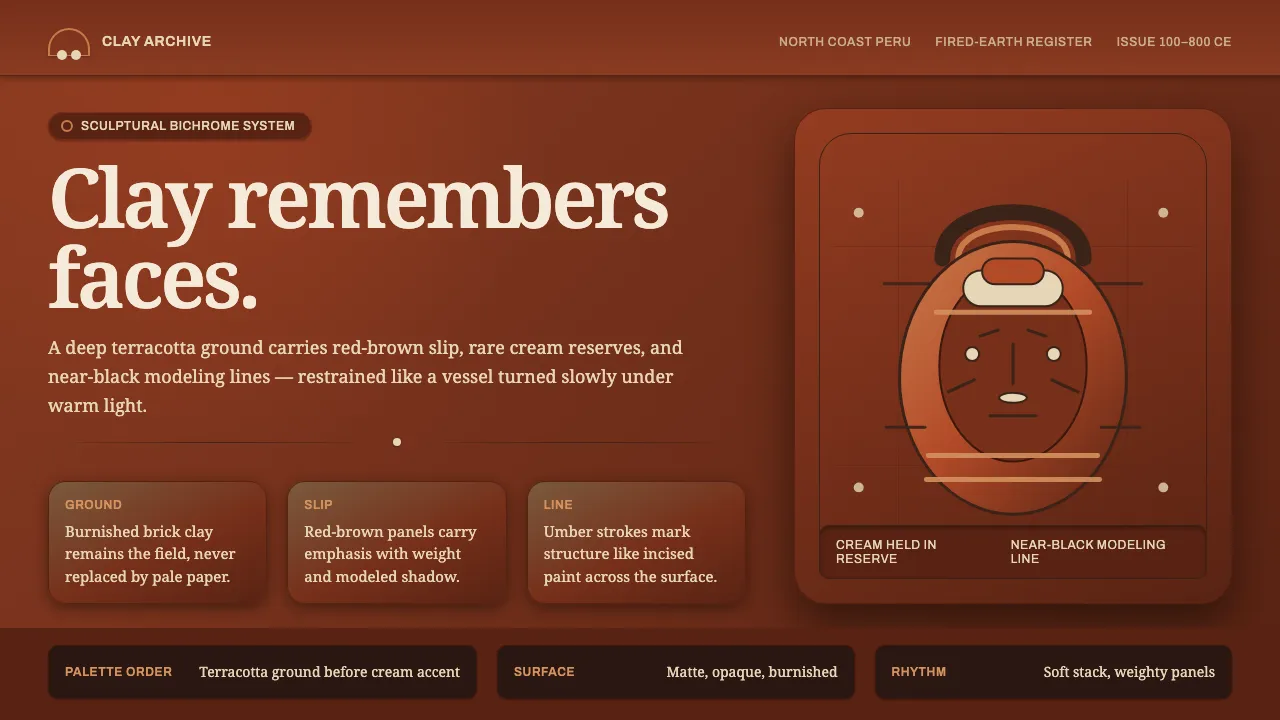
About Moche Portrait Vessel
Between 100 and 800 CE, Moche ceramicists on Peru's north coast molded fired-clay heads of startling individuality — prominent cheekbones, specific noses, particular scars — then finished them in a disciplined two-color slip scheme: red-brown over the burnished terracotta body, cream reserved for small zones, black line drawn for war paint and face markings. The clay body itself, not the cream, was always the ground.
This system translates that sculptural bichrome logic into interface: a deep brick-terracotta page, red-brown slip carrying primary action, cream held back as a rare accent, and near-black lines doing the drawing. Surfaces read as burnished earthenware, not paper — modeled, warm, matte, and deliberately restrained in palette.
- Origin
- North coast of Peru, Latin America
- Era
- Moche culture, c.100–800 CE, Early Intermediate Period
- Key figures
- anonymous Moche ceramist-portraitists · coastal valley workshops
- Movements
- Moche ceramic sculpture · stirrup-spout portrait-head vessels · bichrome slip painting
Moche Portrait Vessel design spec
Colors
Typography
The other 11 sections — buttons, cards, spacing, motion, techniques and more — open once you unlock. Download the DESIGN.md or send it to your AI in one click. Unlock once, yours forever.
Sign up nowStyles similar to Moche Portrait Vessel
Also inspired by crafts & folk art, with a close feel.
 Bhutanese Yathra Wool WeaveHighland wool made digital. Brown-maroon bands carry cyan diamonds and spare gold weft.
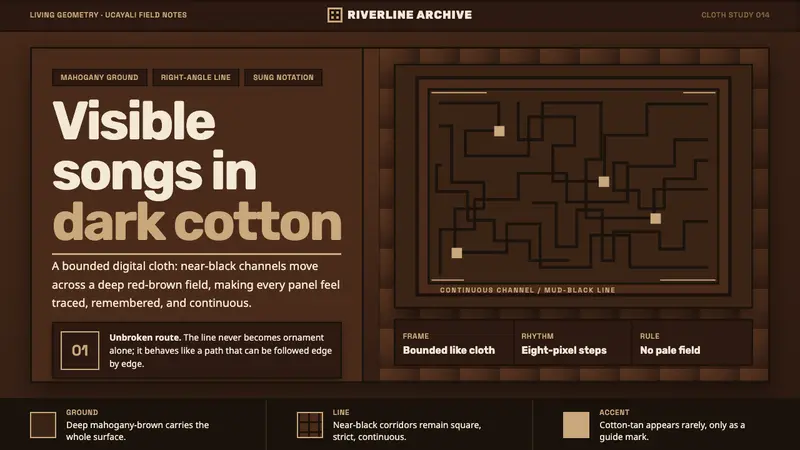 Shipibo Kené PatternSacred geometry sings. Mahogany cotton carries near-black right-angle paths.
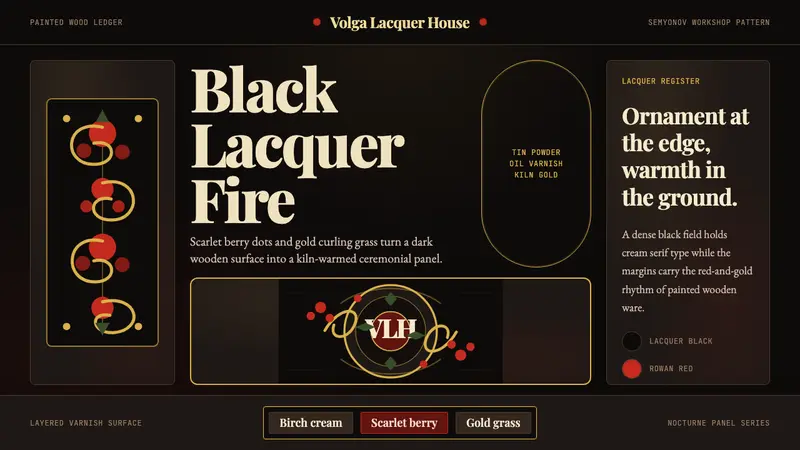 Russian Khokhloma Wood-Red LacquerKiln-fired ornament. Lacquer black, scarlet dots, and Playfair gold curls crowd the frame.
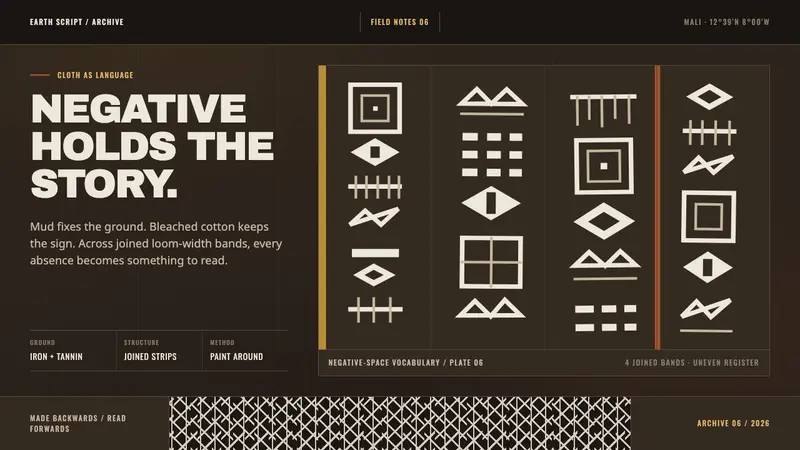 Bogolanfini MudclothAbsence becomes language. Warm iron-black bands hold uneven bleached-cotton symbols.