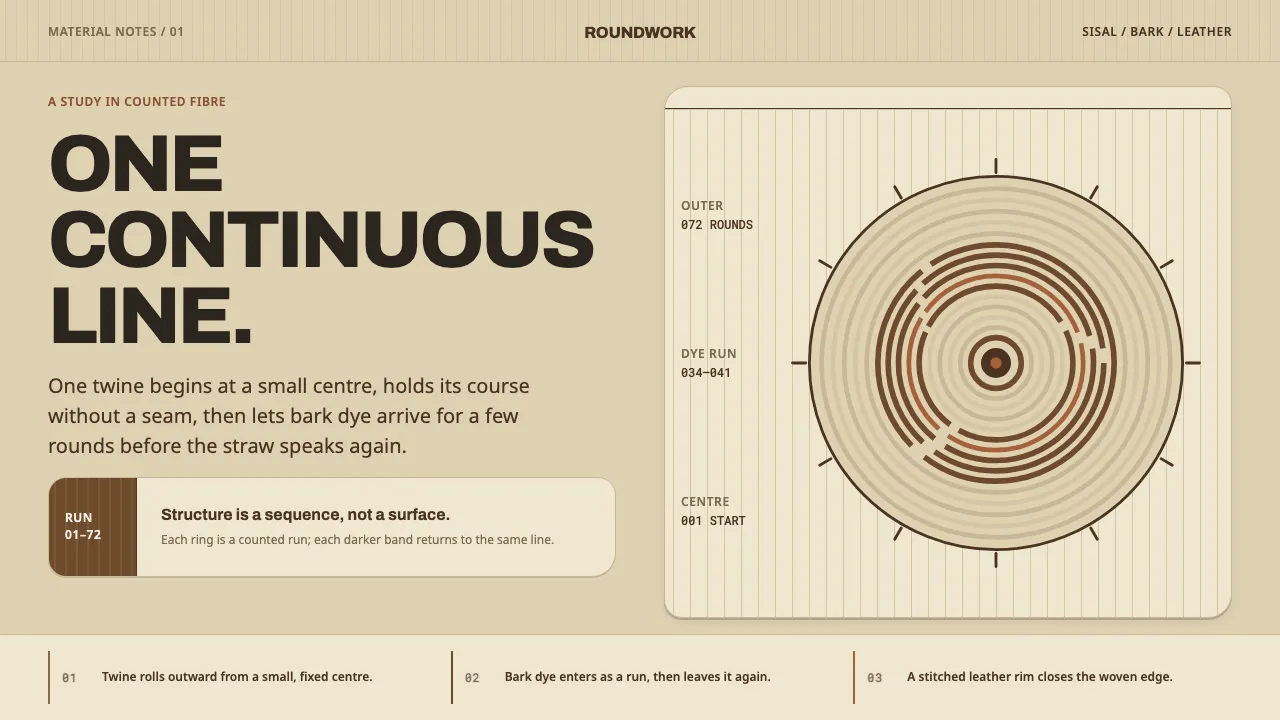
About Kenyan Kiondo
A kiondo is a bag made of one line. The weaver rolls sisal into twine against her thigh and coils it outward from a small centre, so the wall is a single unbroken spiral — never a seam, never a panel. Colour enters as bands, where twine steeped in bark, root, charcoal or soil joins the run, and leaves again a few rounds later.
The design system takes that literally. Undyed straw is the page, dyed brown is the structure, and every band, rule and ring is something the weave count produced rather than something drawn on top of it. Leather does the rest: a rim strip, base panels, handles, and saddle stitching you can count.
- Origin
- Kenya — Taita, Kikuyu (Agikuyu) and Kamba communities of the central highlands and southeast
- Era
- pre-1900 origins; sisal arrives in East Africa 1893; market weaving from the early 1930s in Makueni
- Key figures
- Taita women weavers · Kikuyu (Agikuyu) women weavers · Kamba women weavers of Makueni
- Movements
- East African fibre craft · natural bark and root dyeing · Agikuyu spiral symbolism
Kenyan Kiondo design spec
Colors
Typography
The other 11 sections — buttons, cards, spacing, motion, techniques and more — open once you unlock. Download the DESIGN.md or send it to your AI in one click. Unlock once, yours forever.
Sign up nowStyles similar to Kenyan Kiondo
Also inspired by crafts & folk art, with a close feel.
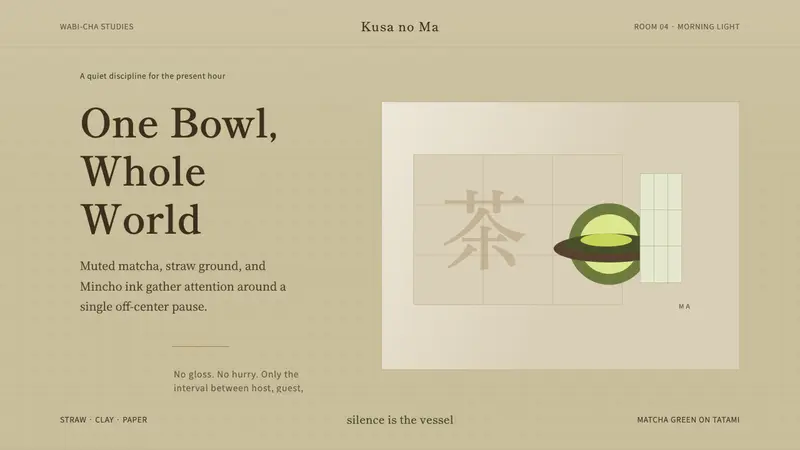 Japanese Tea CeremonyStillness has weight. Tatami straw, matcha green, and Mincho type leave room to breathe.
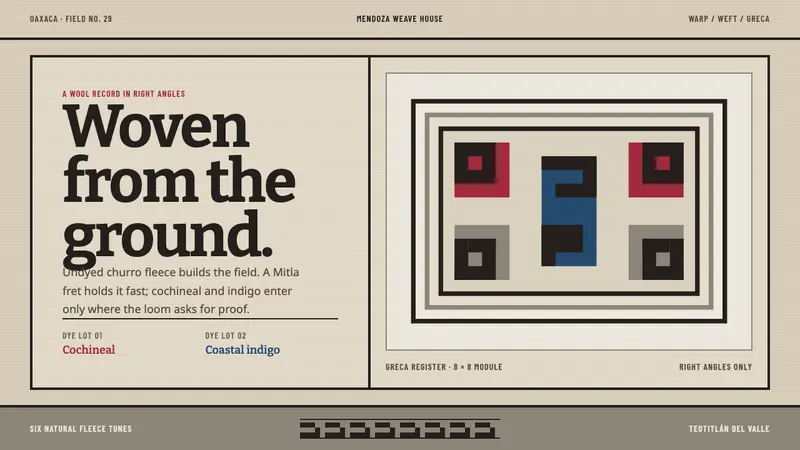 Teotitlán Wool RugCraft is structural. Raw fleece, Bitter slabs, and a hard-edged Mitla fret hold two vivid dyes.
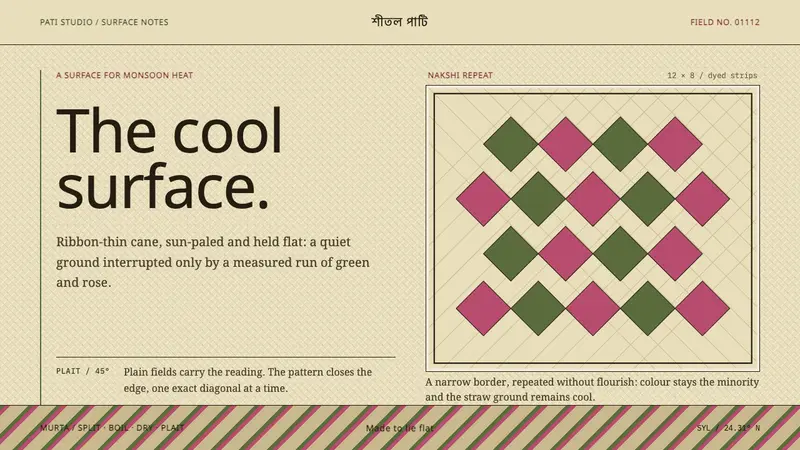 Sylheti Shital PatiCoolness lies flat. Pale straw fields hold cane-green and rose diamond repeats.
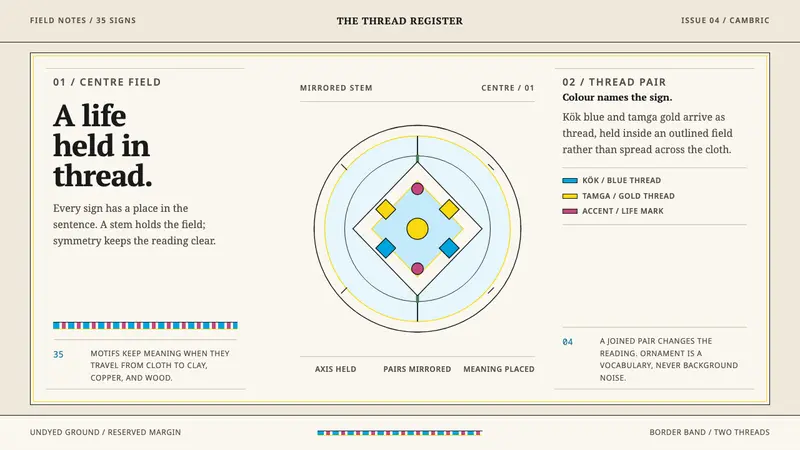 Crimean Tatar OrnekOrnament that can be read. Kök blue and tamga gold hold a mirrored stem on undyed cambric.