About Inca Quipu Knot-Cord
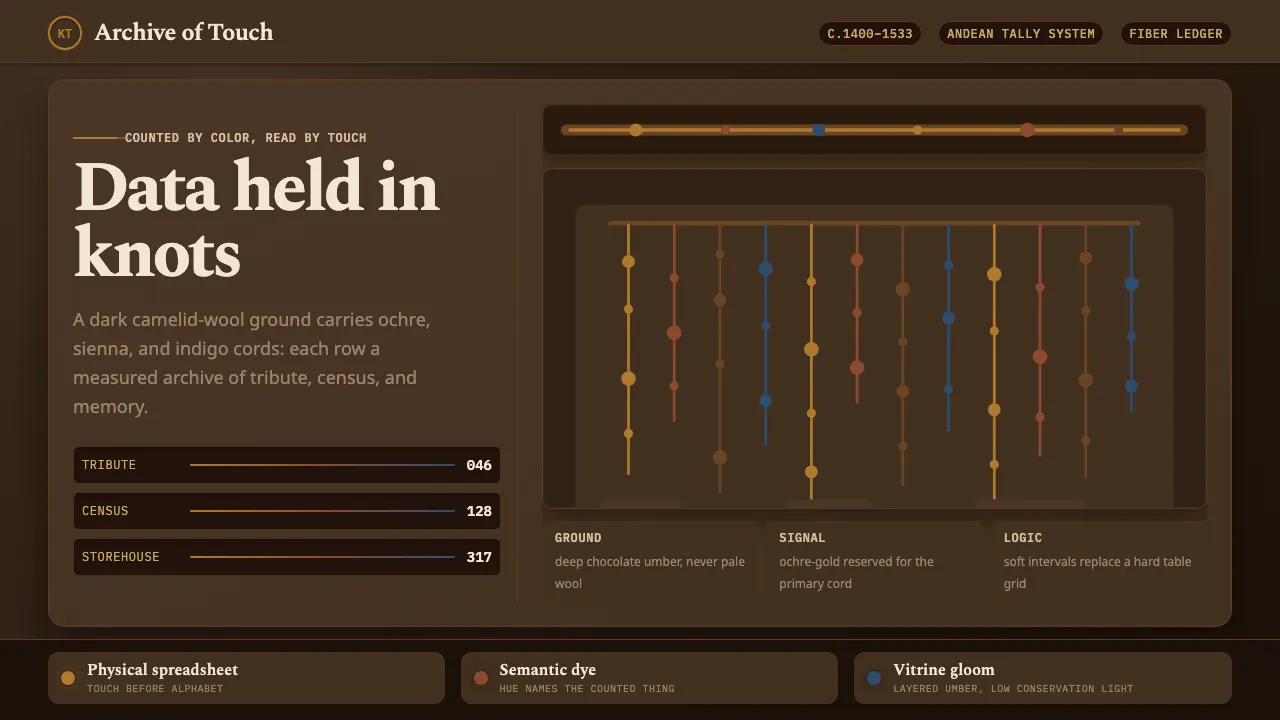
The quipu (khipu) was the Inca Empire's knotted-cord recording system, spun and plied from cotton and Andean camelid fiber. A thick main cord carried pendant cords hanging in measured rows, each knotted at precise intervals to encode counts, census data, and tribute records across a realm with no written script. Cord color was semantically load-bearing — it named what was being counted — while the natural undyed camelid wool itself read as a deep chocolate-umber ground, never a pale or ivory tone. This system channels that vitrine-dark gloom hung with ochre-gold cords: a physical spreadsheet of knots, legible by touch as much as by sight.
- Origin
- Andes / Tawantinsuyu, highland Peru
- Era
- c.1400–1533 CE (Inca Empire), with older Andean cord-record precedents
- Key figures
- quipucamayocs (khipukamayuq)
- Movements
- Andean administrative recording · knotted-cord accounting and census notation
Inca Quipu Knot-Cord design spec
Colors
Typography
The other 11 sections — buttons, cards, spacing, motion, techniques and more — open once you unlock. Download the DESIGN.md or send it to your AI in one click. Unlock once, yours forever.
Sign up nowStyles similar to Inca Quipu Knot-Cord
Also inspired by crafts & folk art, with a close feel.
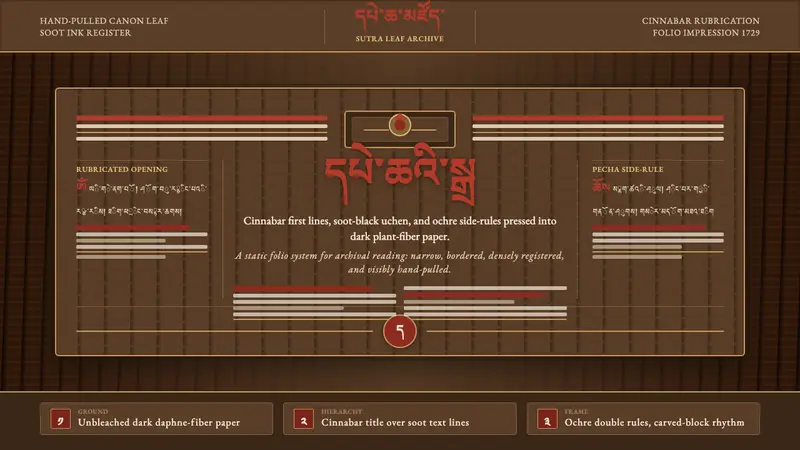 Derge Woodblock Sutra PrintHand-pulled scripture gravity. Cinnabar uchen and ochre rules press into dark fiber paper.
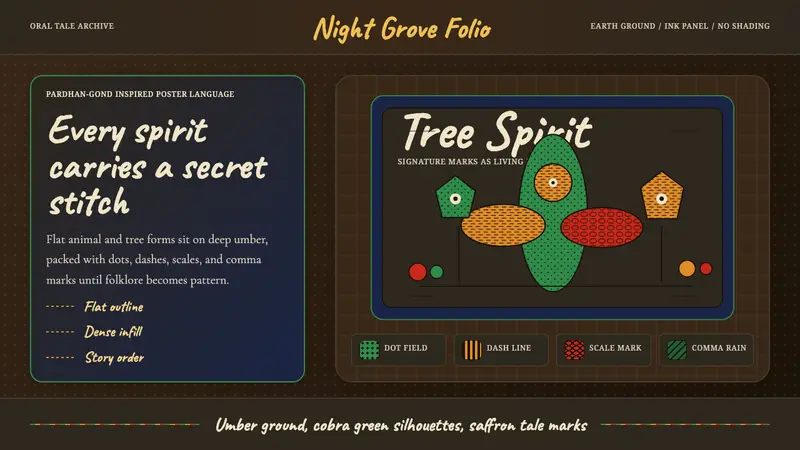 Gond Pardhan (Tree Spirit Painting)Story breathes in pattern. Cobra green forms on umber ground, filled with dots and dashes.
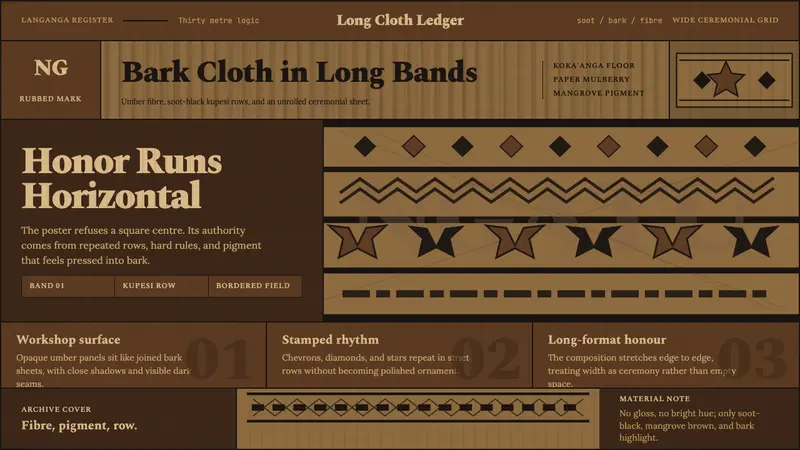 Tongan Ngatu (Tapa)Ceremony runs wide. Soot-black rows stamp umber bark with strict kupesi geometry.
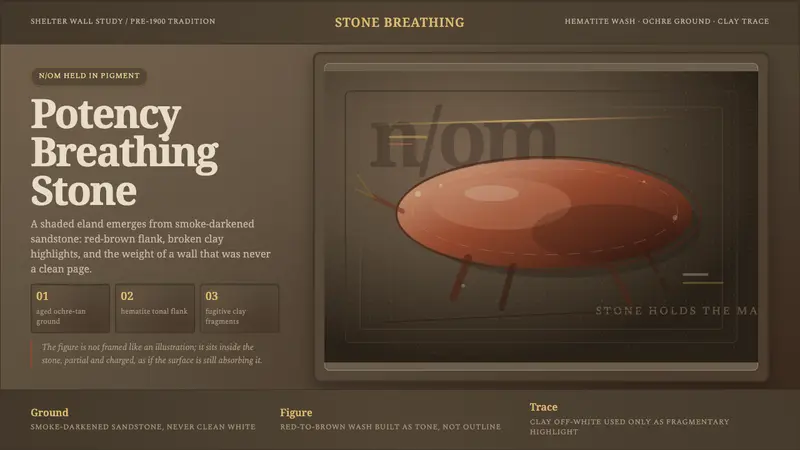 San Rock Art DrakensbergPotency stains the stone. Hematite gradients breathe over smoke-dark sandstone.