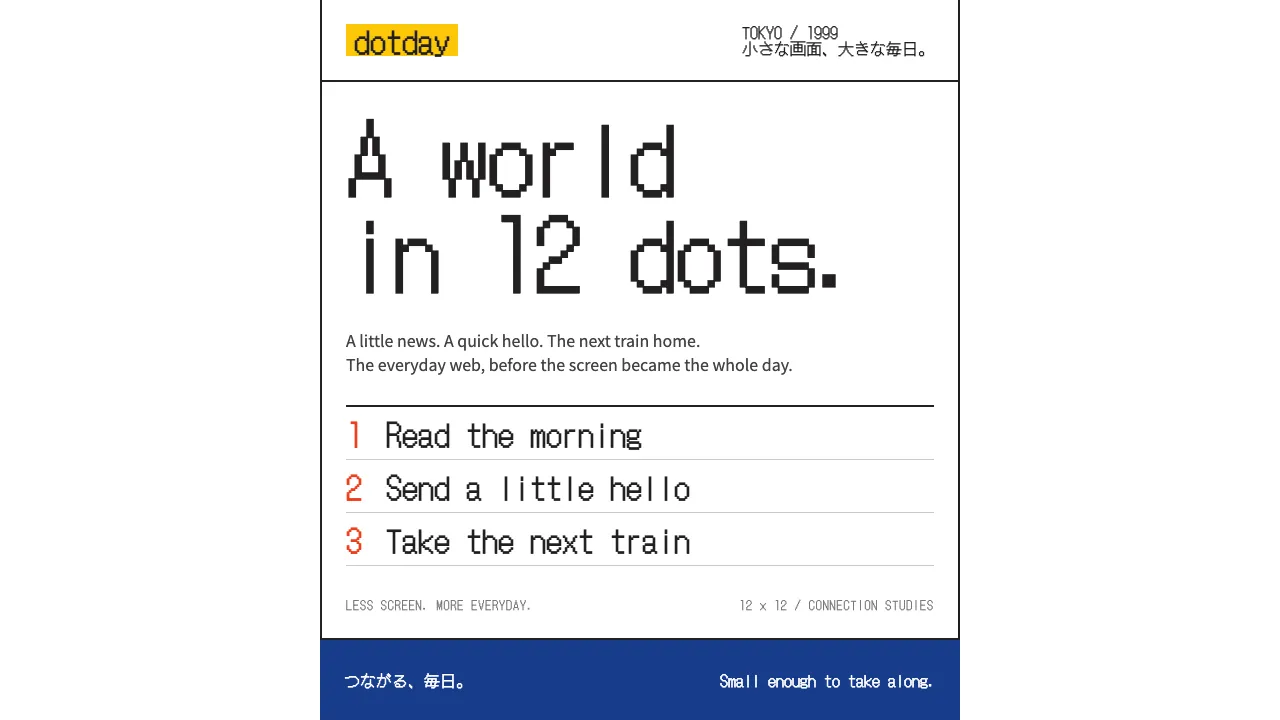
About i-mode
i-mode put the web on Japanese feature phones in February 1999: a narrow white screen of black bitmap text, numbered menu lines picked with the d-pad, and a row of tiny pictographs drawn on a 12×12 grid. Those 176 glyphs by Shigetaka Kurita were the first emoji.
This system rebuilds that handset page for today's screens. It keeps white space, bitmap gothic type, flat single-colour pixel glyphs and the logo's yellow, and it allows no gradients, rounded corners or depth.
- Origin
- Tokyo, Japan
- Era
- 1999–2000s (launched February 1999 on the F501i; colour LCDs from the 502i series onward)
- Key figures
- Shigetaka Kurita · Mari Matsunaga · Takeshi Natsuno · Keiichi Enoki
- Movements
- Japanese keitai culture · Compact-HTML mobile web · Pixel pictograph design
i-mode design spec
Colors
Background
Surface
Primary
Secondary
Accent
Text
Typography
DotGothic16Headings
Noto Sans JPBody
Unlock for 1 credit
The other 11 sections — buttons, cards, spacing, motion, techniques and more — open once you unlock. Download the DESIGN.md or send it to your AI in one click. Unlock once, yours forever.
Sign up nowHave an account? Sign in
Styles similar to i-mode
Also inspired by brands & products, with a close feel.
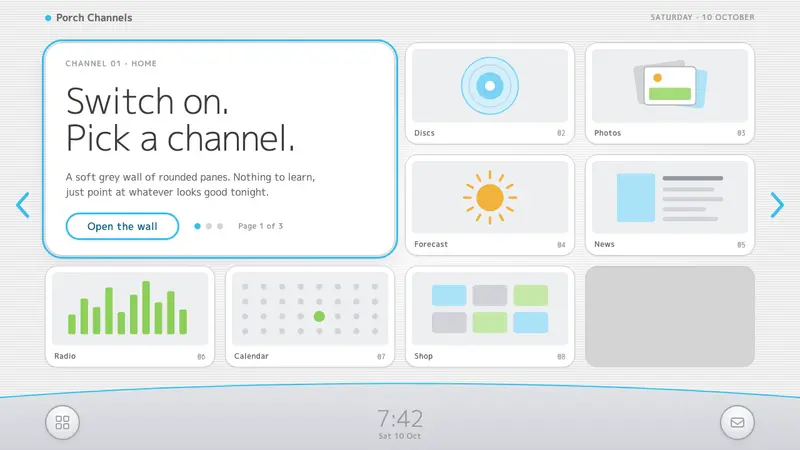 Wii MenuSwitch-on calm. White TV panes on a grey scanline wall, one thin blue line on a silver dock.
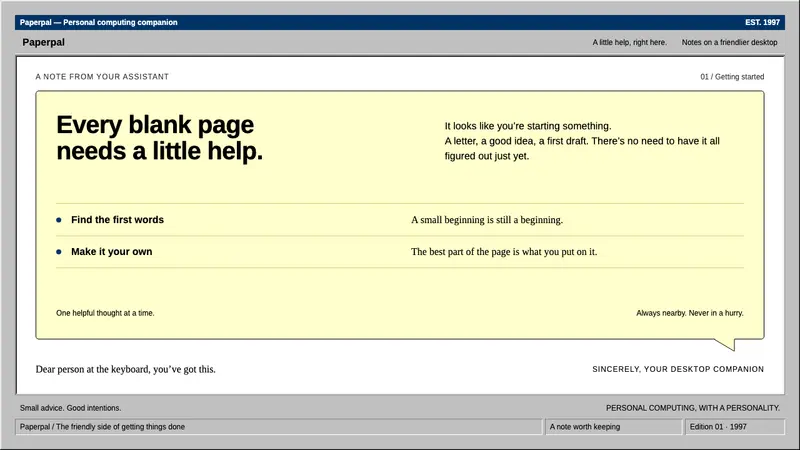 ClippyHelp with a human touch. Pale-yellow balloons, navy trim and hard grey bevels.
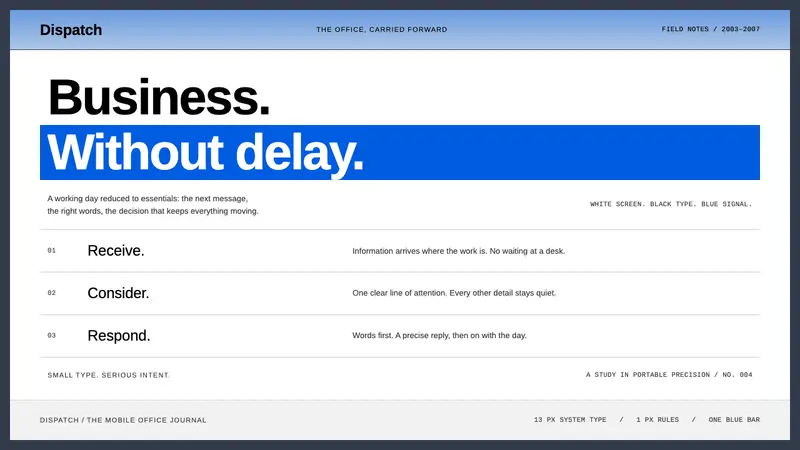 BlackBerryPortable precision. Dense black Arimo, white ruled rows and one decisive blue bar.
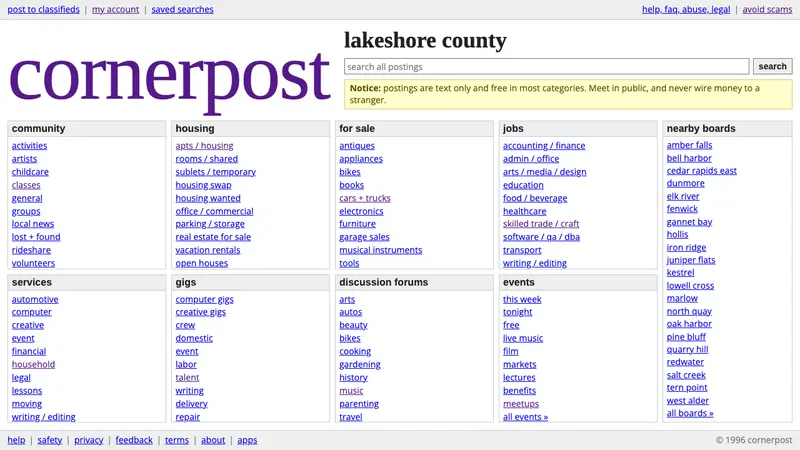 craigslistNothing designed, everything findable. Blue underlined links and a purple serif wordmark on white.