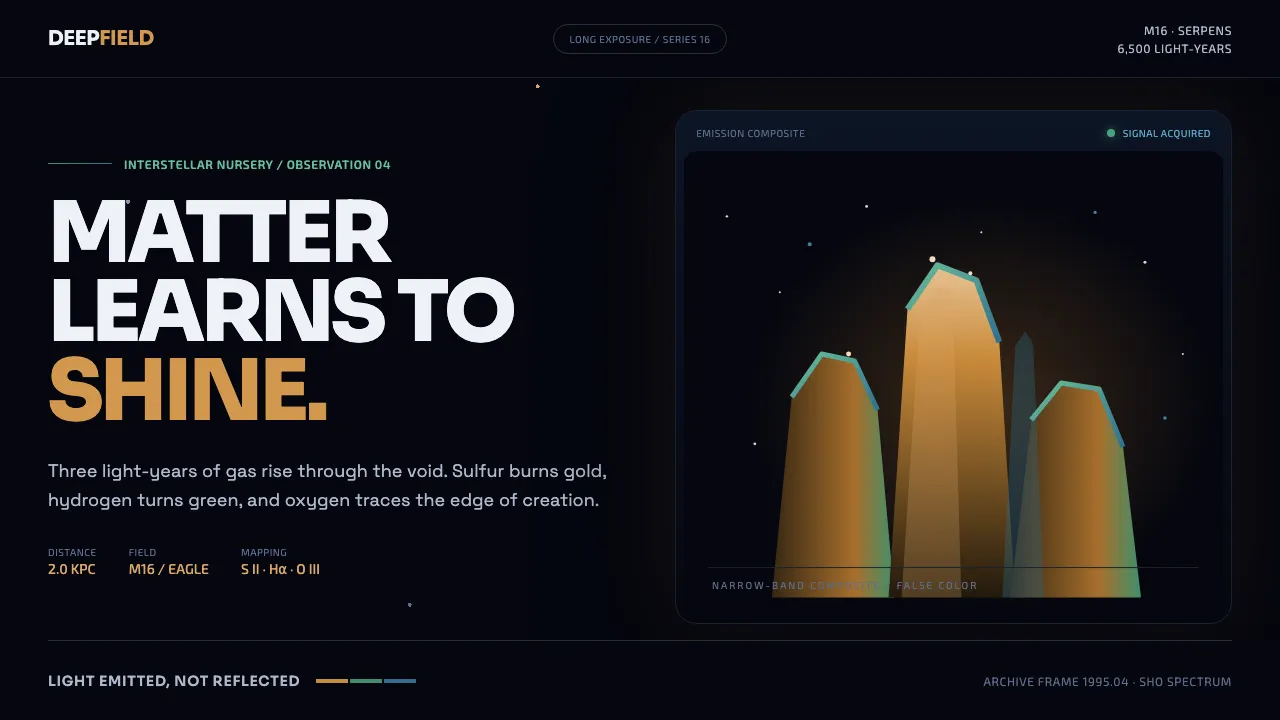
About Hubble Pillars of Creation
In April 1995 Hubble's WFPC2 camera stared into the Eagle Nebula and returned three light-years of interstellar gas and dust standing upright against the dark. Jeff Hester and Paul Scowen's narrow-band mapping painted the towers gold and amber, ringed them in fluorescing green and ionized cyan, and set them in a near-black navy void freckled with pinpoint stars. This system carries that composition into an interface: grand vertical forms, emitted light rather than reflected, and a palette earned by a telescope, not a mood board — a cosmic incubator turned design language.
- Origin
- United States (NASA / STScI, Hubble Space Telescope)
- Era
- 1995 (WFPC2 original; 25th-anniversary re-image 2015)
- Key figures
- Jeff Hester · Paul Scowen · NASA · ESA · STScI
- Movements
- Space-telescope science imaging · Narrow-band SHO astrophotography
Hubble Pillars of Creation design spec
Colors
Typography
The other 11 sections — buttons, cards, spacing, motion, techniques and more — open once you unlock. Download the DESIGN.md or send it to your AI in one click. Unlock once, yours forever.
Sign up nowStyles similar to Hubble Pillars of Creation
Also inspired by science & nature, with a close feel.
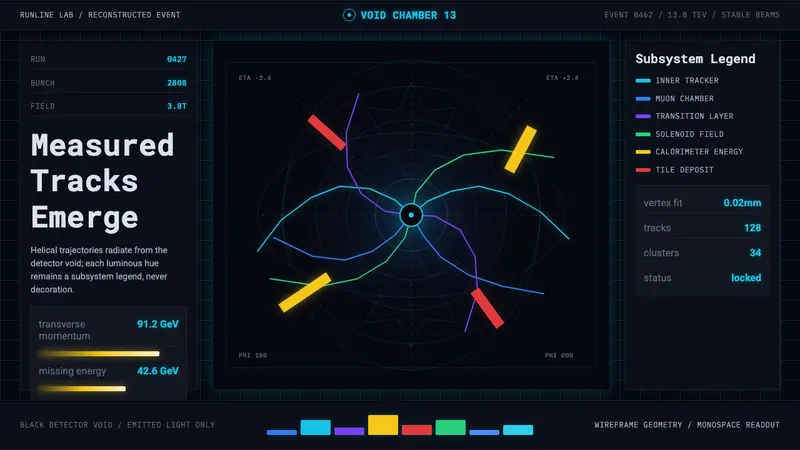 CERN CollisionData, not spectacle. Cyan tracks on black wireframes make every subsystem color literal.
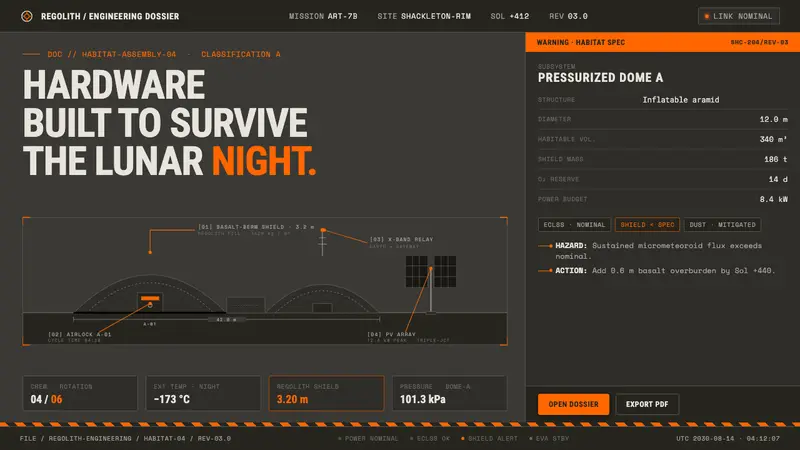 Lunar Base 2030Hardware built to survive the lunar night. Regolith gray, ANSI hazard orange, NASA mono callouts.
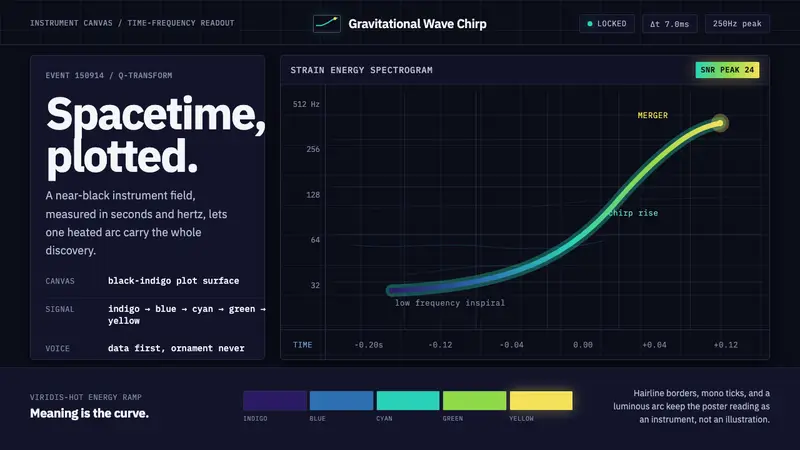 Gravitational Wave ChirpData makes the drama. Near-black grid, mono Hz ticks, and a viridis-hot chirp arc.
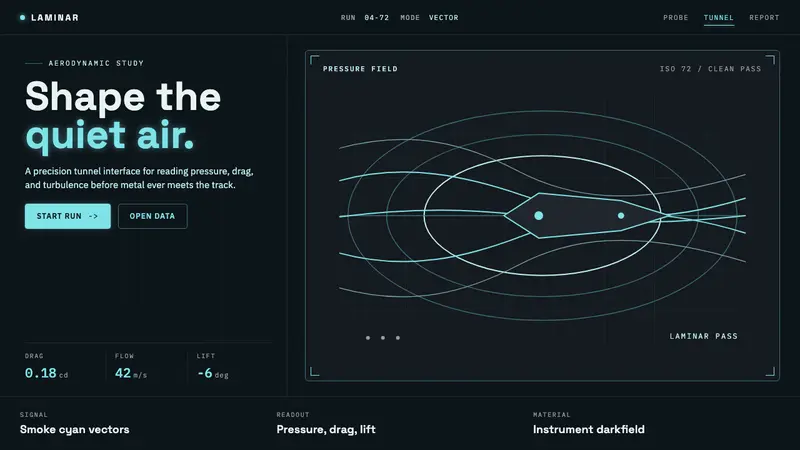 Wind TunnelMakes darkness feel measurable. Cyan-white streamlines and monospace ticks glow on near-black.