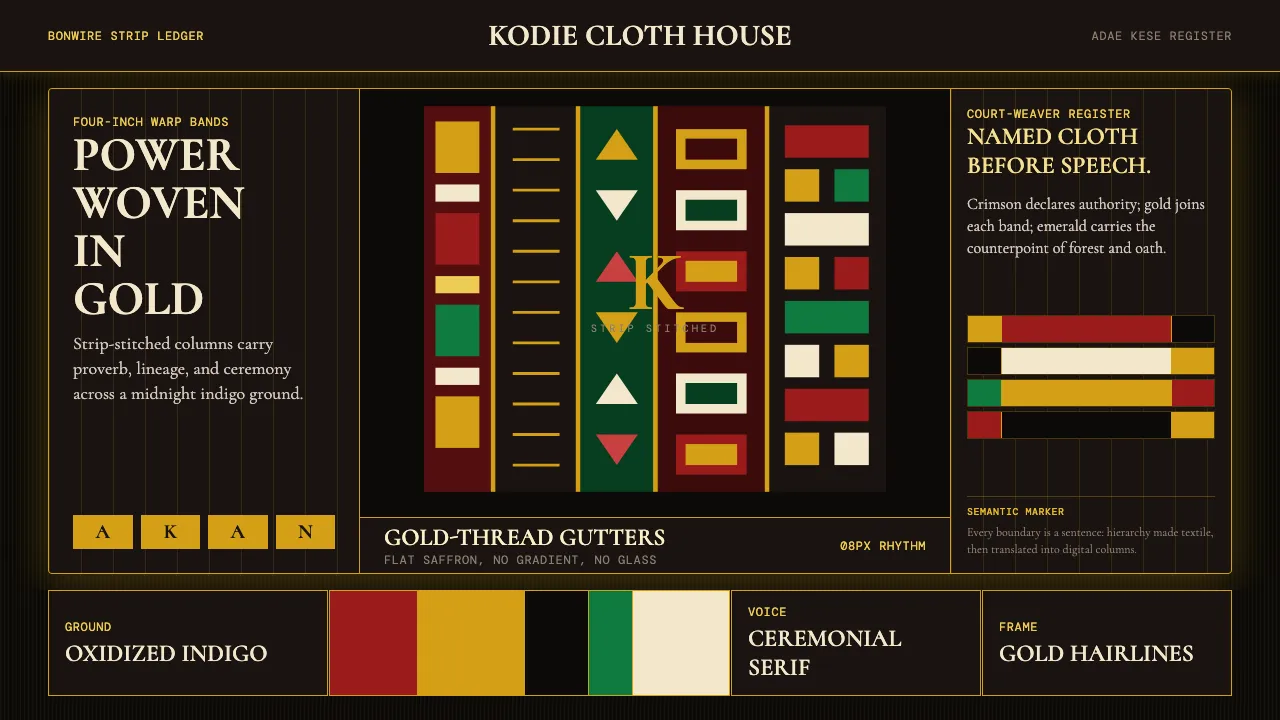
About Ghanaian Kente (Asante Royal Gold)
Asante royal kente transforms woven silk strips into a language of power. Court weavers in Bonwire interlocked four-inch warp bands dyed in indigo, kola crimson, and saffron gold to create named cloths reserved for the Asantehene — each pattern encoding a proverb, each color stripe a sentence of royal authority.
This design system channels that textile hierarchy into digital form: midnight indigo grounds, gold-thread gutters, strip-stitched column layouts, and adinkra glyphs as semantic markers. The aesthetic is Manhyia Palace on Adae Kese — deep, warm, and unmistakably Asante.
Learn more about the Ghanaian Kente (Asante Royal Gold) style
- Origin
- Bonwire, Ashanti Region, Ghana
- Era
- 17th–19th century Asante Empire (founding 1701 under Osei Tutu; peak 1764–1867)
- Key figures
- Otaa Kraban · Osei Tutu I · Okomfo Anokye · Asantehene Kwaku Dua I
- Movements
- Asante royal regalia tradition · Akan adinkra symbolism · Bonwire strip-weave guild
Ghanaian Kente (Asante Royal Gold) design spec
Colors
Typography
The other 11 sections — buttons, cards, spacing, motion, techniques and more — open once you unlock. Download the DESIGN.md or send it to your AI in one click. Unlock once, yours forever.
Sign up nowStyles similar to Ghanaian Kente (Asante Royal Gold)
Also inspired by crafts & folk art, with a close feel.
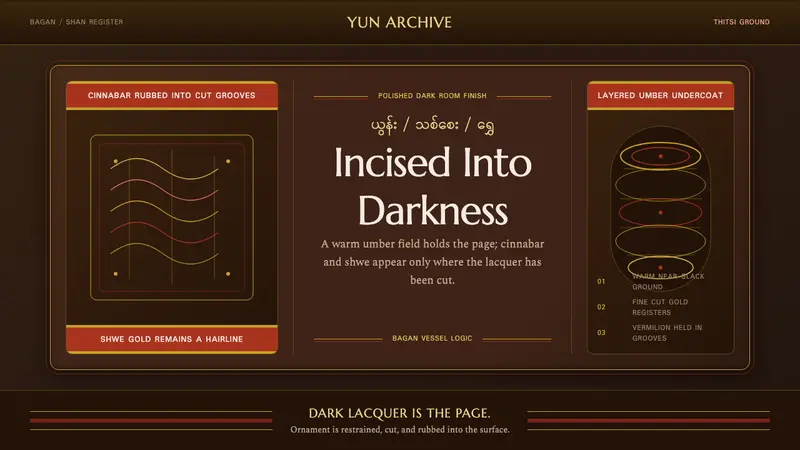 Burmese Shan Lacquer BrownDark lacquer leads. Cinnabar bands and shwe hairlines cut across a warm umber field.
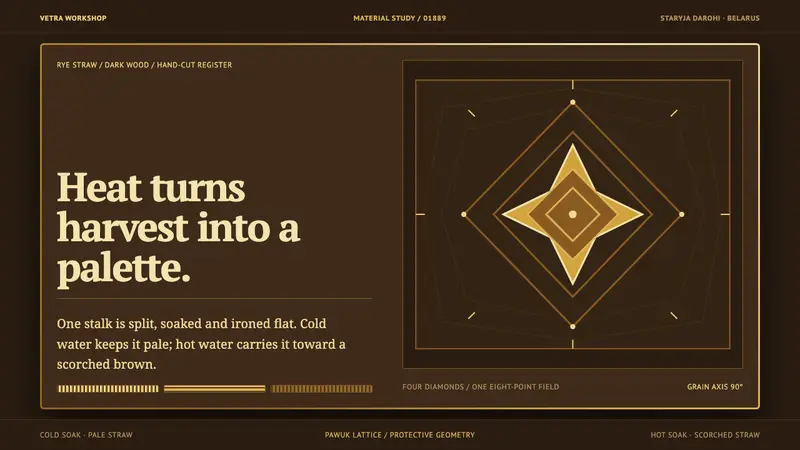 Belarusian SolomkaOne harvest, a tonal ladder. Straw diamonds turn pale gold to scorched brown on dark wood.
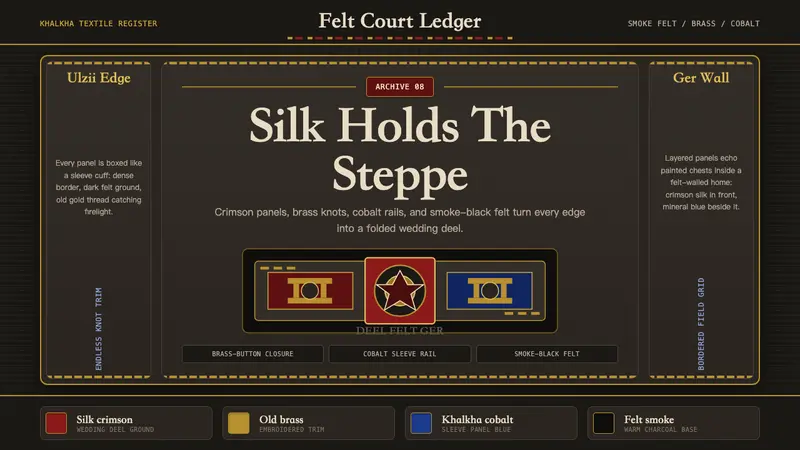 Mongolian Deel & Ger FeltTextile gravity. Smoke-black felt frames crimson silk, brass knot borders, and cobalt rails.
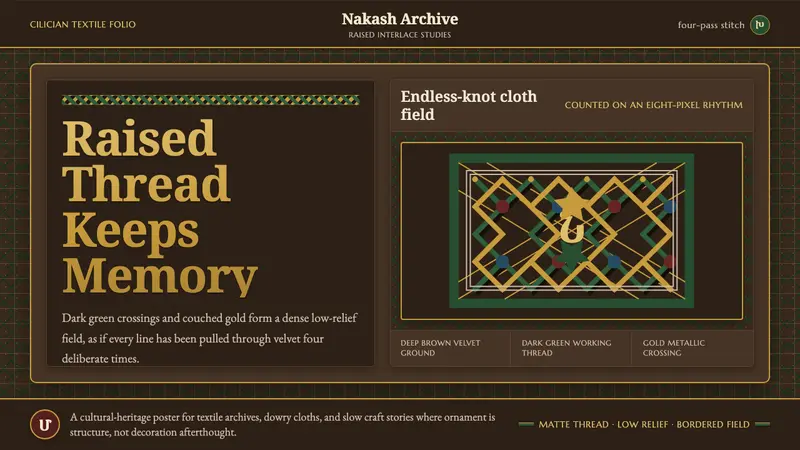 Armenian Marash Interlace EmbroideryDense memory in raised thread. Green-gold interlace locks over deep brown cloth.