About Georgian Minankari Cloisonné
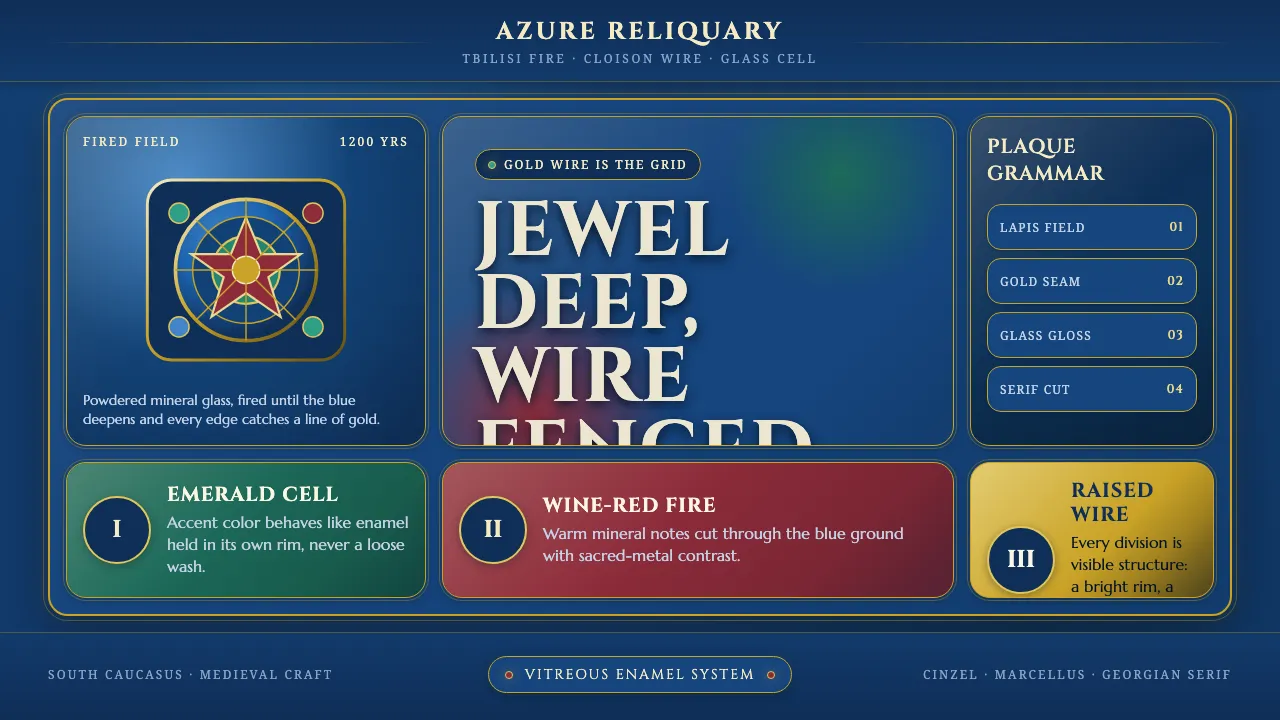
Minankari is Georgia's cloisonné-enamel tradition: fine gold wires bent into cells on a silver or gold base, filled with powdered mineral glass, and fired until the surface fuses into a glossy, jewel-deep plaque. For over a millennium — from Byzantine-derived medieval icon covers to the jewelry workshops of present-day Tbilisi — its signature has been deep lapis and azure blue enamel outlined by a bright, unbroken gold line.
This design system translates that vocabulary directly: a deep lapis-blue enamel ground, azure and emerald and wine-red cells, gold cloison borders fencing every surface, lapidary serif type, and glassy reflective finishes in place of matte flatness.
- Origin
- Georgia, South Caucasus (Tbilisi, Gelati, Khakhuli)
- Era
- Medieval, Byzantine-derived (flowering 8th–12th century; continuous into the present)
- Key figures
- Georgian minankari enamel masters · Medieval goldsmiths of the Khakhuli Triptych workshops
- Movements
- Georgian cloisonné (minankari) enamel · Byzantine-derived sacred goldsmithing
Georgian Minankari Cloisonné design spec
Colors
Typography
The other 11 sections — buttons, cards, spacing, motion, techniques and more — open once you unlock. Download the DESIGN.md or send it to your AI in one click. Unlock once, yours forever.
Sign up nowStyles similar to Georgian Minankari Cloisonné
Also inspired by crafts & folk art, with a close feel.
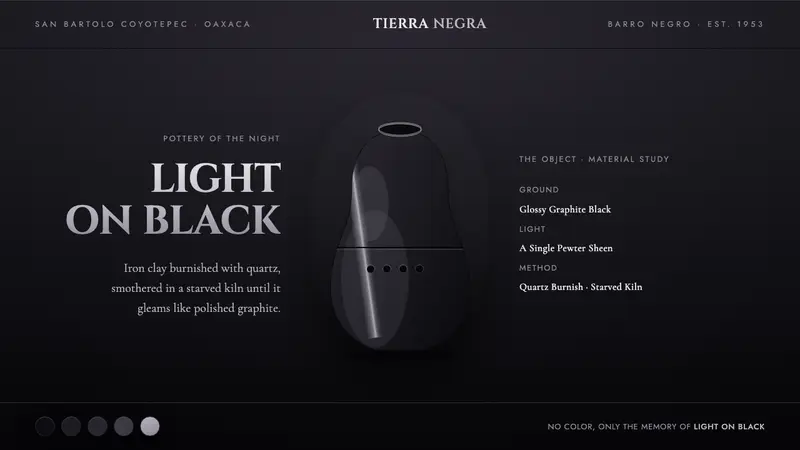 Oaxaca Barro NegroPottery of the night. Glossy graphite on matte black, one pewter sheen on the curve, Cinzel caps.
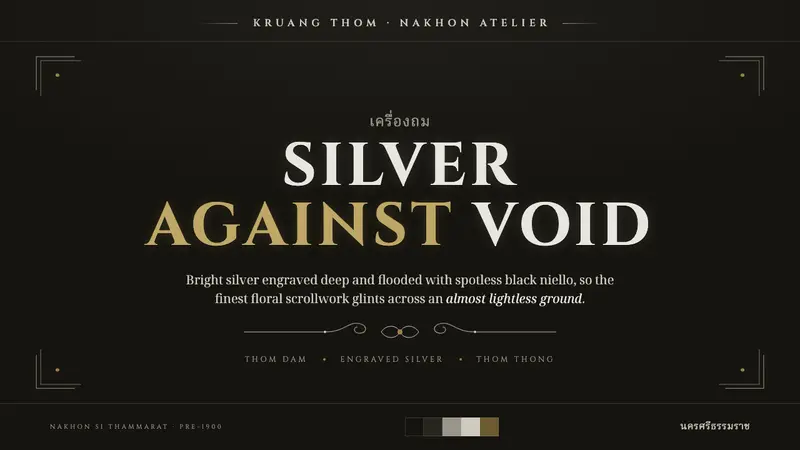 Thai NiellowareSpotless black, one bright line. Silver scrollwork engraved into near-lightless niello, gold rare.
 Kintsugi & Urushi LacquerBreakage becomes ceremony. Urushi black-brown carries gold seams and asymmetric type.
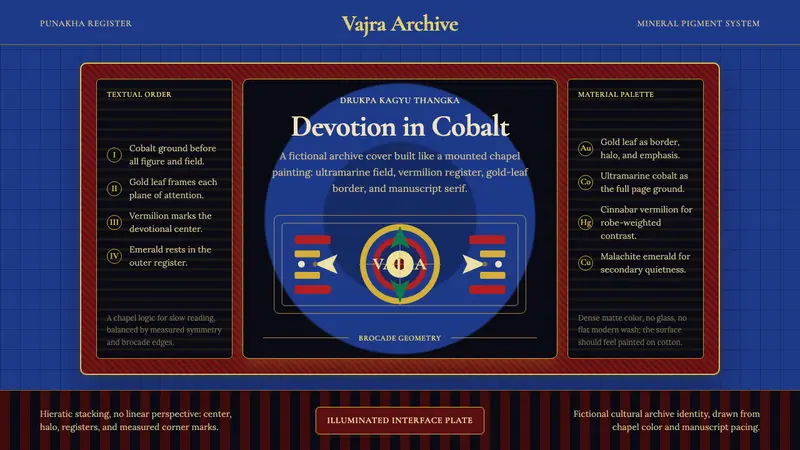 Bhutanese Drukpa Kagyu ThangkaDevotion made cobalt. Gold frames, Cormorant serif, and vermilion marks hold the chapel.