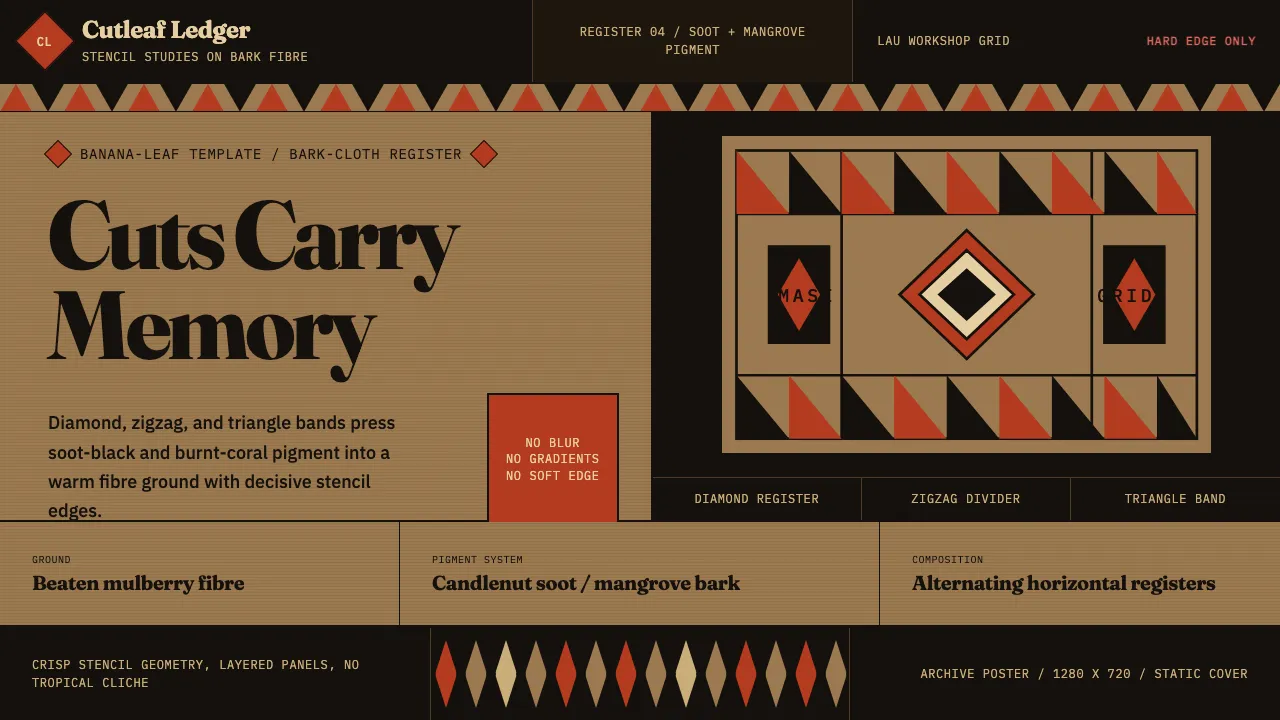
About Fijian Masi (Bark Stencil)
Fijian masi is bark cloth stenciled through banana-leaf templates with candlenut soot and mangrove-bark pigments. Unlike rubbed tapa traditions, the stencil technique produces hard-edged, poster-like geometry — diamonds, zigzags, and triangle bands crisply printed onto fibrous mulberry bark.
This design system channels the Lau Islands workshop aesthetic: sharp stencil cuts, alternating bands of soot-black and burnt-coral against a warm fibre ground, every shape a deliberate graphic decision.
- Origin
- Fiji (Vatulele, Lau Group, Cakaudrove)
- Era
- 18th century onward; revival from the 1970s
- Key figures
- Makereta Matemosi · Mereia Carling · Lingikoni Vaka'uta · Tau Lewuravu
- Movements
- Vatulele masi-making · Cakaudrove regional revival · contemporary Oceania design
Fijian Masi (Bark Stencil) design spec
Colors
Background
Surface
Primary
Secondary
Accent
Text
Typography
FrauncesHeadings
IBM Plex SansBody
IBM Plex MonoMono
Unlock for 1 credit
The other 11 sections — buttons, cards, spacing, motion, techniques and more — open once you unlock. Download the DESIGN.md or send it to your AI in one click. Unlock once, yours forever.
Sign up nowHave an account? Sign in
Styles similar to Fijian Masi (Bark Stencil)
Also inspired by crafts & folk art, with a close feel.
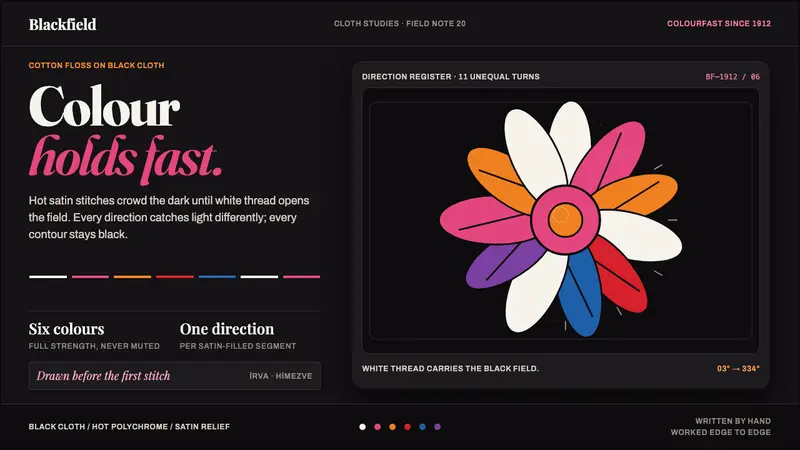 Kalocsa EmbroideryColour burns against black. White thread and hot satin segments pack the field edge to edge.
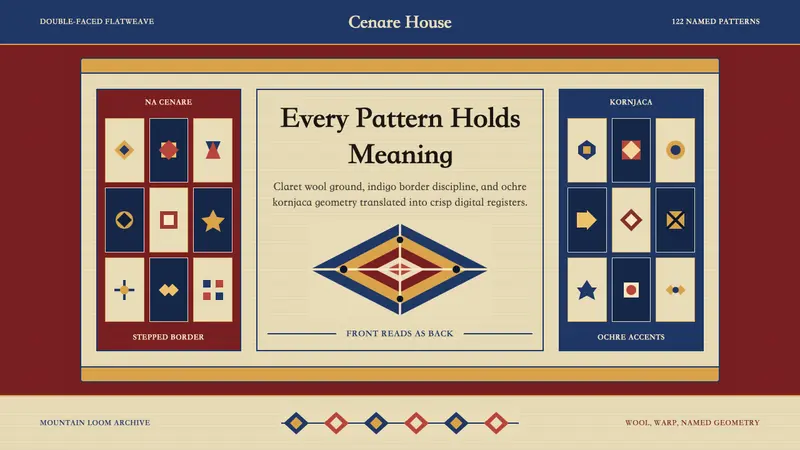 Serbian Pirot KilimWoven memory, sharply framed. Claret ground, indigo borders, ochre stepped diamonds.
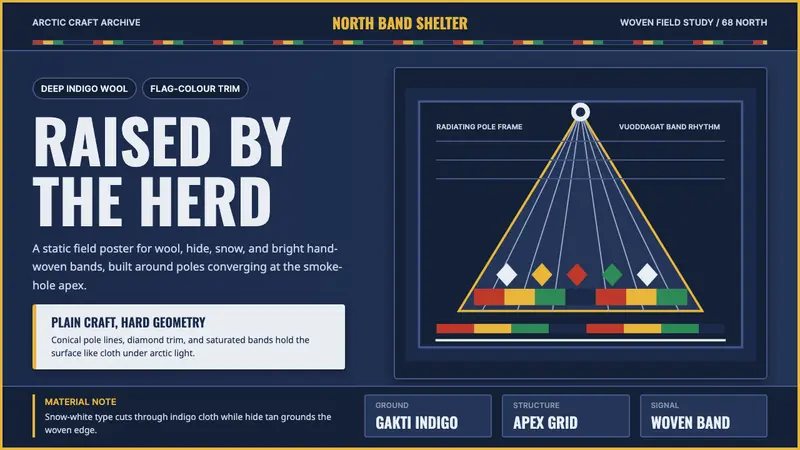 Sámi LavvuArctic craft stays bold. Indigo wool, Oswald type, and woven flag bands converge at an apex.
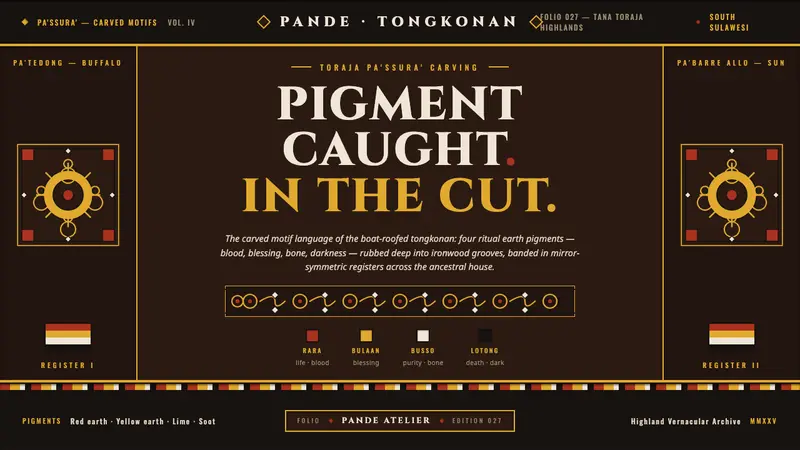 Toraja Pa'ssura' CarvingPigment caught in the cut. Red, yellow, lime, soot rubbed into ironwood grooves in mirror symmetry.