About Afar Nomad Textile
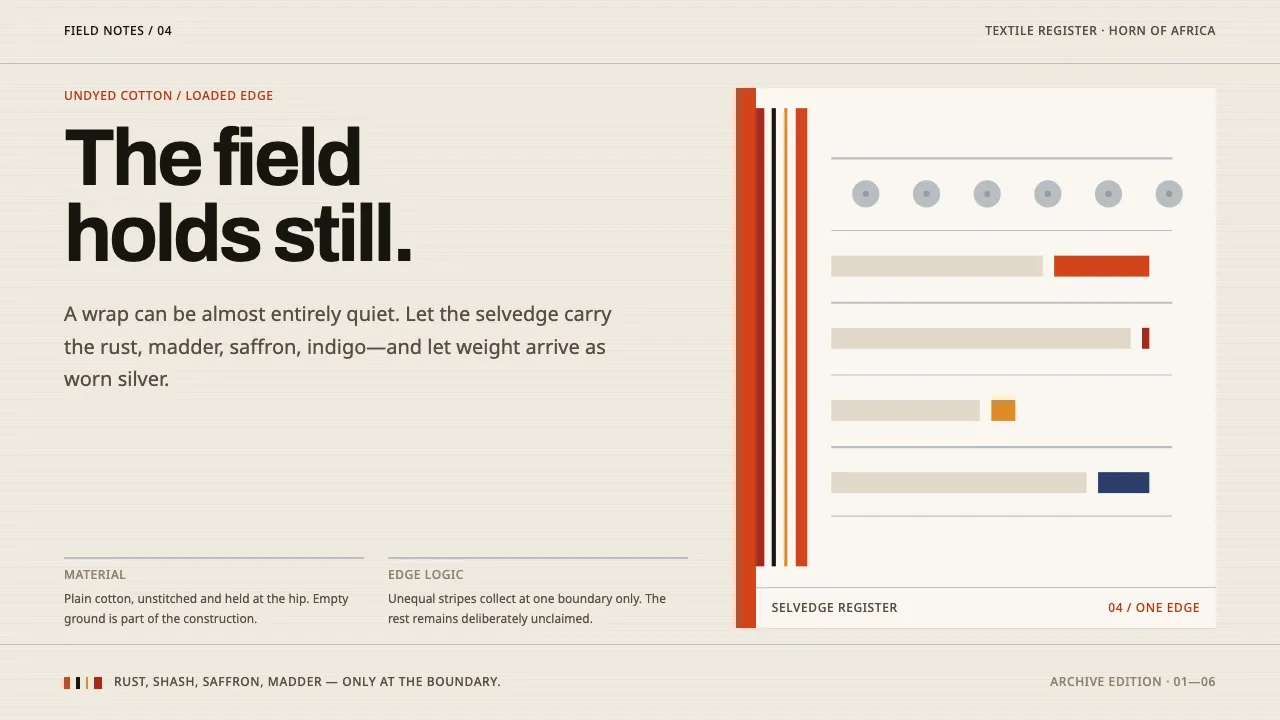
The Afar did not weave their cloth — they chose it. Holding the salt-caravan routes inland from the Red Sea, they bought merchants' cottons and muslins and wore them plain: the sanafil, an unstitched wrap knotted at the right hip, undyed by preference and still undyed today.
So the whole identity of the cloth sits in two places. A narrow band of woven stripes at the selvedge, unequal in width and clustered at one edge only. And silver — hammered thick, hung from leather in the hair, worn as weight rather than as sparkle. This system is built the same way: one quiet field, a few loaded edges.
- Origin
- Djibouti and the Danakil depression; Afar territory across Eritrea and Ethiopia
- Era
- pre-1900, continuous into the present
- Key figures
- Afar clans of the salt-caravan economy · the Aussa Sultanate · Red Sea trade-cloth merchants · Afar silversmiths
- Movements
- nomadic pastoral dress · Red Sea trade textiles · Horn of Africa silver ornament
Afar Nomad Textile design spec
Colors
Typography
The other 11 sections — buttons, cards, spacing, motion, techniques and more — open once you unlock. Download the DESIGN.md or send it to your AI in one click. Unlock once, yours forever.
Sign up nowStyles similar to Afar Nomad Textile
Also inspired by crafts & folk art, with a close feel.
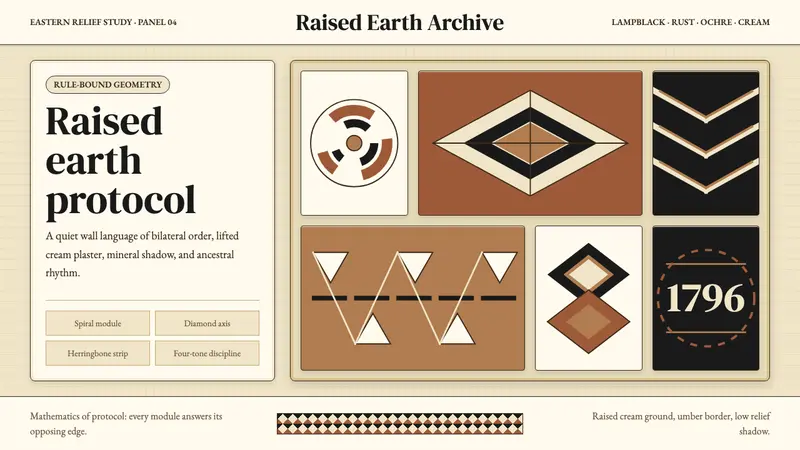 Imigongo (Rwanda Cow-Dung Geometric Art)Quiet precision. Cream relief grid sets lampblack, rust, and ochre into ancestral order.
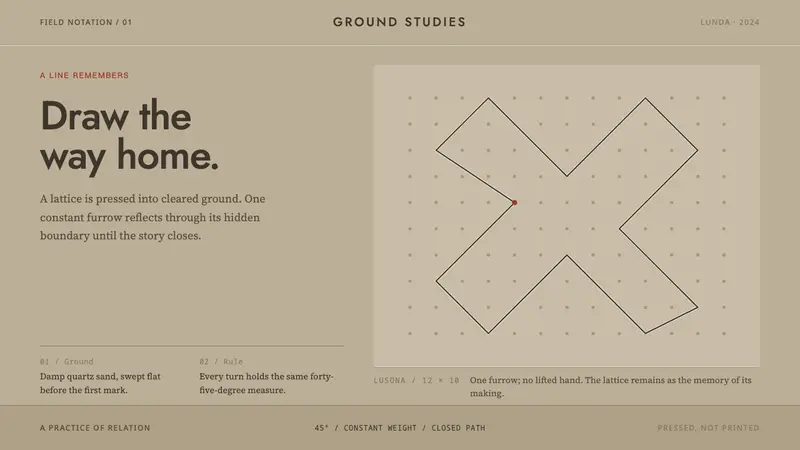 Angolan SonaA story closes in one stroke. A 45° furrow crosses visible dots on damp sand.
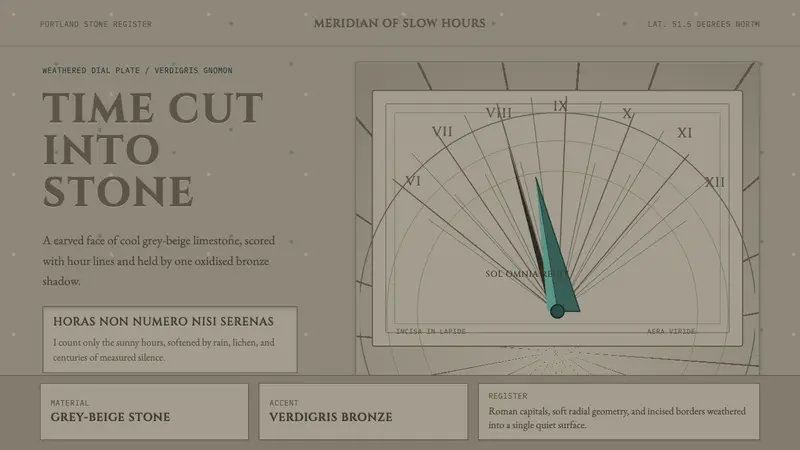 Engraved SundialStone refuses haste. Grey-beige hour lines and verdigris gnomon carve silence.
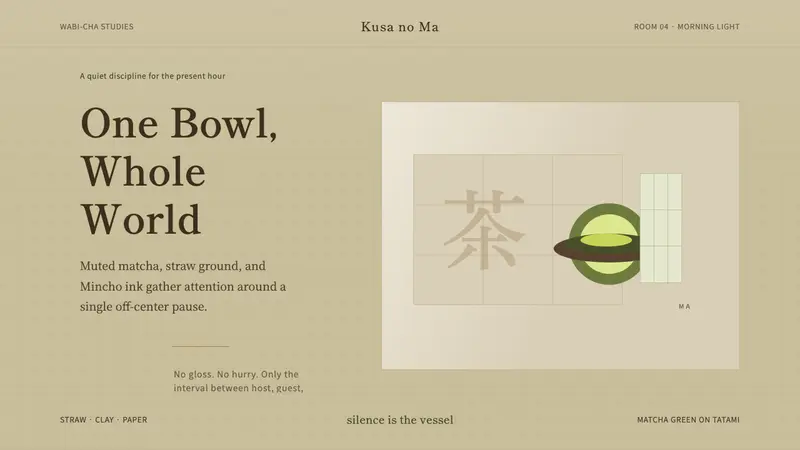 Japanese Tea CeremonyStillness has weight. Tatami straw, matcha green, and Mincho type leave room to breathe.