About Cybernetic 1968 (Stafford Beer)
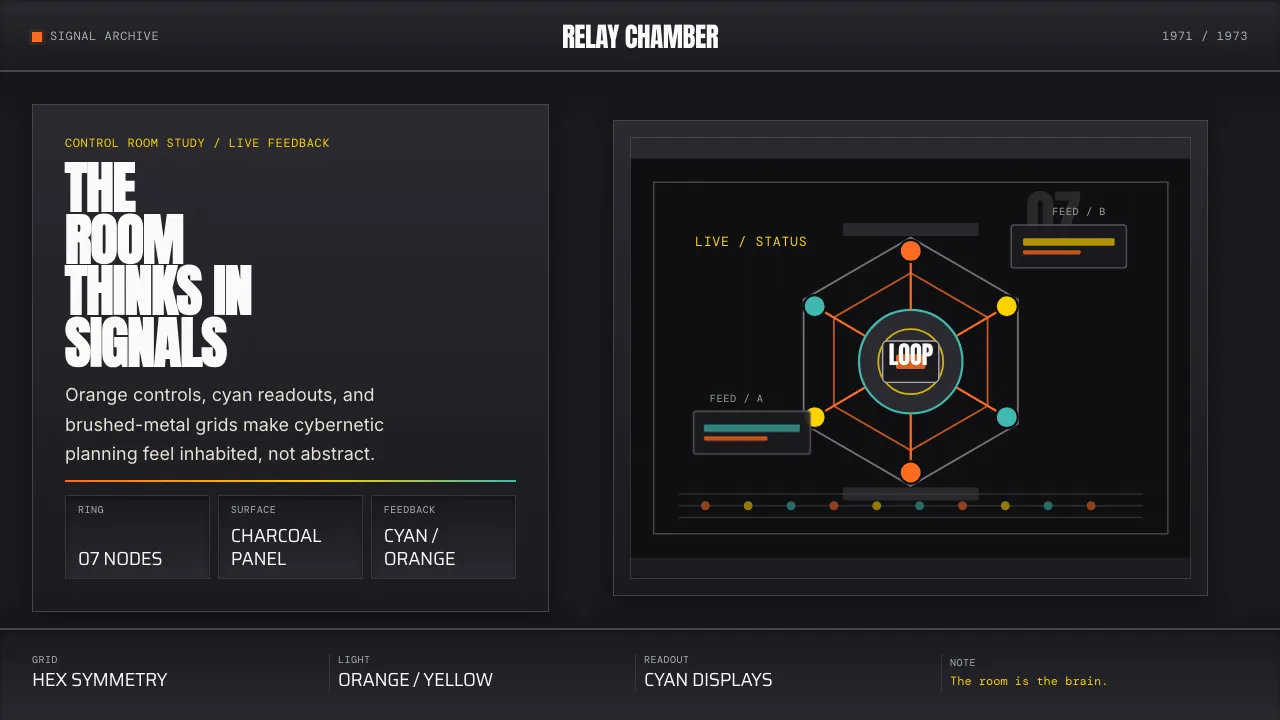
Project Cybersyn was Stafford Beer's audacious attempt to build a real-time cybernetic nervous system for Chile's nationalized economy. Gui Bonsiepe's Operations Room — seven swivel chairs in a hexagonal ring, curved-wall projection displays, orange instrument buttons — became the most iconic image of cybernetic socialism made physical.
This design system channels that mission-control gravity: deep charcoal walls, saturated orange instrument accents, brushed-aluminum surfaces, and rigorous Ulm-School typography. Every element says "the room is the brain."
- Origin
- Santiago, Chile / London, UK
- Era
- 1971–1973 (Project Cybersyn); rediscovered 2003+ via Eden Medina's research
- Key figures
- Stafford Beer · Gui Bonsiepe · Fernando Flores · Eden Medina
- Movements
- British cybernetics · Ulm School industrial design · Allende-era Chilean socialism
Cybernetic 1968 (Stafford Beer) design spec
Colors
Typography
The other 11 sections — buttons, cards, spacing, motion, techniques and more — open once you unlock. Download the DESIGN.md or send it to your AI in one click. Unlock once, yours forever.
Sign up nowStyles similar to Cybernetic 1968 (Stafford Beer)
Also inspired by architecture & places, with a close feel.
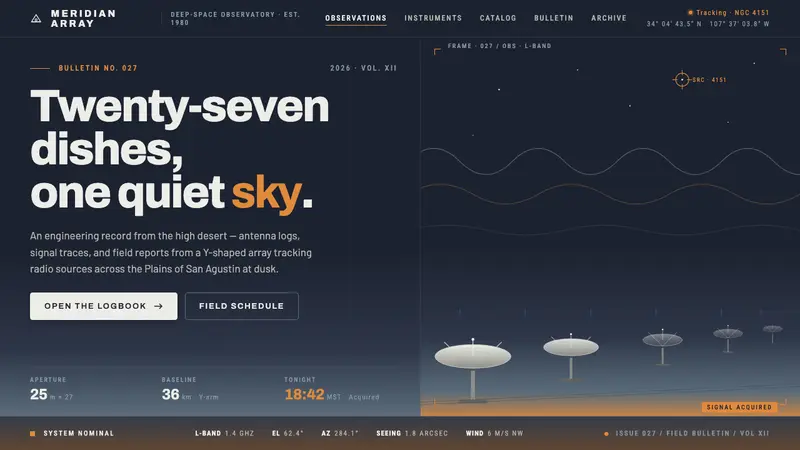 Radio Telescope ArrayEngineering at dusk. Steel-white dishes tilt against a twilight sky bleeding to horizon amber.
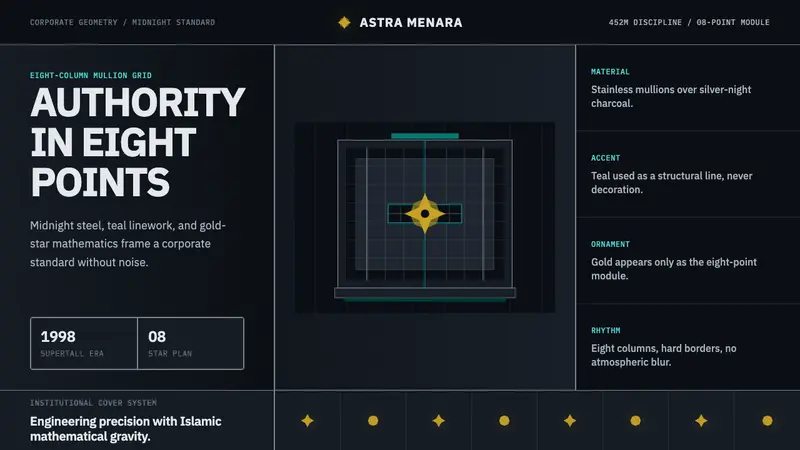 Petronas Twin Towers KLCorporate gravity at midnight. Teal mullions and gold star geometry lock the grid.
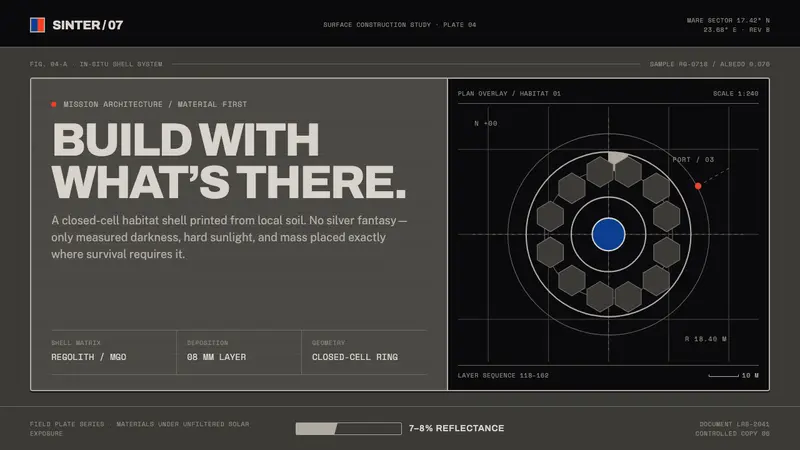 Lunar Regolith SettlementMoonlight without the myth. Regolith gray, hard terminators, and a strict technical grid.
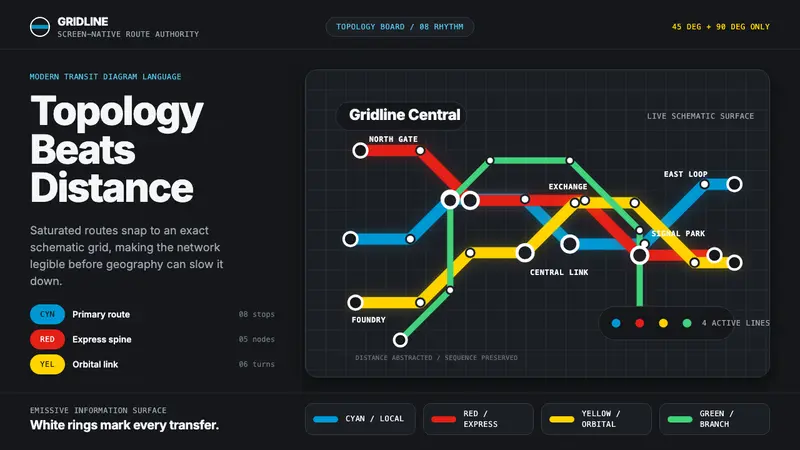 Transit Diagram (modern)Topology over geography. Cyan, red and yellow routes lock to 45-degree angles on black.