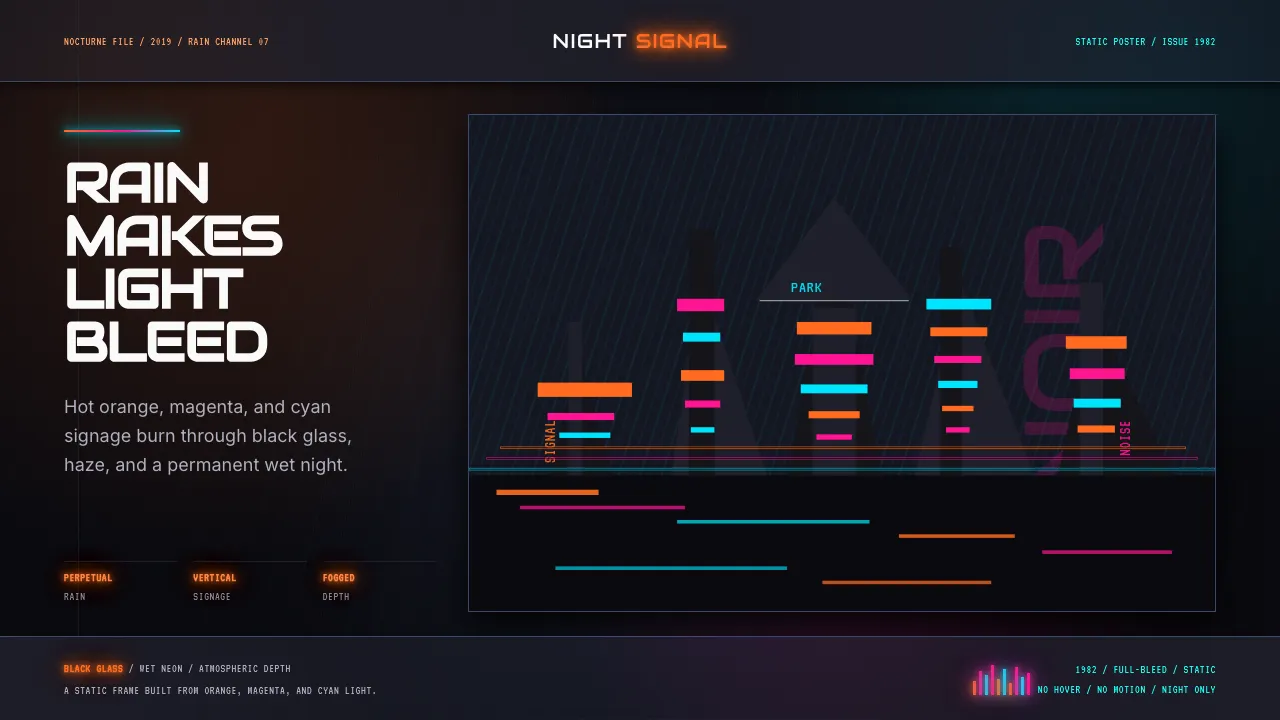
About Blade Runner 1982 Neon Noir
Ridley Scott's 1982 Blade Runner established the canonical cyberpunk visual vocabulary — perpetual rain refracting saturated neon across black glass, vertical Shinjuku-influenced signage towering over retrofitted street markets, and Tyrell Corporation pyramids vanishing into atmospheric haze. This system captures that rain-soaked noir tension: hot-orange and magenta neon bleeding through cyan fog on an endless rainy night.
- Origin
- Los Angeles, United States
- Era
- 1982 theatrical release; 2007 Final Cut; continuous cultural influence through 2024
- Key figures
- Ridley Scott · Lawrence G. Paull · Syd Mead · Jordan Cronenweth
- Movements
- cyberpunk visual genre · 1980s neo-noir cinema · retrofitted-future aesthetic
Blade Runner 1982 Neon Noir design spec
Colors
Background
Surface
Primary
Secondary
Accent
Text
Typography
AudiowideHeadings
InterBody
VT323Mono
Unlock for 1 credit
The other 11 sections — buttons, cards, spacing, motion, techniques and more — open once you unlock. Download the DESIGN.md or send it to your AI in one click. Unlock once, yours forever.
Sign up nowHave an account? Sign in
Styles similar to Blade Runner 1982 Neon Noir
Also inspired by film, games & music, with a close feel.
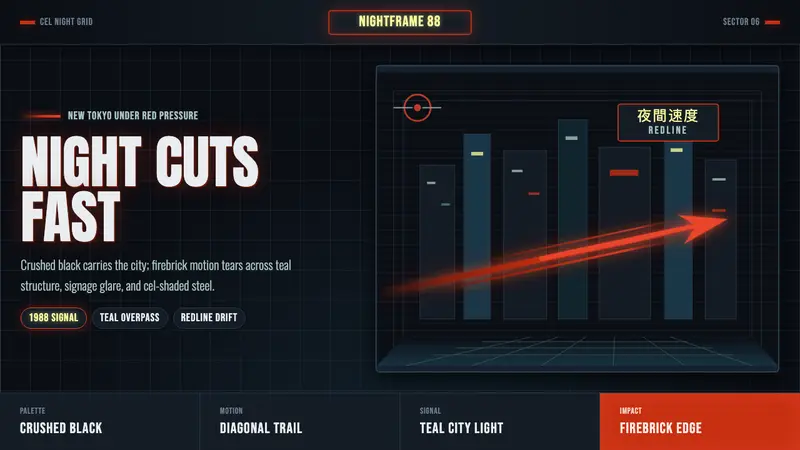 Akira Neo-TokyoNight moves fast. Firebrick trails cut crushed black, teal grids, and condensed signage.
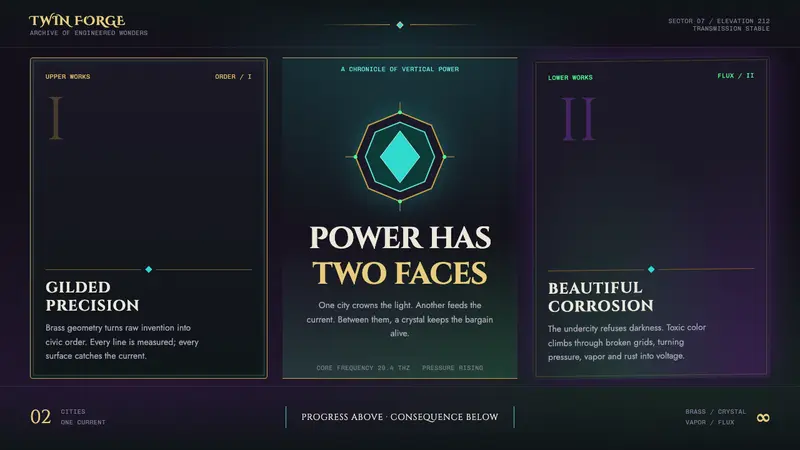 Arcane Hextech (2021)Progress and rot share a current. Brass symmetry meets teal crystal and toxic neon haze.
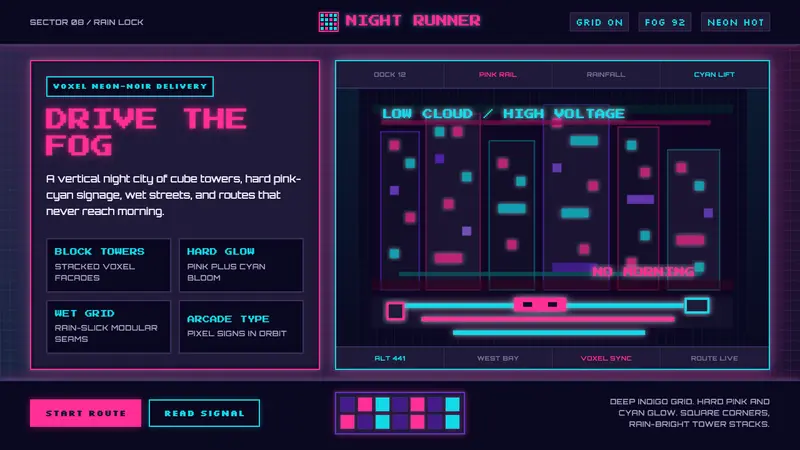 Cloudpunk (Nivalis)Neon-noir goes voxel. Pink-cyan glow cuts deep-indigo grids and blocky tower stacks.
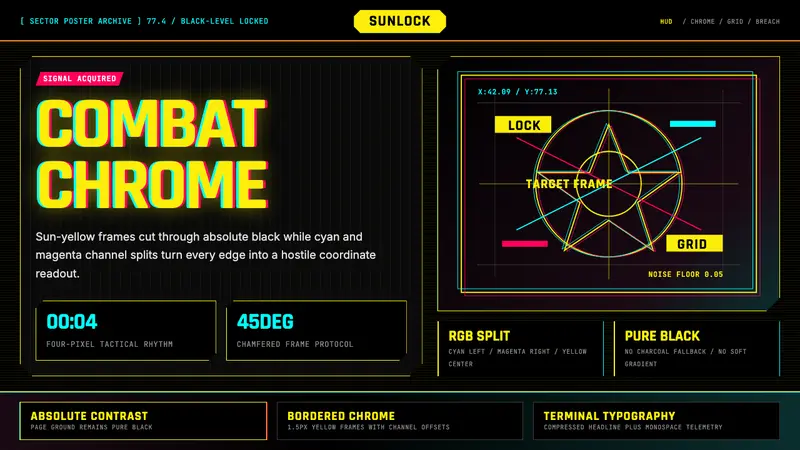 Cyberpunk 2077 Night City YellowCombat HUD on black. Sun-yellow chrome splits into magenta-cyan coordinate grids.