About Assamese Japi
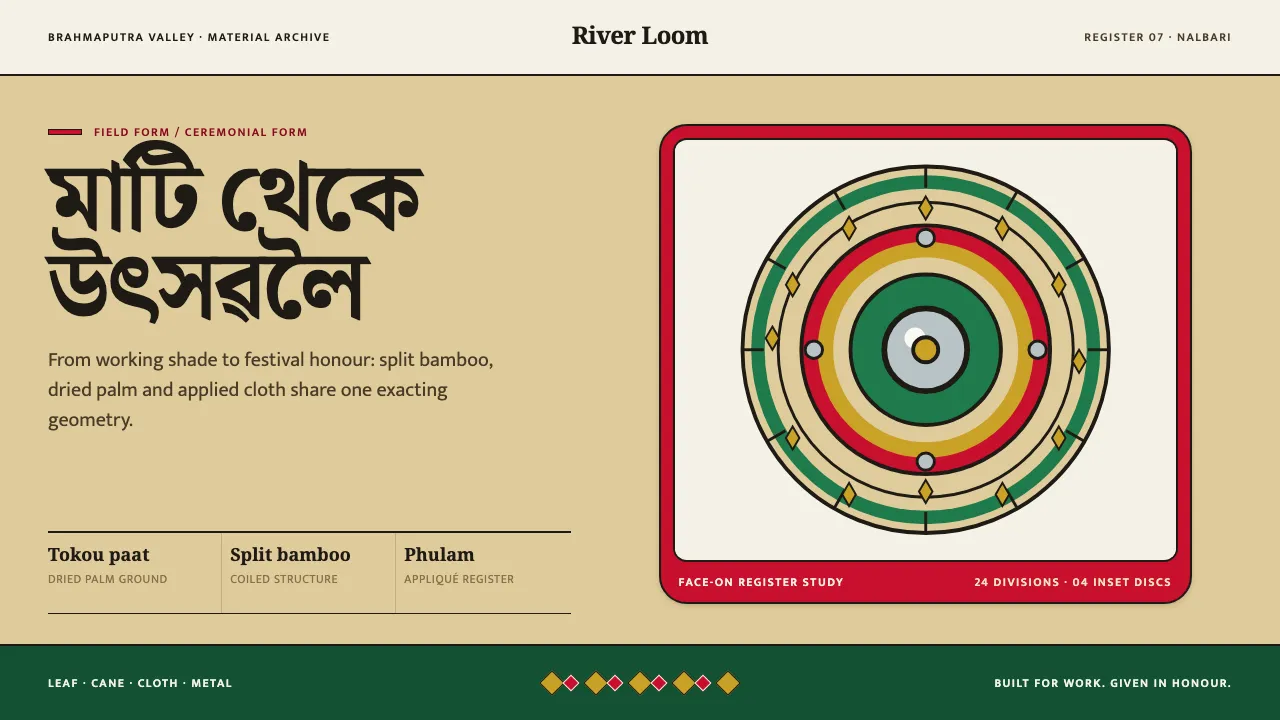
The japi is Assam's conical hat: split bamboo woven over tokou paat, the dried leaf of the Trachycarpus martianus palm. In its plain haluwa form it is a cultivator's shade against sun and rain — undecorated straw and cane, worn until it stains and splits.
In its phulam form, made most famously at Nalbari, the same cone is covered in cloth appliqué against a bright red ground: spiked double bamboo-split circles, crescent moons, butterflies in circles, small inset mirror discs, a metal sula finial at the apex. One hat works in the field. The other is handed over at felicitations and at Rongali Bihu. This system keeps both.
- Origin
- Assam, north-east India — the Brahmaputra valley, with Nalbari the centre for phulam japi
- Era
- pre-1900 and much older; phulam japi in its current Nalbari form ~19th century onward
- Key figures
- Nalbari's hereditary japi-making households · Assamese gorokhiya cultivators · the Ahom nobility who wore the bordoi japi · Xuanzang (Hiuen Tsang)
- Movements
- Assamese bamboo and cane craft · cloth-appliqué and mirror-work decoration · Bihu festival material culture
Assamese Japi design spec
Colors
Typography
The other 11 sections — buttons, cards, spacing, motion, techniques and more — open once you unlock. Download the DESIGN.md or send it to your AI in one click. Unlock once, yours forever.
Sign up nowStyles similar to Assamese Japi
Also inspired by crafts & folk art, with a close feel.
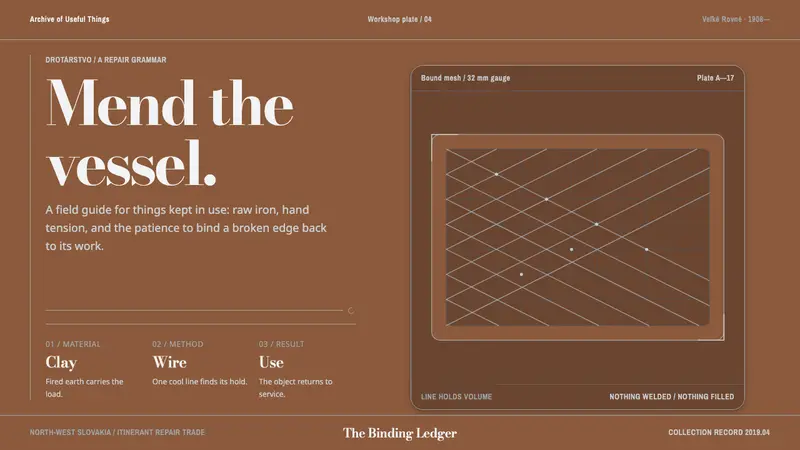 Slovak Drotár WirewareRepair becomes structure. Cold wire mesh binds warm fired clay in a measured grid.
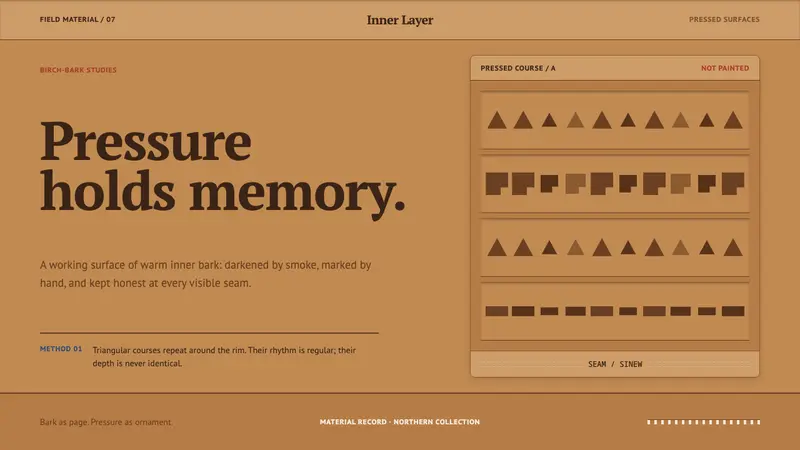 Evenki Birch BarkPressure holds memory. Warm bark bands use stamped triangles and visible sinew seams.
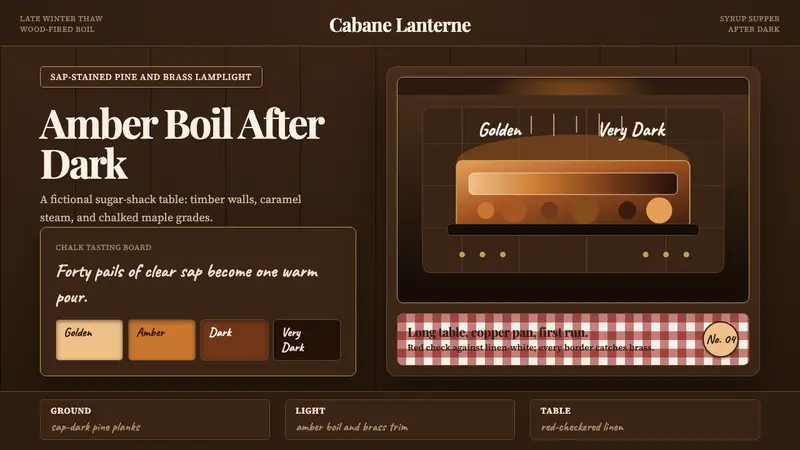 Québec Maple Sugar ShackWarmth boils in the dark. Amber serif type, brass borders, and gingham checks glow on timber.
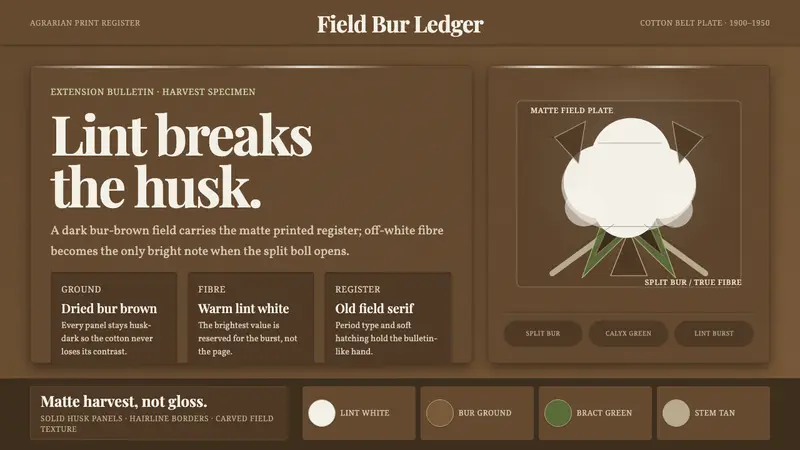 Cotton Boll HarvestHarvest contrast made matte. Off-white lint bursts from husk brown with field-serifs.