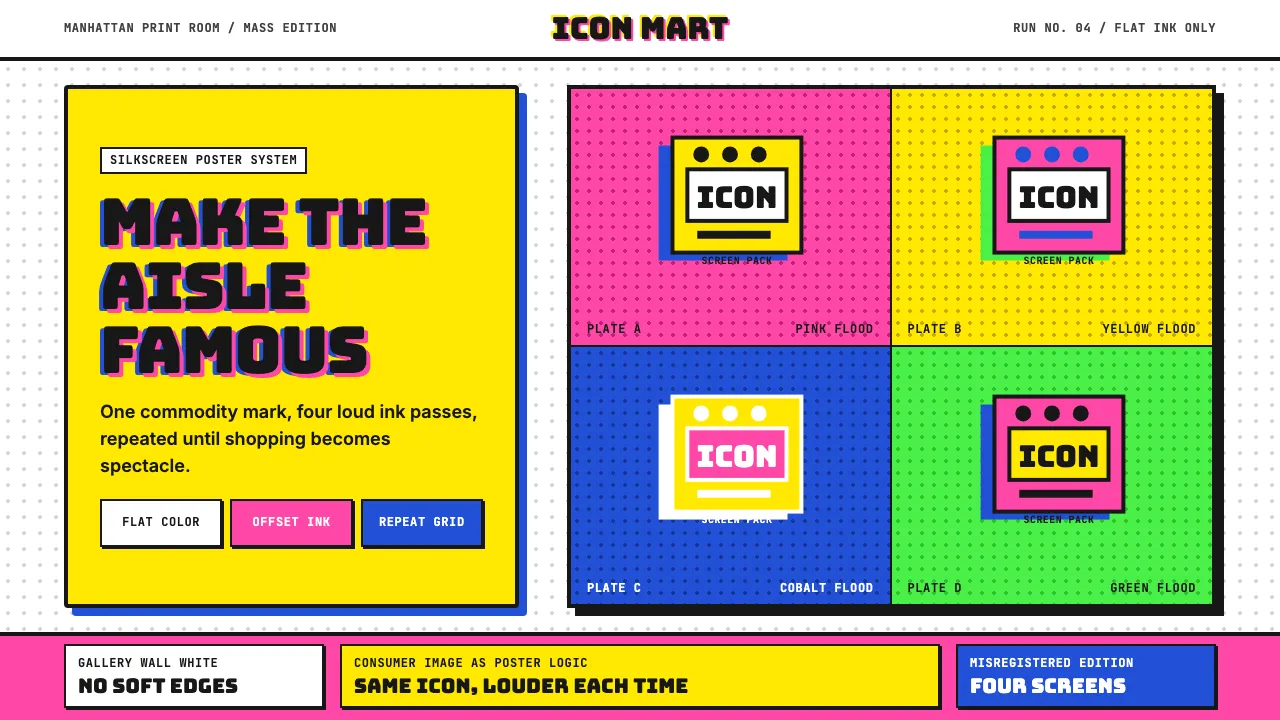
About Warhol Pop
Andy Warhol turned the supermarket aisle into a gallery wall. Working from his Manhattan studio "The Factory," he silk-screened soup cans, celebrity portraits, and Brillo boxes into icons of postwar American culture — proving that art could be mass-produced, flat, loud, and still profound.
The Warhol-Pop design system captures that democratic flatness: high-saturation color blocks, deliberate misregistration offsets, and portrait-grid repetition. It is the visual language of consumerist celebrity, brand-logo-as-art, and the silkscreen aesthetic that still echoes through poster design and album covers today.
- Origin
- New York City, The Factory (Manhattan)
- Era
- 1962 peak; Warhol active 1950s–1987
- Key figures
- Andy Warhol · Edie Sedgwick · Roy Lichtenstein · Robert Indiana
- Movements
- Pop Art · American Pop · British Pop
Warhol Pop design spec
Colors
Typography
The other 11 sections — buttons, cards, spacing, motion, techniques and more — open once you unlock. Download the DESIGN.md or send it to your AI in one click. Unlock once, yours forever.
Sign up nowStyles similar to Warhol Pop
Also inspired by art & artists, with a close feel.
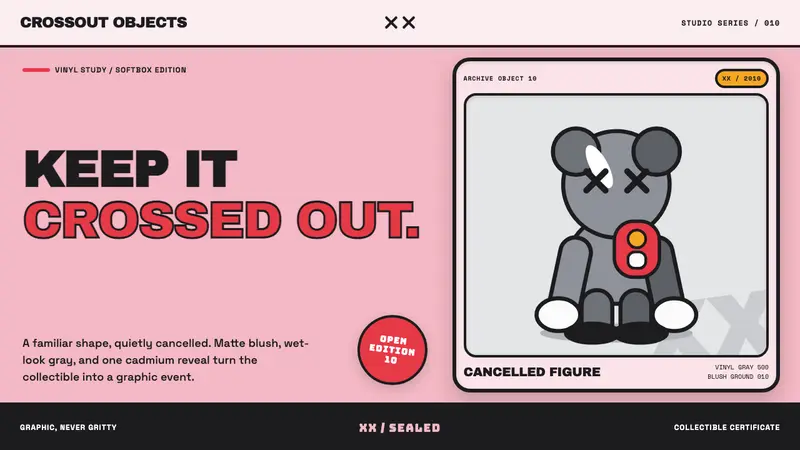 KAWS Companion (2010)Playful, with its eyes crossed out. Blush fields frame glossy gray vinyl and fat black lines.
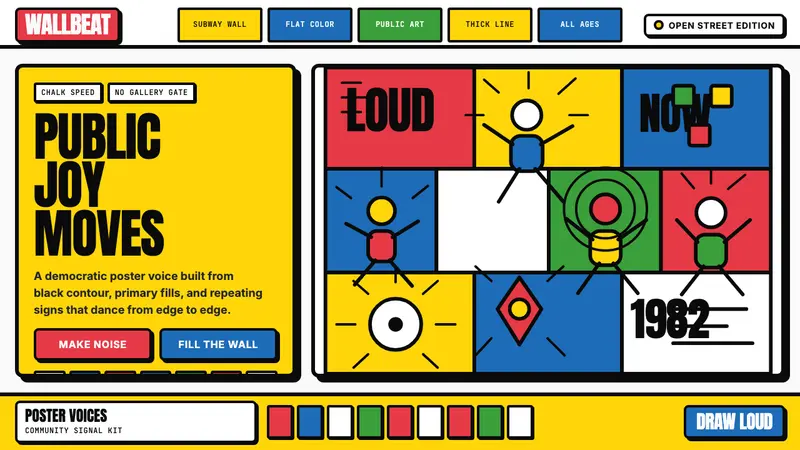 Keith Haring PopJoy refuses the gallery. Thick black contours pack primary color into a dancing wall grid.
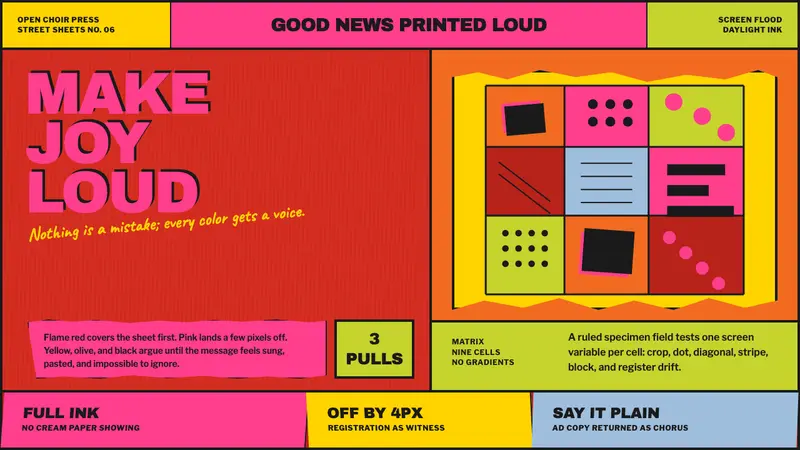 Corita Kent SerigraphJoy printed at full volume. Flame red, hot pink, and misregistered type flood the sheet.
 Tanzanian Tingatinga on Cobalt Canvas (1968)Cobalt sings flat. Yellow, vermilion and emerald panels snap under black enamel outlines.